
Reading Skills Reading Fiction Worksheets for Ages 4-8
5 filtered results
Difficulty Level
Grade
Age
-
From - To
Subject
Activity
Standards
Enhance your child's imagination and comprehension with our Reading Skills Reading Fiction Worksheets, designed for ages 4-8. Each worksheet offers engaging stories and activities that bolster young readers' vocabulary, sequence understanding, and inferential thinking. Our worksheets provide a fun and educational way to develop critical reading skills, helping children easily identify main ideas, characters, and settings. Perfect for classroom use or at-home learning, these expertly crafted resources ensure that reading time is both productive and enjoyable. Visit us today and give your little ones the tools to become confident, enthusiastic readers!
Favorites
With answer key
Interactive
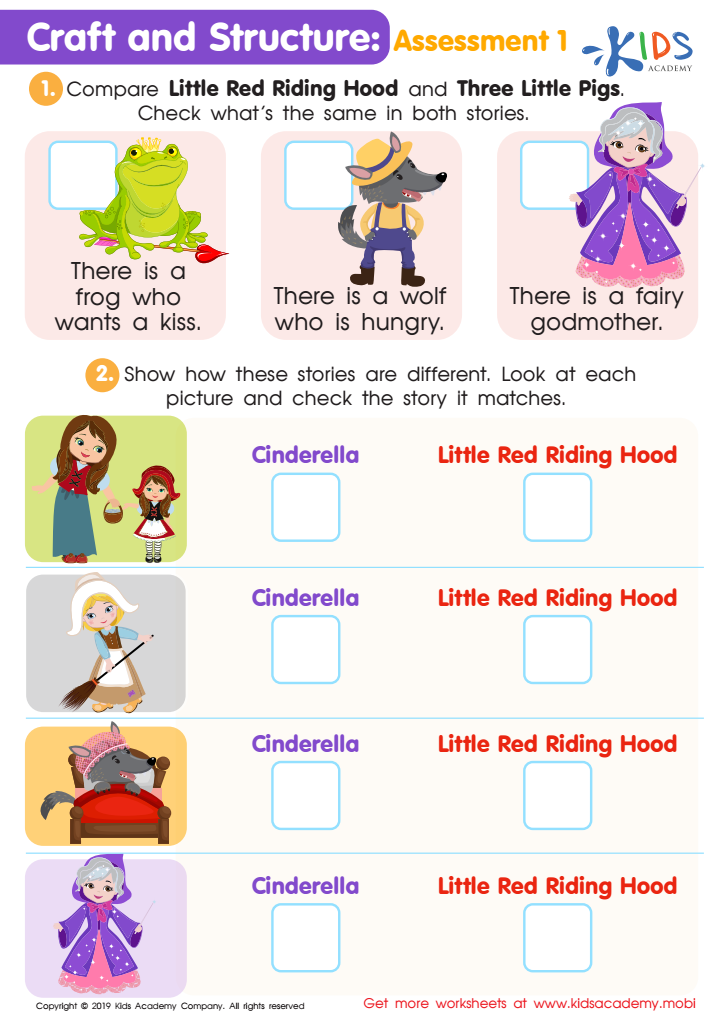
Craft and Structure: Assessment 1 Worksheet
Fairytales are a great way to bond with your kids while teaching them. Popular stories include Little Red Riding Hood and Three Little Pigs. Test how well they understood these two with this assessment worksheet. Ask them to compare the two stories and check what is the same. Doing this will help kids learn new words and sentence construction, as well as teaching them life lessons.
 Assign to My Students
Craft and Structure: Assessment 1 Worksheet
Worksheet
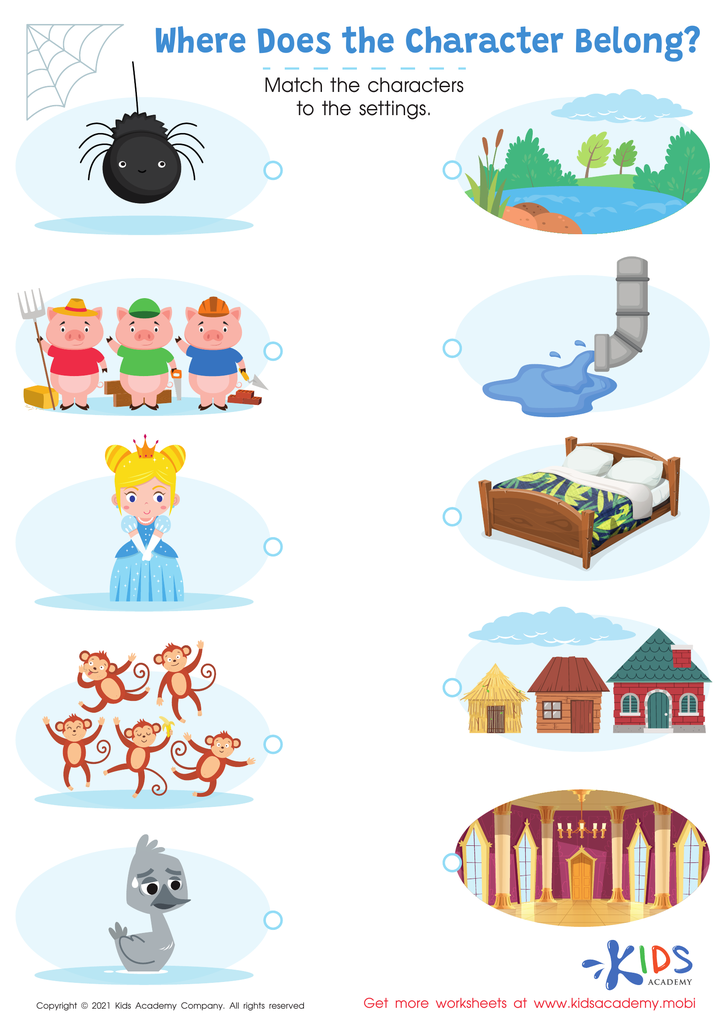
Where Does the Character Belong? Worksheet
Fairy Tales are a great way to teach young ones about settings, characters and other literary elements. This worksheet contains illustrations from popular fairy tales to help kids identify characters and match them to the right settings. It's a fun way to improve recall skills and enhance comprehension using visuals.
Where Does the Character Belong? Worksheet
Worksheet
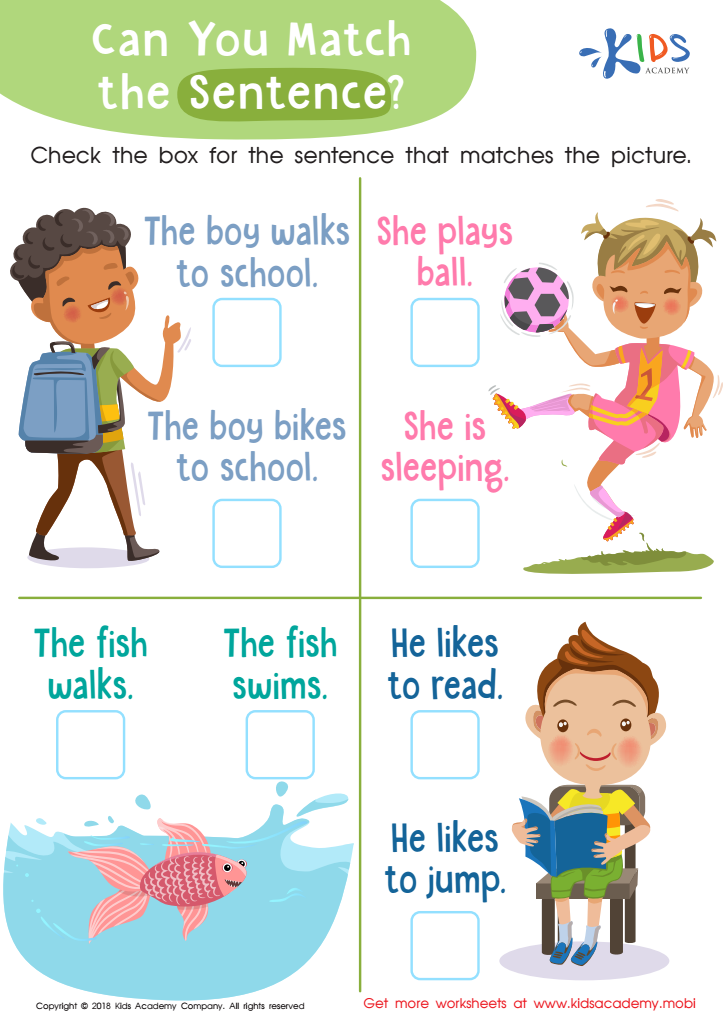
Can You Match the Sentence? Worksheet
Kids gain fluency with this worksheet which uses bright pictures. They select the sentence that matches the image and check the box. This repetition of words and phrases helps them improve their reading skills while having fun.
Can You Match the Sentence? Worksheet
Worksheet
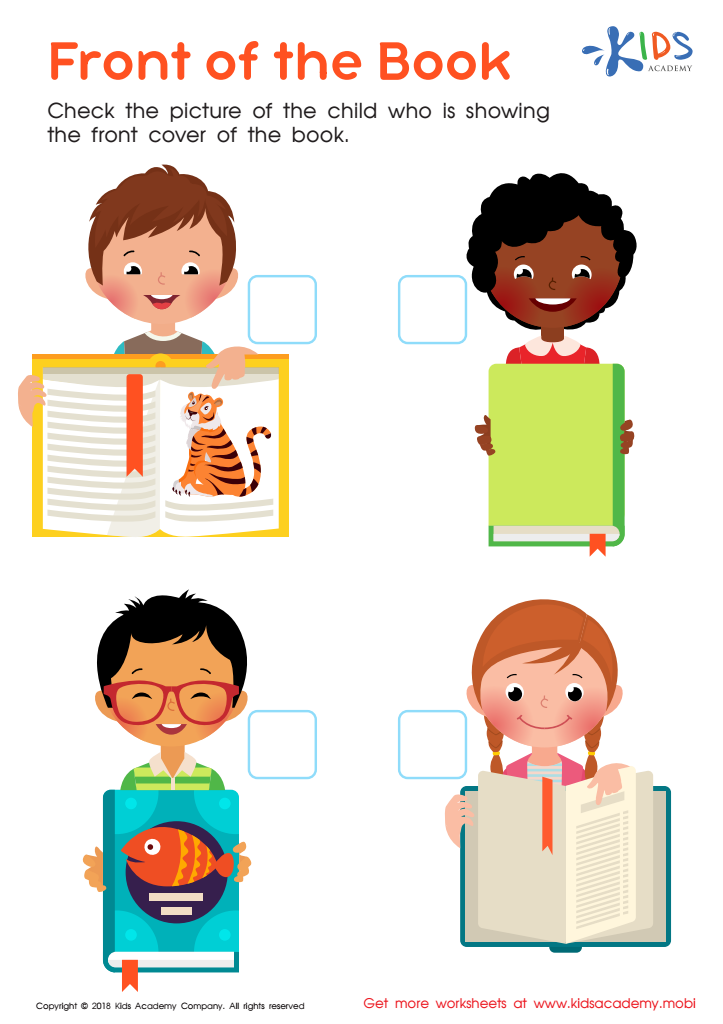
Front of the Book Worksheet
Help your child become a reader with this free worksheet! It's full of fun new friends and is designed to help kids understand concepts about the front of a book. They'll look at each picture and decide which friend is holding the book with the front cover, and check off the correct answer in the given boxes. Get your little one ready to be a reader!
Front of the Book Worksheet
Worksheet
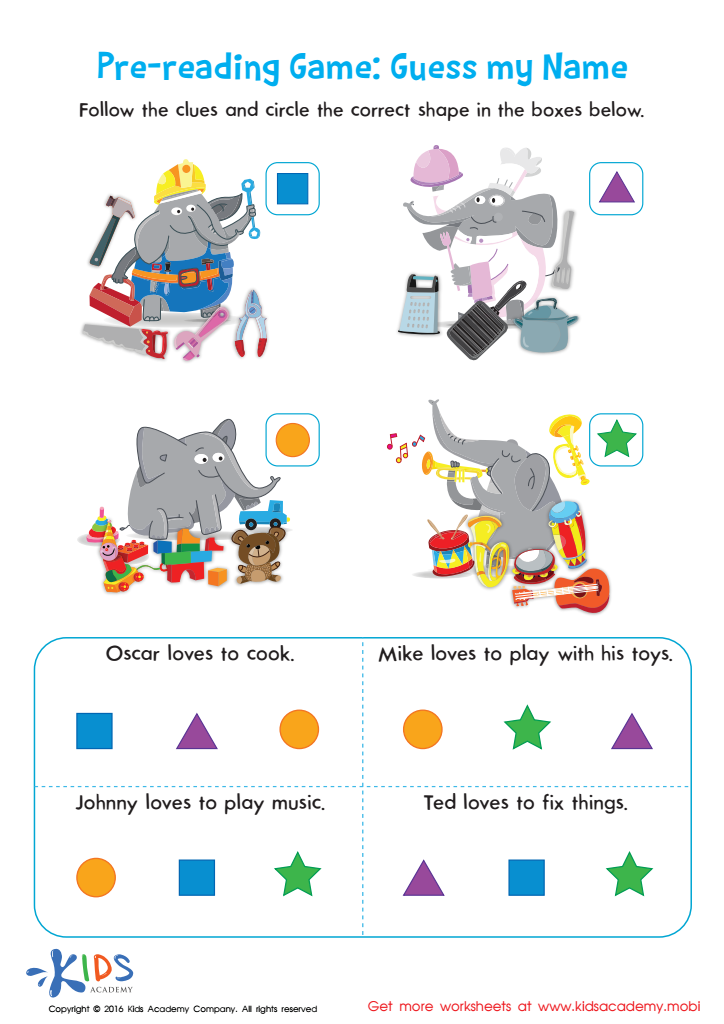
Pre Reading Worksheet Guess My Name
Guess My Name is a fun way to practice inference skills.
Guess My Name is a fun pre-reading game to help your child practice drawing inferences from clues. With colorful illustrations, they'll use clues to match each elephant with its sentence and sharpen their inference skills.
Pre Reading Worksheet Guess My Name
Worksheet
Join Kids Academy for Free
Who is primarily going to use this learning content?







Parents and teachers should place high importance on cultivating strong reading skills and encouraging the reading of fiction in children aged 4-8 for numerous compelling reasons.
Firstly, reading fiction enhances language development. Exposure to varied vocabulary, sentence structures, and storytelling techniques helps children grasp complex language concepts, thus improving their speaking and writing abilities.
Secondly, reading fiction piques a child's imagination and creativity. Through stories, children explore fantastical worlds, envision scenarios beyond their experiences, and learn to think creatively. Such imaginative play is crucial for cognitive development.
Additionally, fictional stories foster empathy. Characters in these tales often face dilemmas or emotions that children can relate to or learn from. Understanding characters' feelings and motivations builds emotional intelligence and the ability to empathize with others.
Lastly, developing reading habits early on is crucial for academic success. Strong reading skills form the foundation of all other learning. When children enjoy reading fiction, they are more likely to develop lifelong reading habits, which continue to support academic achievement and personal growth.
In short, prioritizing reading fiction from an early age promotes language proficiency, nurtures imagination, cultivates empathy, and lays the groundwork for future educational success, making it a vital aspect of early childhood development.








