Shape Recognition Reading Fiction Worksheets for Ages 4-8
3 filtered results
-
From - To
Enhance your child's learning with our Shape Recognition Reading Fiction Worksheets for ages 4-8! These engaging, educational printables blend storytelling with shape identification to capture young minds. Each worksheet features delightful fictional tales where kids identify and color shapes embedded in the narrative. This multifaceted approach sharpens their recognition skills, fosters early reading, enhances problem-solving abilities, and promotes creativity. Perfect for classroom use or at-home practice, our worksheets make learning both fun and fruitful. Designed by educational experts, these resources ensure a solid foundation in key developmental skills while keeping your child entertained and eager to learn.
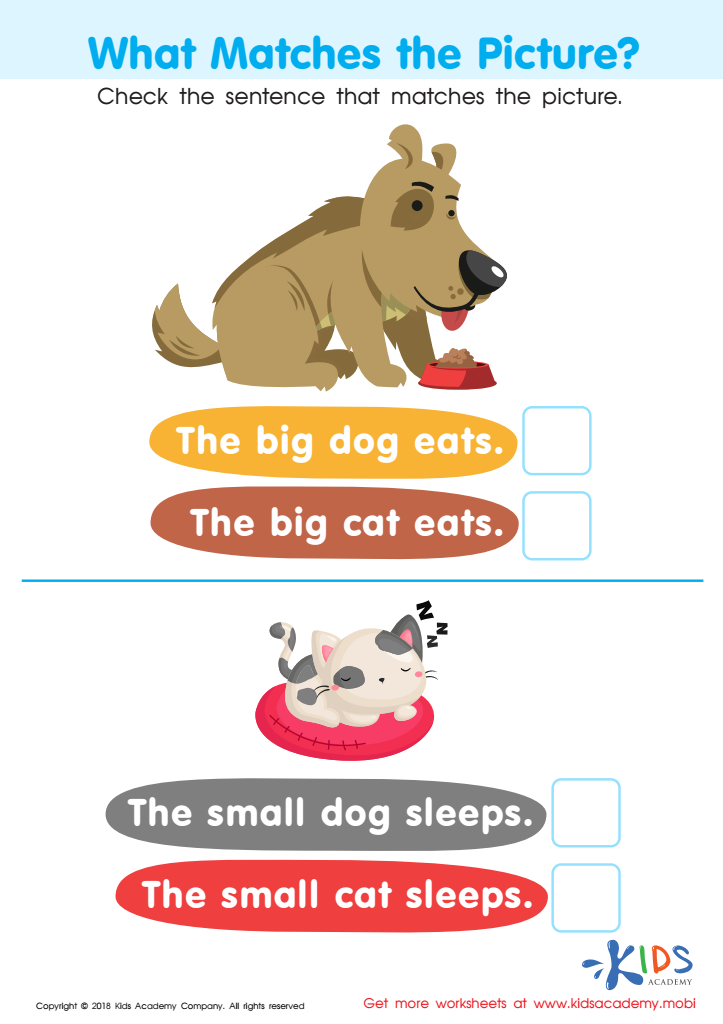
What Matches the Picture? Worksheet
 Assign to My Students
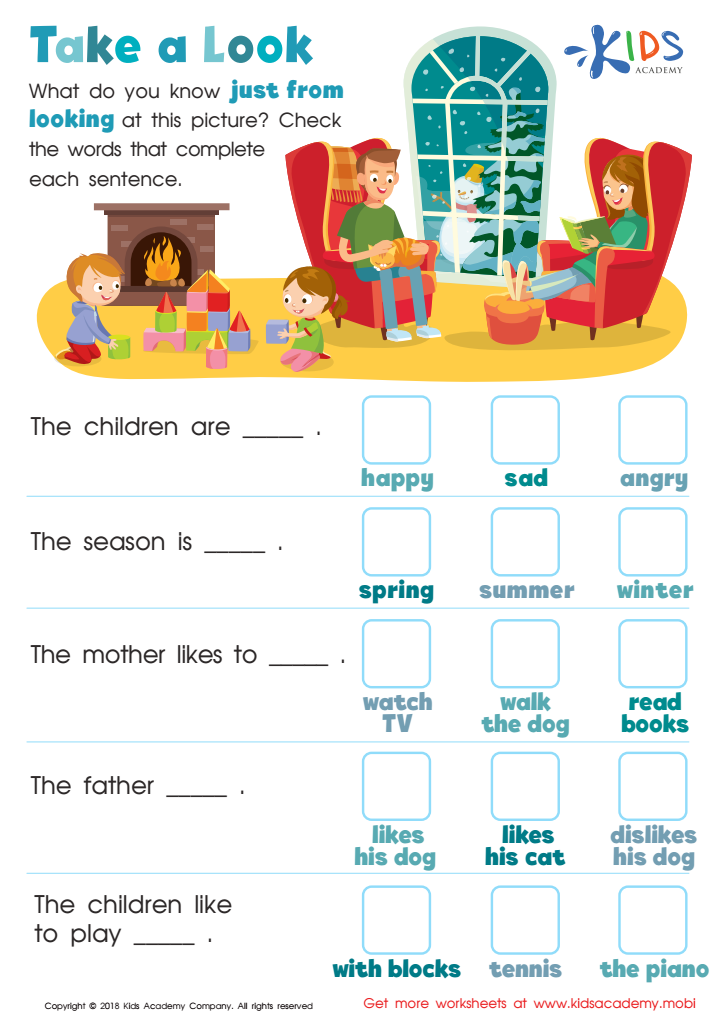
Take a Look - Part 1 Worksheet
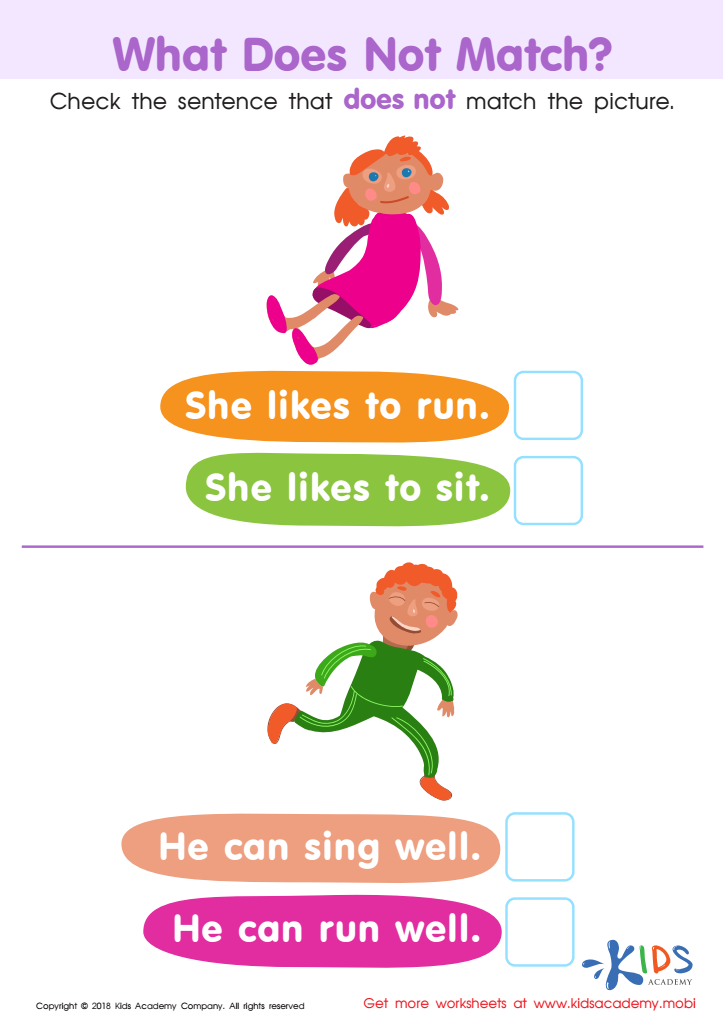
What Does Not Match? Worksheet


.jpg)





Parents and teachers play a crucial role in nurturing early childhood development, and shape recognition through reading fiction is particularly beneficial for children aged 4-8. At this age, children are naturally curious and are developing cognitive and motor skills rapidly. Shape recognition is a fundamental aspect of early math skills, which underpins later ability in more complex mathematical concepts. Fictional stories that incorporate shape recognition not only engage young minds through narrative but also provide a context for learning that is both fun and educational.
By engaging with shapes within the framework of a story, children can better remember and understand geometric concepts. This kind of learning promotes visual-spatial intelligence and lays the foundation for literacy and numeracy skills. Moreover, when adults read fiction involving shape activities with children, they are not just helping them appreciate geometry but also modeling meta-cognitive strategies like predicting, inferring, and problem-solving. Plus, it offers an avenue for quality bonding time, fostering a love for learning and strengthening emotional ties. Storytelling that involves shapes also enhances imagination and creativity as children might encounter varied uses and representations of shapes, fueling their ability to think outside the box. All these reasons make shape recognition in fiction a valuable educational tool.








