Story analysis Reading Fiction Worksheets for Ages 4-8
7 filtered results
-
From - To
Unlock the power of storytelling with our engaging Story Analysis Reading Fiction Worksheets, designed specifically for ages 4-8! These worksheets provide young readers with invaluable skills to enhance their comprehension and analytical abilities. Through interactive activities, children will explore characters, settings, and themes while developing critical thinking skills. Our resources foster a love for reading by making story analysis fun and accessible. Perfect for classrooms or at-home learning, these worksheets inspire creativity and enhance literacy skills. Join us in nurturing a generation of confident readers and insightful storytellers. Explore our collection today and watch your child's analytical skills grow!
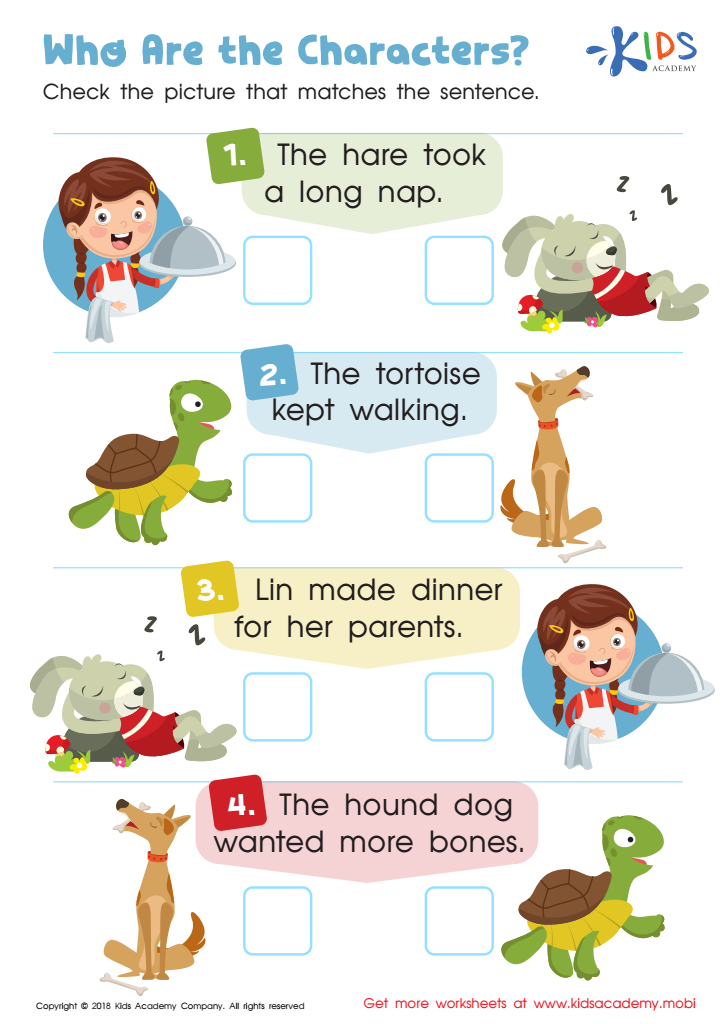
Who Are The Characters Worksheet
 Assign to My Students
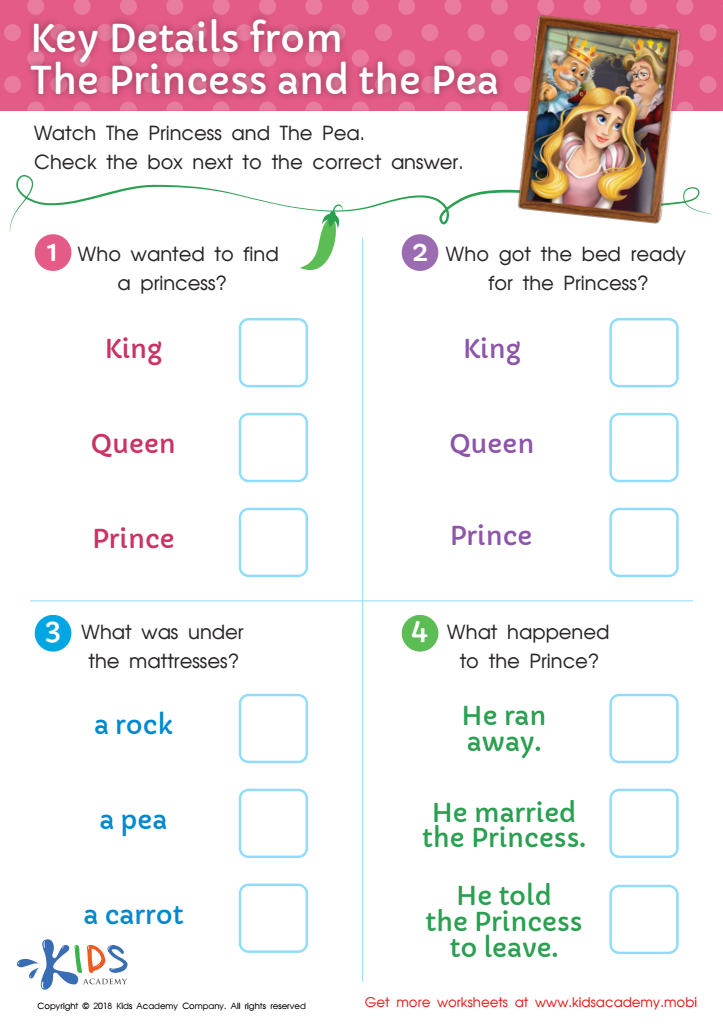
Key Details from the Princess and the Pea Worksheet
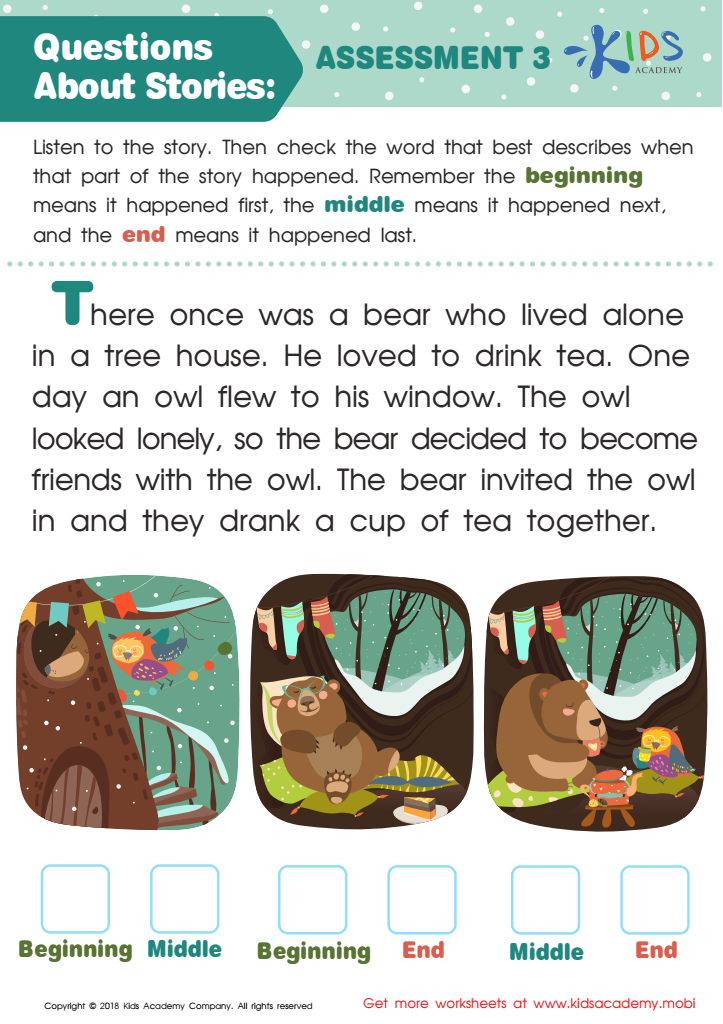
Questions About Stories: Assessment 3 Worksheet
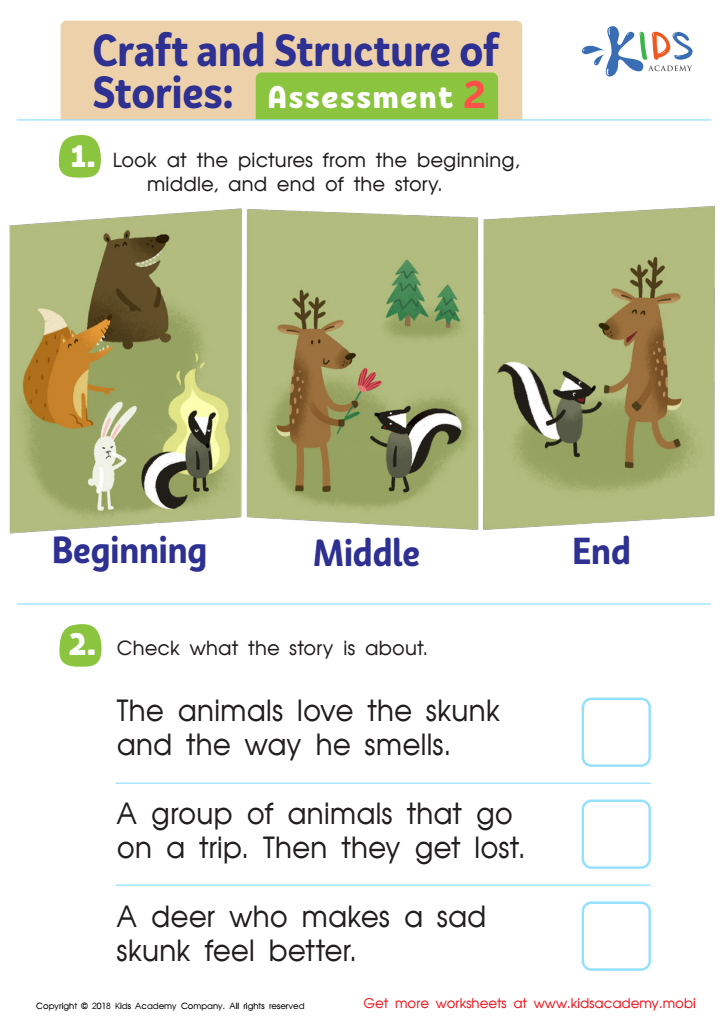
Craft and Structure of Stories: Assessment 2 Worksheet
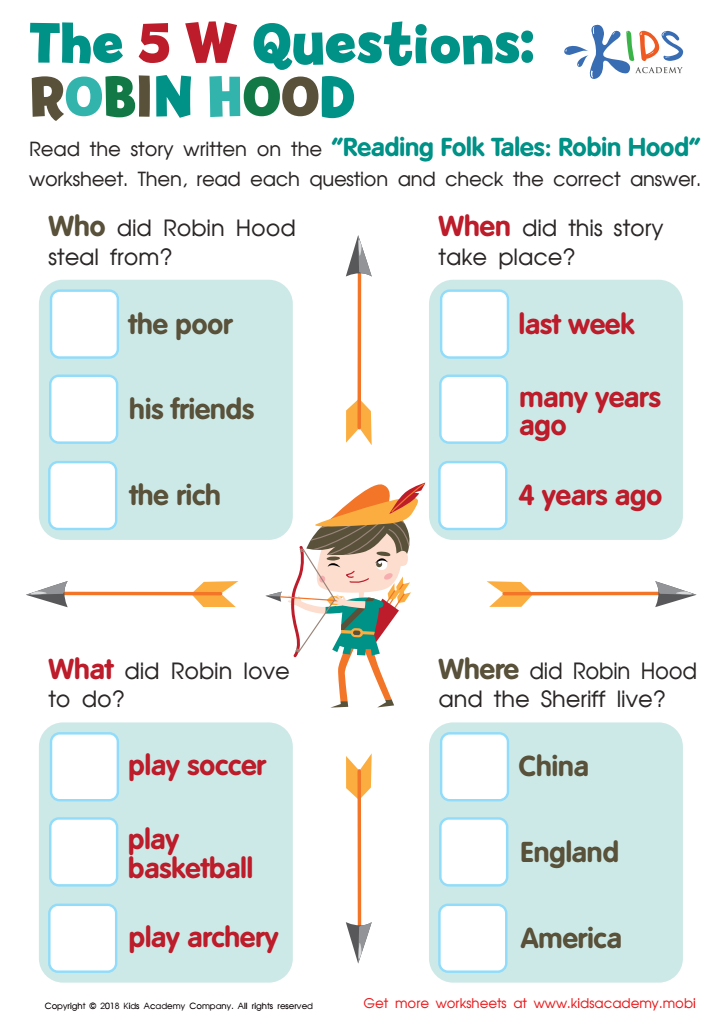
The 5 W Questions: Robin Hood Worksheet
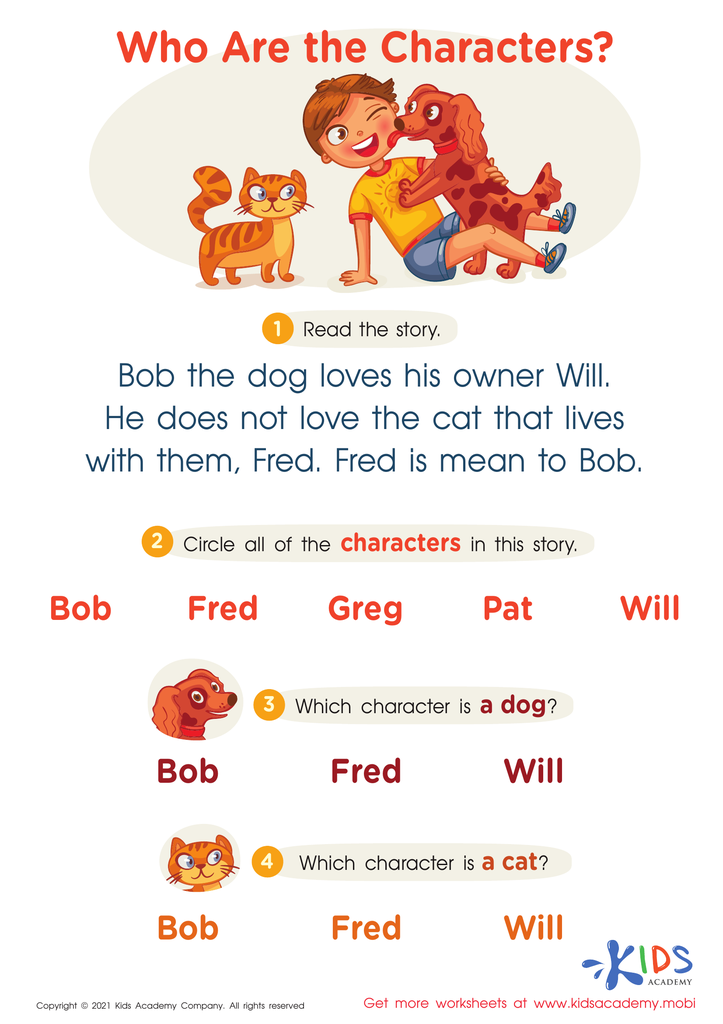
Who Are the Characters? Worksheet
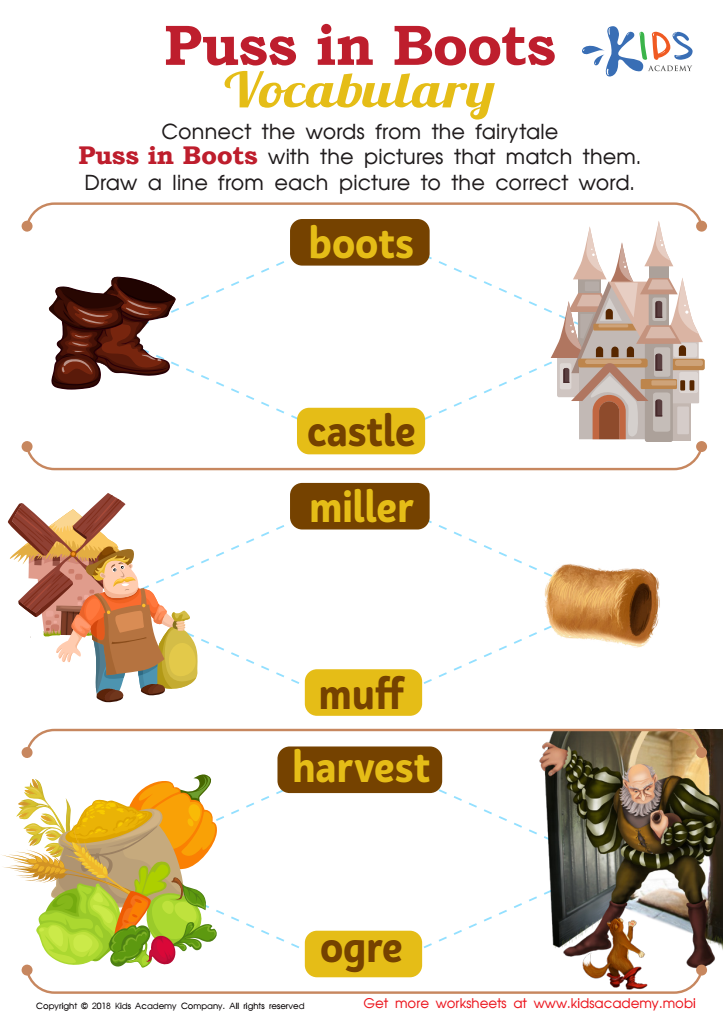
Puss in Boots Vocabulary Worksheet







Story analysis in reading fiction for children ages 4-8 is crucial for several reasons. First, this age group is particularly impressionable, and engaging with well-crafted stories helps develop their imagination and empathy. By analyzing characters, settings, and plot structures, children learn to understand different perspectives and emotions, fostering social skills and emotional intelligence.
Moreover, story analysis encourages critical thinking. When children examine stories, they learn to ask questions about narrative choices, motives, and outcomes, which sharpens their analytical and problem-solving skills. These abilities lay the foundation for deeper learning in literacy and across other subjects as they progress in school.
Additionally, story analysis enhances vocabulary and language skills. Talking about narratives empowers children to articulate their thoughts, express opinions, and communicate clearly, which are essential skills for future academic success.
Finally, parents and teachers who emphasize story analysis foster a love for reading. When children find joy and meaning in stories, they are more likely to become lifelong readers, setting the stage for continued learning and exploration. In sum, story analysis is a vital activity that enriches children's emotional, cognitive, and linguistic development, making it incredibly important for caregivers to support this process.








