Vocabulary enhancement Reading Fiction Worksheets for Ages 4-8 - Page 2
29 filtered results
-
From - To
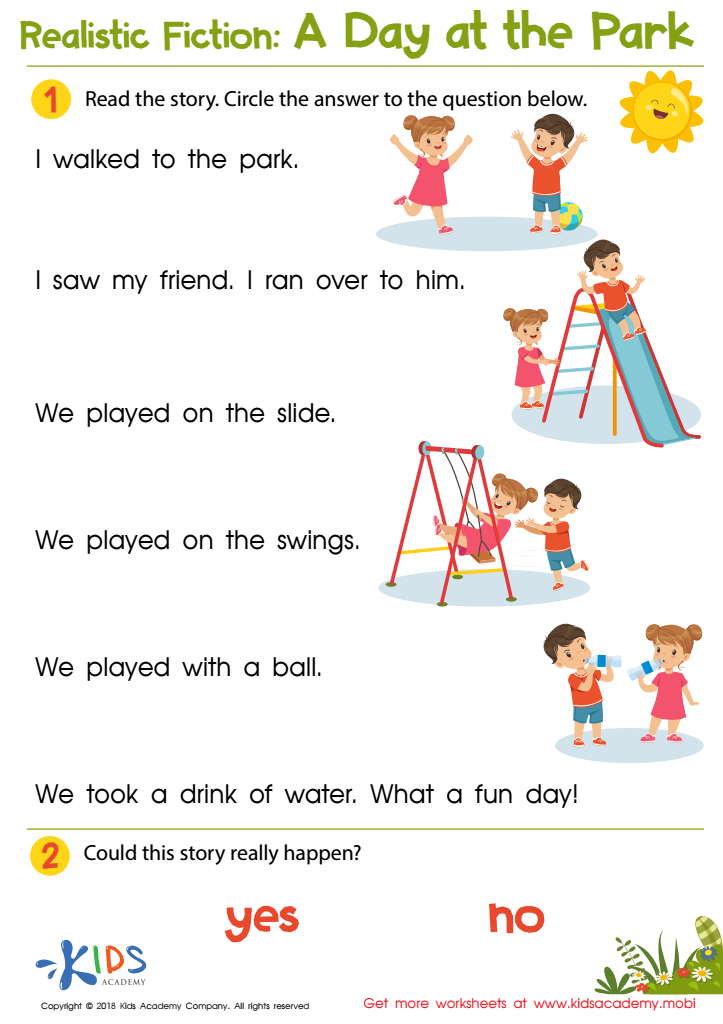
A Day at the Park Worksheet
 Assign to My Students
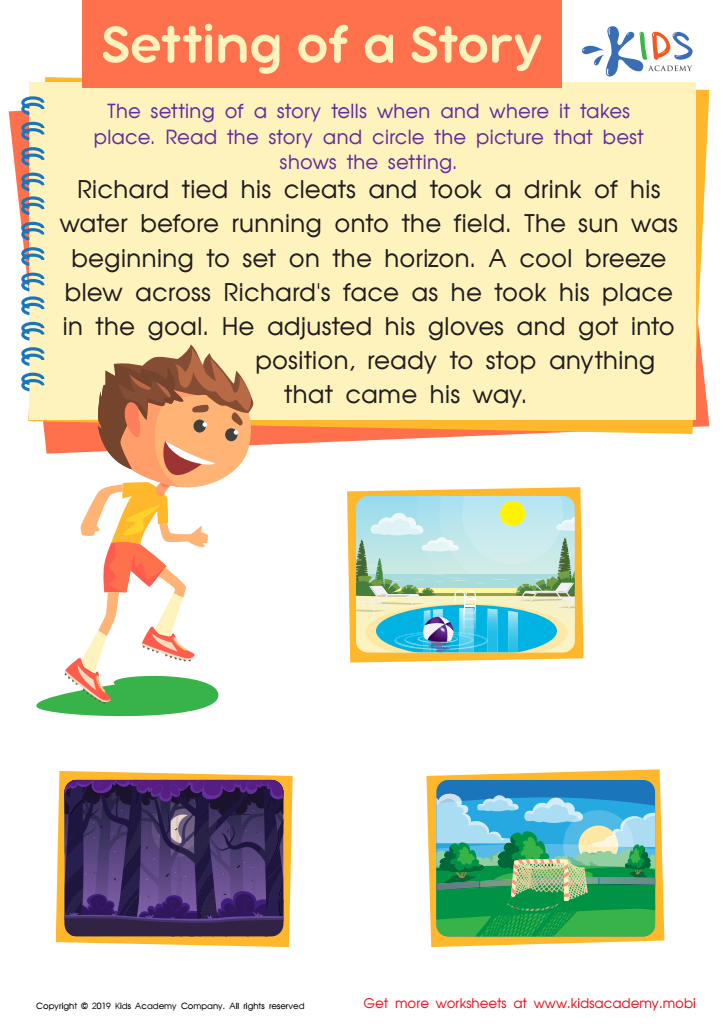
Setting of a Story Worksheet
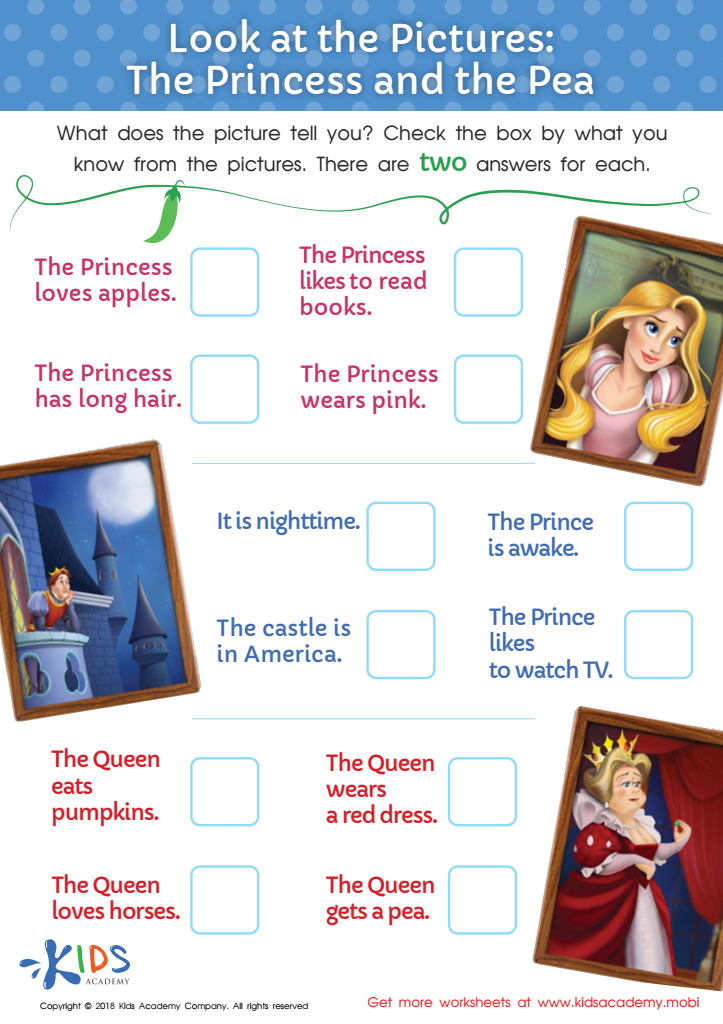
Look at the Pictures: The Princess and the Pea Worksheet
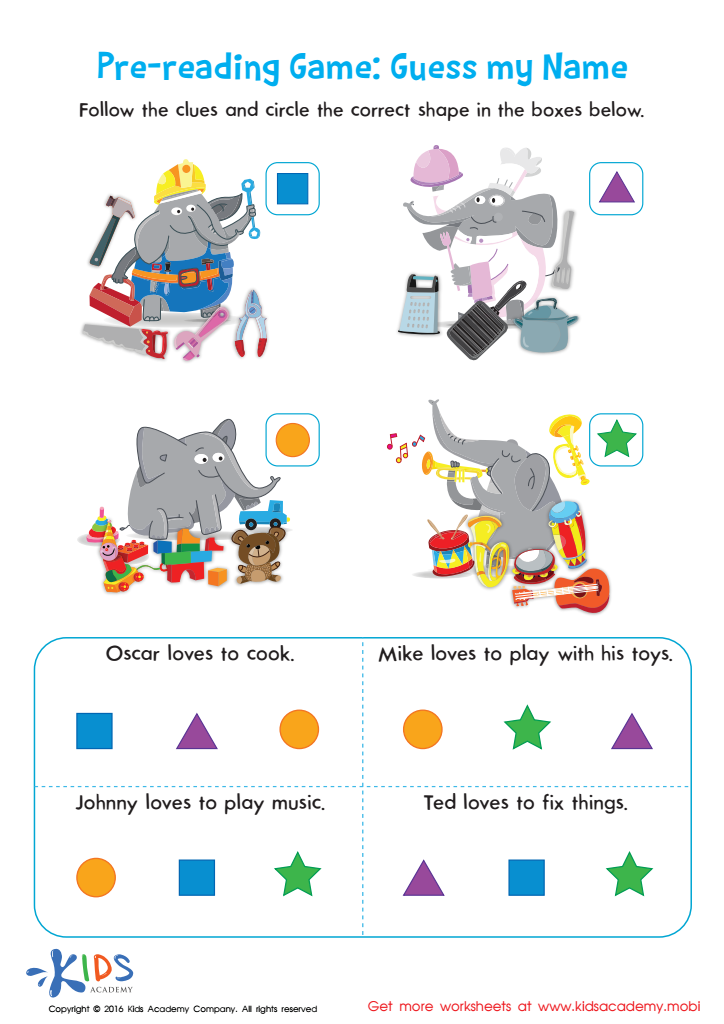
Pre Reading Worksheet Guess My Name
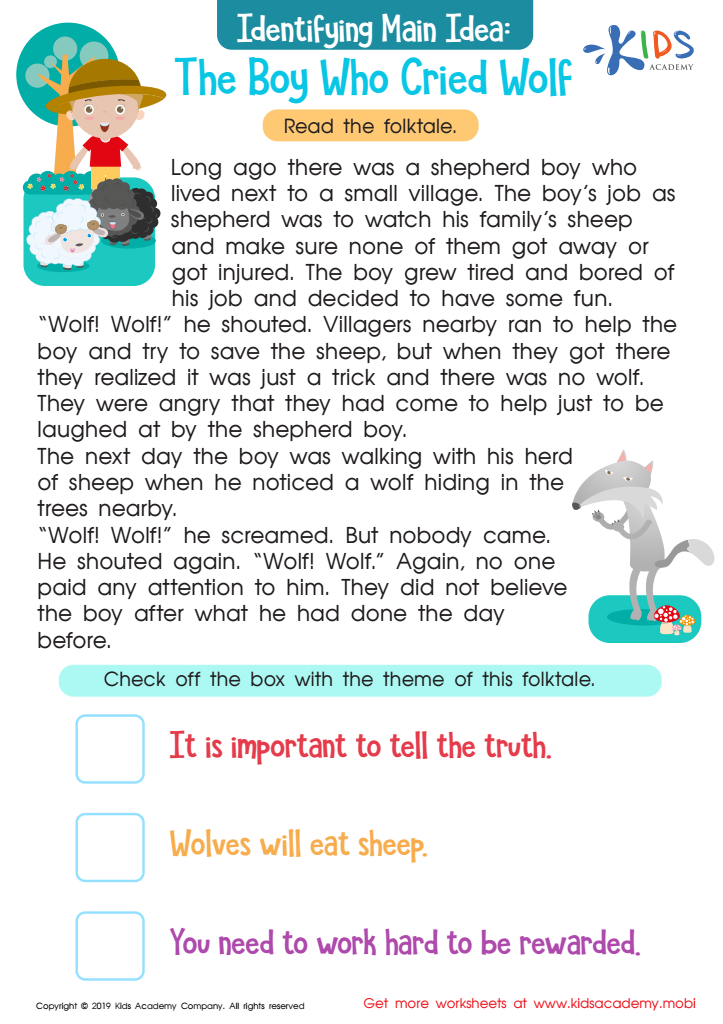
The Boy Who Cried Wolf Part 2 Worksheet








Vocabulary enhancement through reading fiction is vital for children aged 4-8, a crucial developmental stage for language acquisition. During these formative years, children are absorbing language at an impressive rate. Engaging with fictional stories not only introduces them to new words but also contextualizes their meanings within relatable narratives. This deepens understanding and retention, essential for language development.
Fiction invites children into different worlds, sparking their imagination and encouraging them to think critically about characters and plots. Such engagement fosters a love of reading, laying the groundwork for lifelong learning. Additionally, discussing stories enhances children's comprehension skills and facilitates meaningful conversations between parents and teachers, reinforcing word meanings and expanding their expressiveness.
Furthermore, reading fiction can also promote social-emotional learning, as children learn to empathize with characters and navigate complex emotions, further enriching their vocabulary. As parents and teachers, prioritizing vocabulary enhancement through fiction isn’t merely about improving literacy; it's about empowering children with the language skills needed to articulate their thoughts and feelings, succeed academically, and engage effectively with others. Investing in this aspect of childhood education nurtures well-rounded, articulate individuals prepared to face future challenges.








