Rhyming skills development Rhyming Words Worksheets for Ages 4-8
3 filtered results
-
From - To
Enhance your child's literacy journey with our engaging "Rhyming Words Worksheets for Ages 4-8." Specially designed to foster rhyming skills, these worksheets encourage young learners to recognize and generate rhyming words, aiding phonological awareness and reading proficiency. Structured activities include matching rhyming pairs, identifying rhyming patterns, and creating rhymes, ensuring learning is both fun and effective. Tailored to meet the needs of children aged 4-8, these resources will bolster their vocabulary and boost confidence in reading. Ideal for parents and teachers alike, our worksheets make rhyming skills development an enjoyable part of early education. Start today and watch your child’s skills blossom!
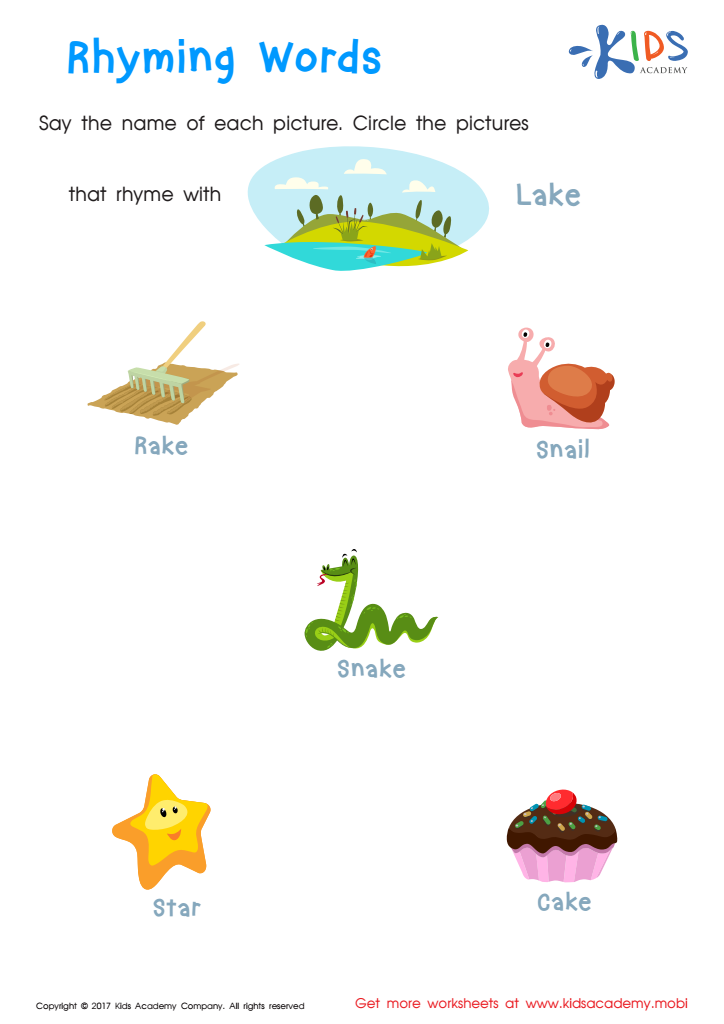
Rhyming Words Rhyming Worksheet
 Assign to My Students
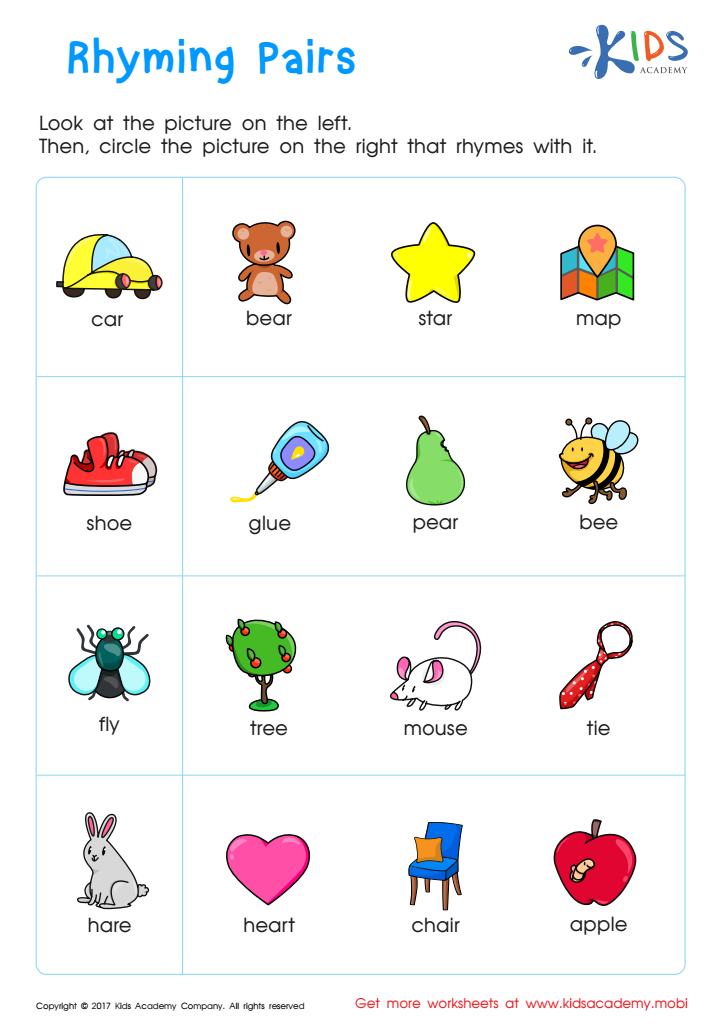
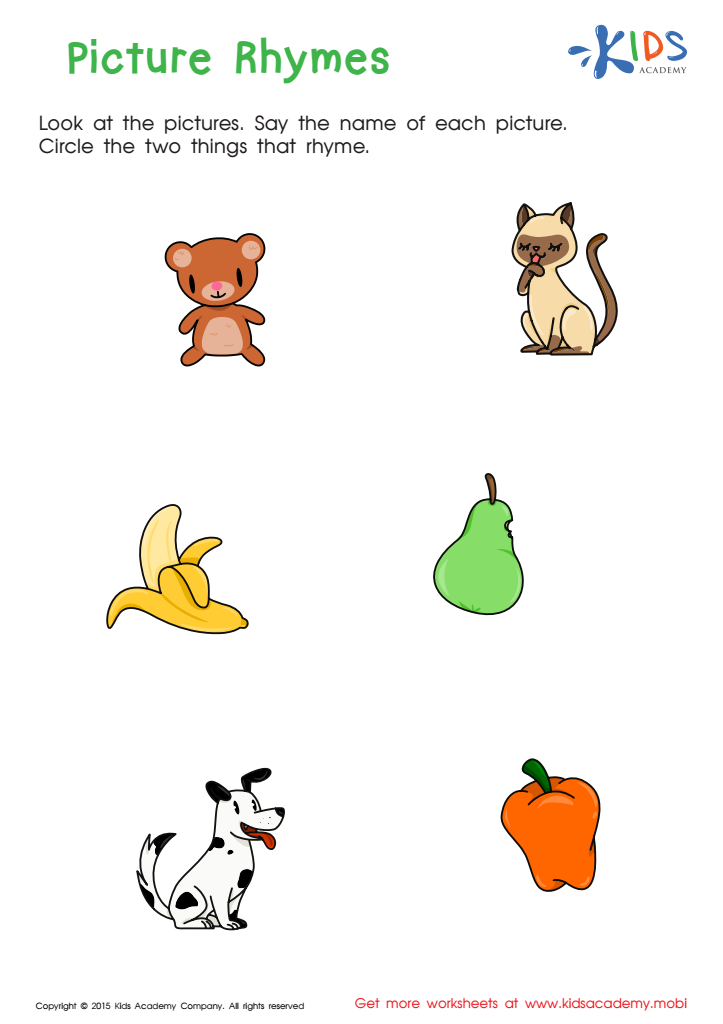
First Words: Picture Rhymes Worksheet




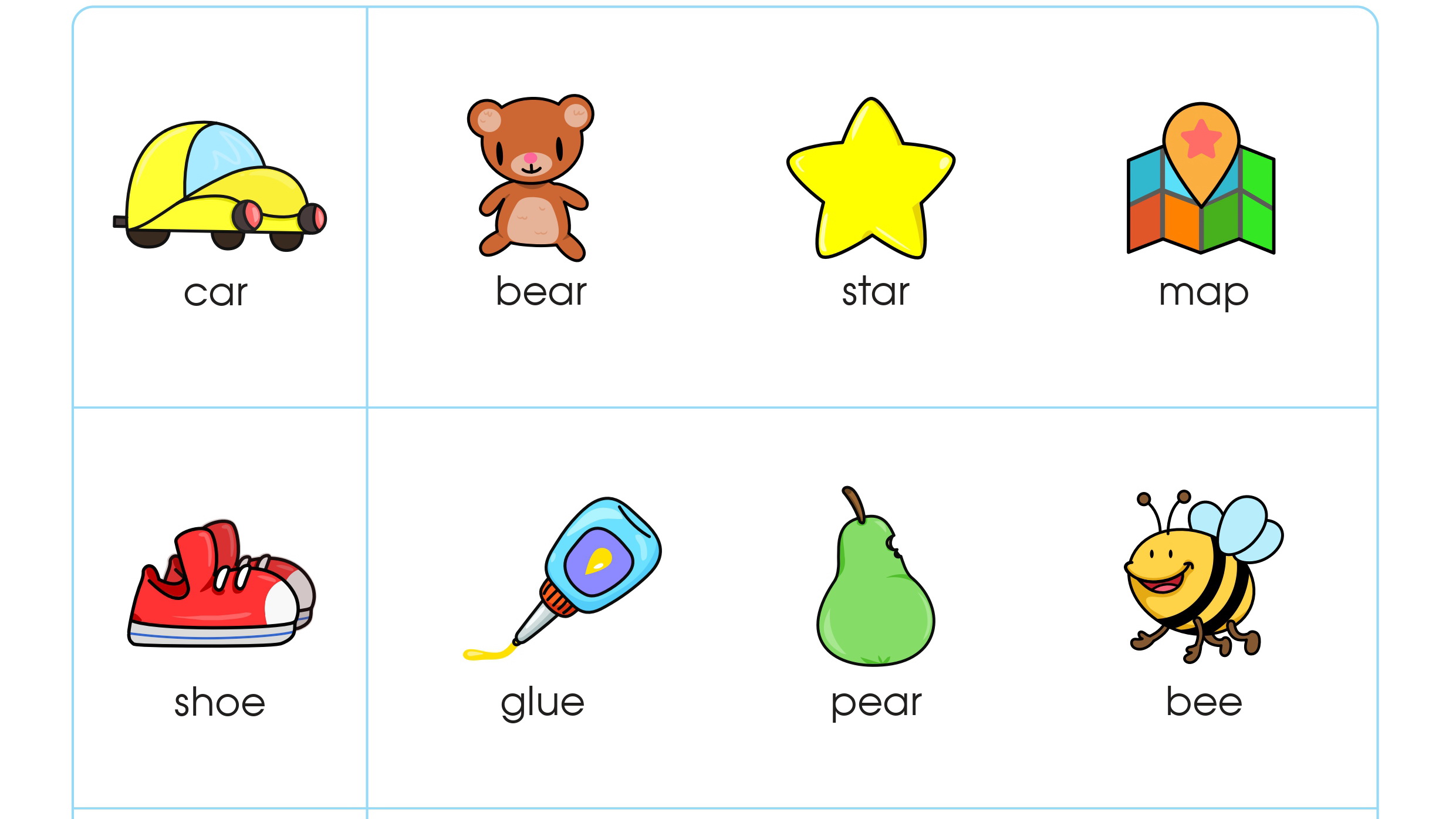


Rhyming skills development is critically important for children aged 4-8 due to its significant impact on early literacy and language development. Rhyming enhances phonemic awareness, which is the ability to recognize and manipulate individual sounds in words—a fundamental skill for reading fluency. When children understand rhymes, they become more adept at decoding words, which improves their reading and spelling capabilities.
Additionally, rhyming activities support vocabulary growth. As children engage with rhyming words, they encounter new vocabulary within a fun and memorable context, which enhances their language acquisition. Rhymes also aid in memory retention. The repetitive and rhythmic nature of rhyming makes it easier for young minds to memorize and recall words and phrases, facilitating better communication skills.
Moreover, rhyming fosters creativity and love for language. Through delightful and playful interaction, children often develop a love for reading and writing, setting a strong foundation for lifelong learning. Furthermore, rhyming activities often involve social interactions, such as singing songs or playing verbal games, promoting social and emotional development.
Parents and teachers who prioritize rhyming skills development are equipping children with the tools needed for academic success and a deep appreciation of language, which underscores its importance in early childhood education.








