Vocabulary expansion Rhyming Words Worksheets for Ages 4-8
4 filtered results
-
From - To
Enhance your child's vocabulary with our engaging Rhyming Words Worksheets, designed specifically for ages 4-8! These worksheets offer a fun and interactive way to help young learners recognize, generate, and expand their vocabulary through the enjoyment of rhymes. With colorful visuals and age-appropriate exercises, children will develop essential phonemic awareness, improve their reading skills, and boost their confidence in literacy. Our resources not only make learning enjoyable but also provide valuable practice for foundational language skills. Perfect for teachers and parents alike, these worksheets support early childhood education in a playful and effective manner. Start your child's rhyming adventure today!
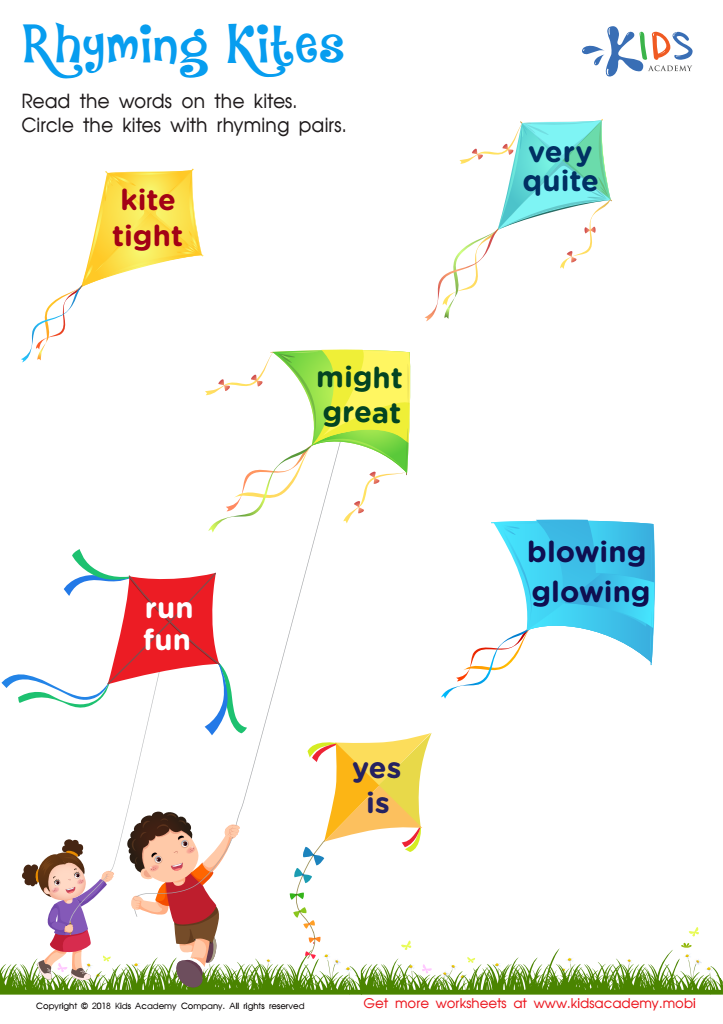
Rhyming Kites Worksheet
 Assign to My Students
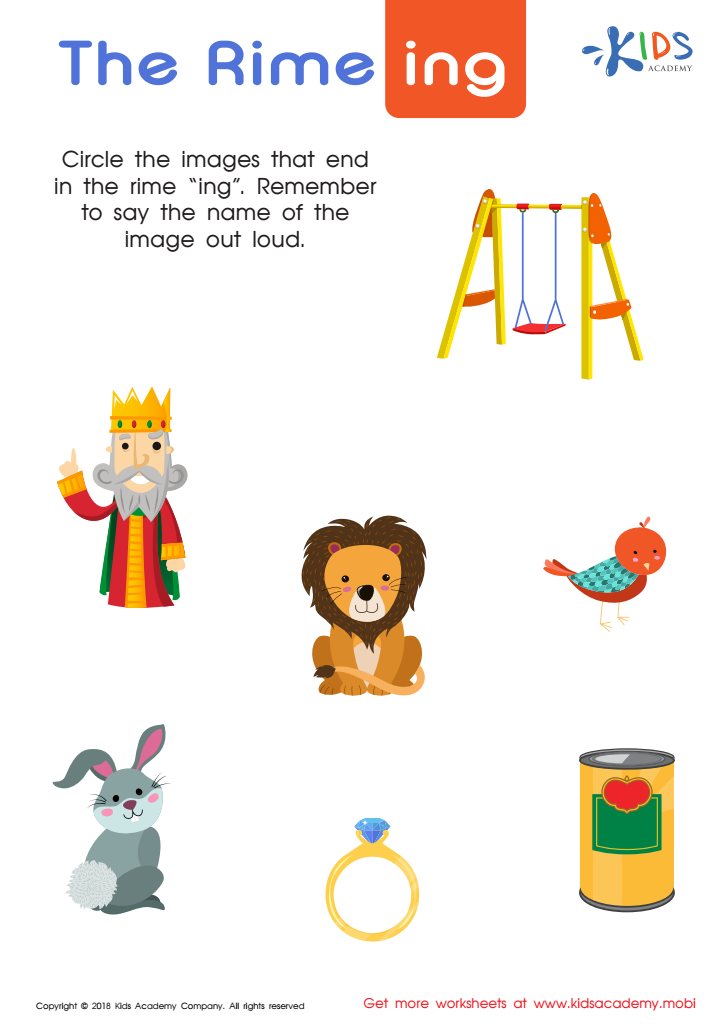
The Rime "ing" Worksheet
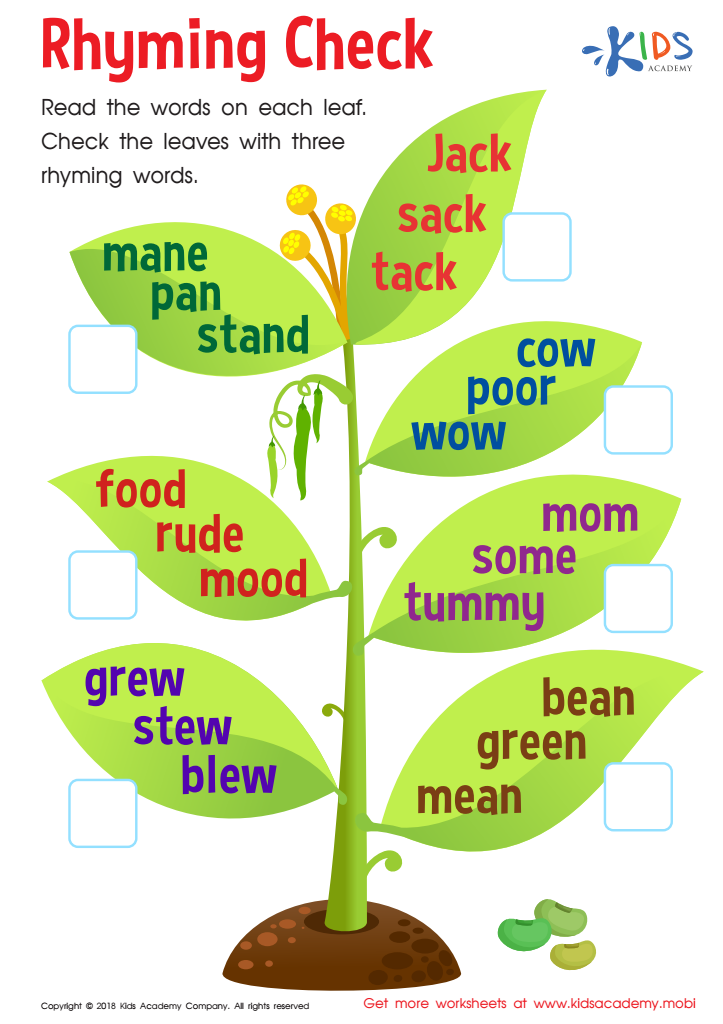
Rhyming Check Worksheet
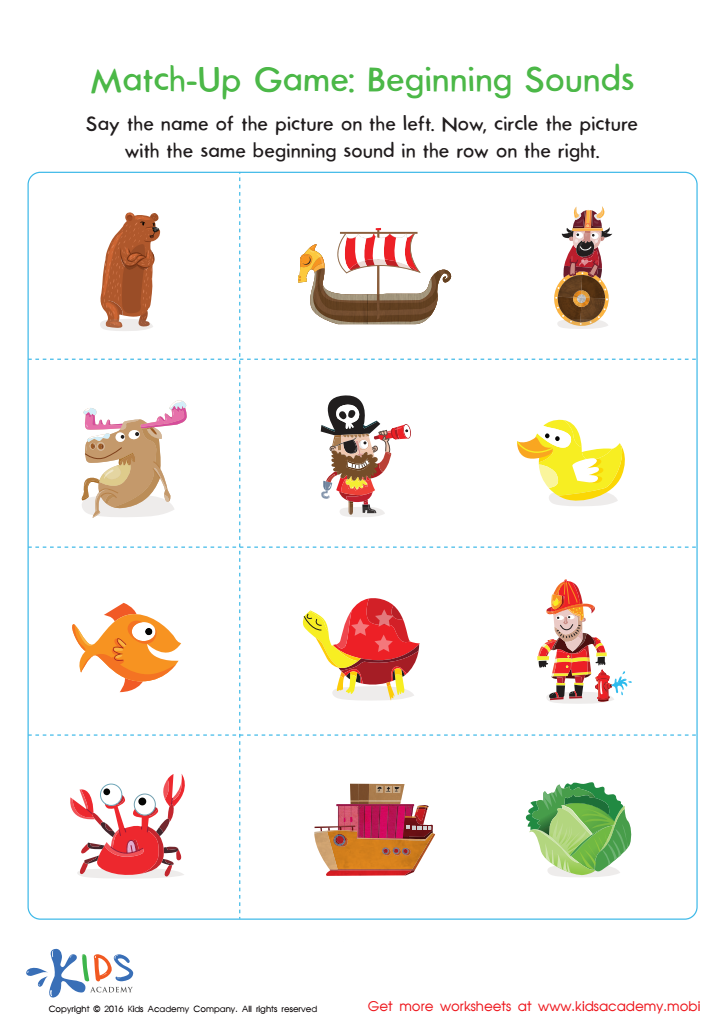
Match–Up Game: Beginning Sounds Worksheet








Vocabulary expansion, particularly through the use of rhyming words, is essential for children aged 4-8. This developmental stage is crucial for language acquisition, and rhyming plays a significant role in this process. Rhyming words enhance phonemic awareness, which is the ability to hear, identify, and manipulate individual sounds in spoken words. This skill is foundational for reading success and helps children understand spelling patterns and phonics.
Incorporating rhyming words into vocabulary building activities makes learning fun and engaging. This can lead to increased motivation and a positive attitude towards reading and language. As children recognize and produce rhymes, their confidence grows, allowing them to participate more actively in conversations and storytelling.
Furthermore, a rich vocabulary supports overall literacy development. It enables children to express themselves more clearly and understand others better, fostering social skills and emotional intelligence. Parents and teachers can utilize songs, games, and storytelling that emphasize rhymes to create a collaborative learning experiences. By prioritizing vocabulary expansion through rhyming, caregivers can build a solid linguistic foundation that will benefit children not only academically but also socially, equipping them with essential communication skills for the future. This investment in early literacy pays dividends throughout their educational journey.








