Counting practice Sight Words Worksheets for Ages 4-8
7 filtered results
Difficulty Level
Grade
Age
-
From - To
Subject
Activity
Standards
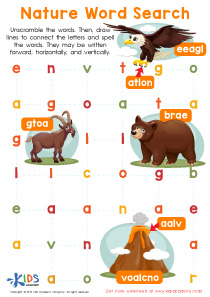
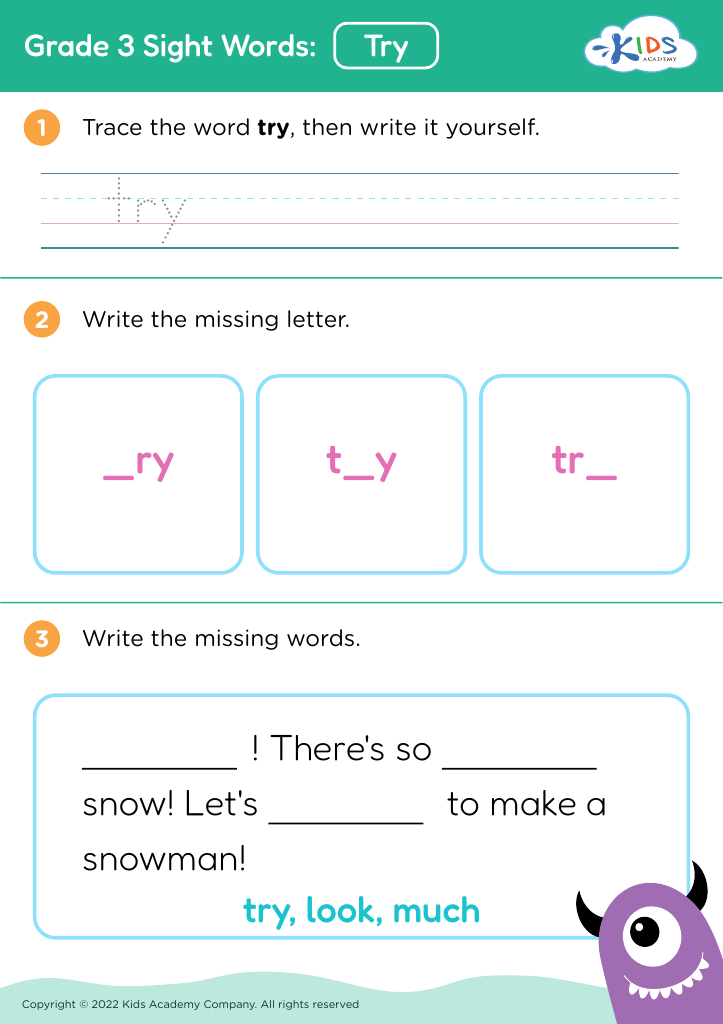
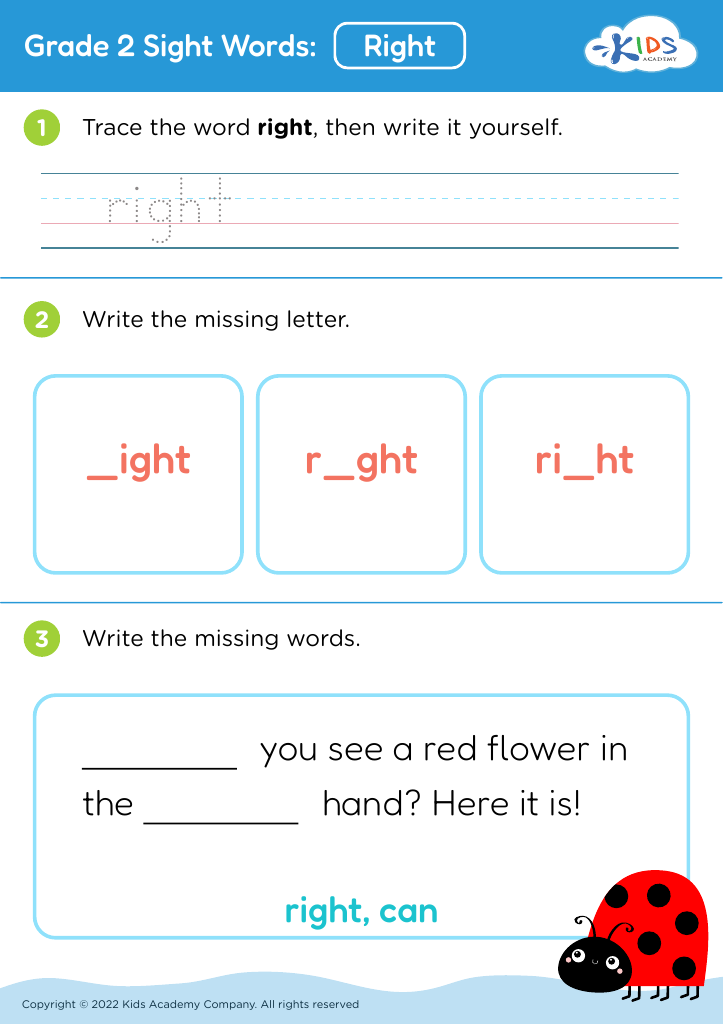
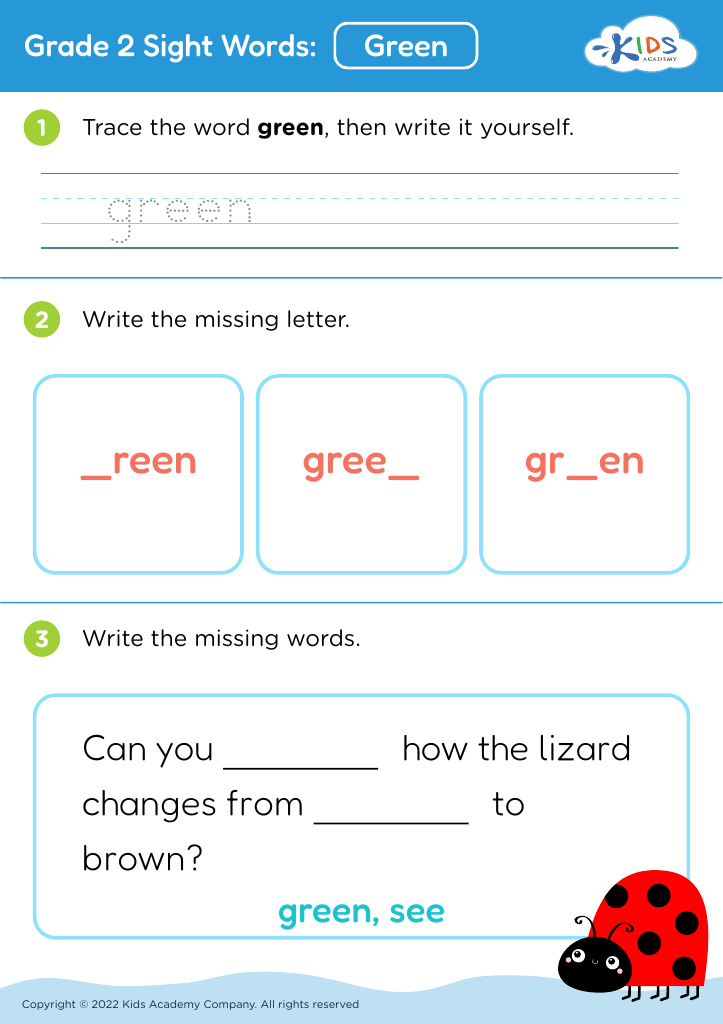
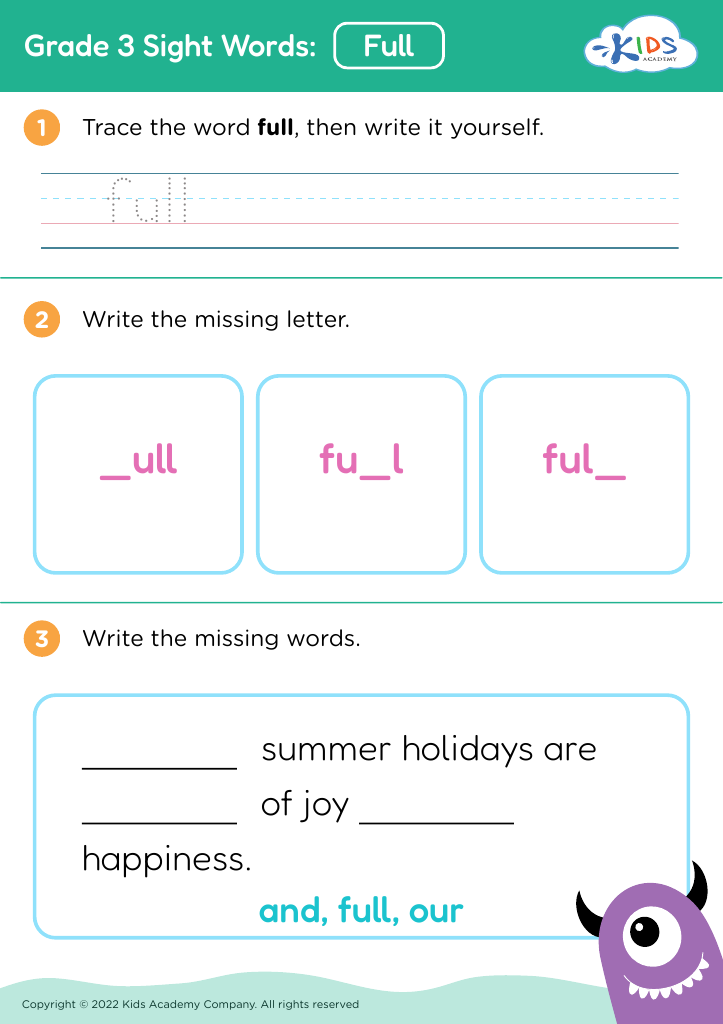
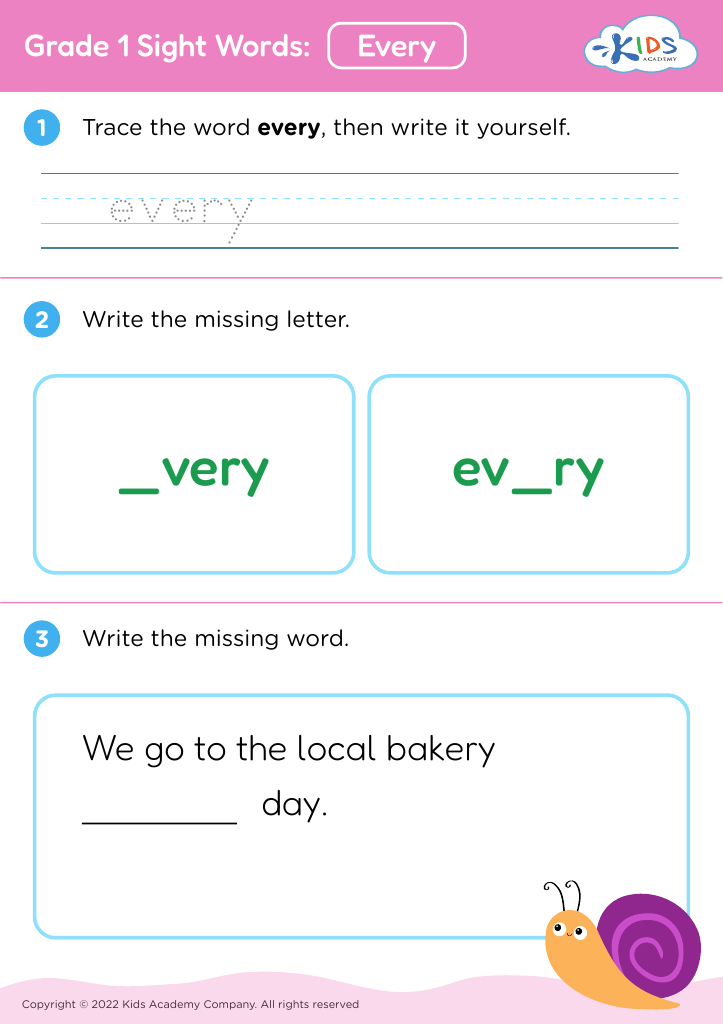
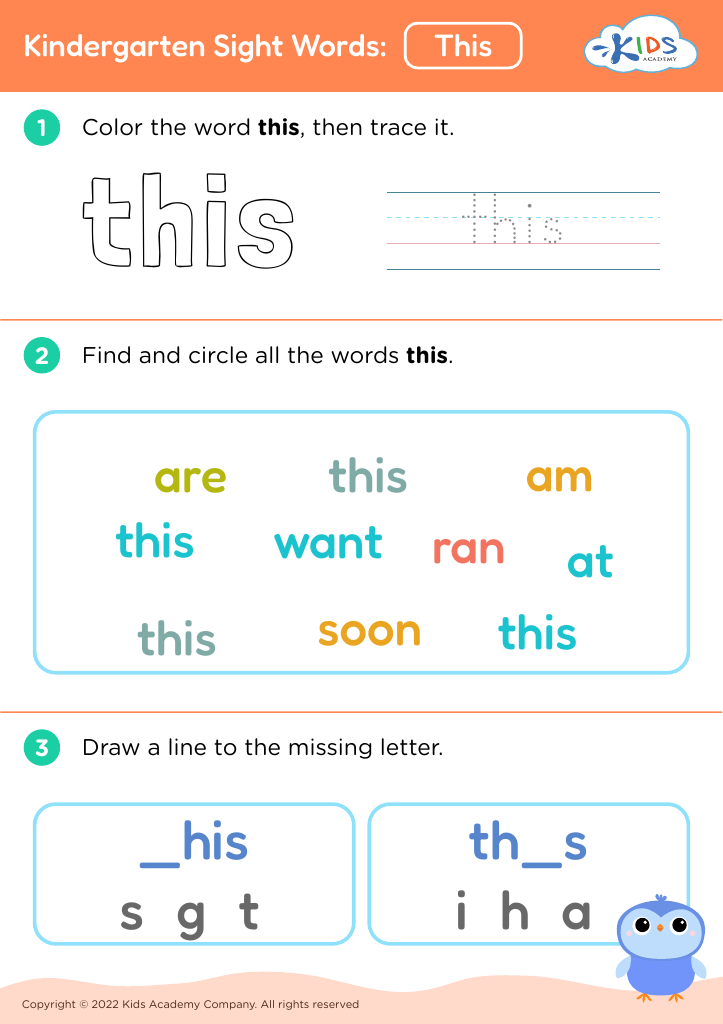
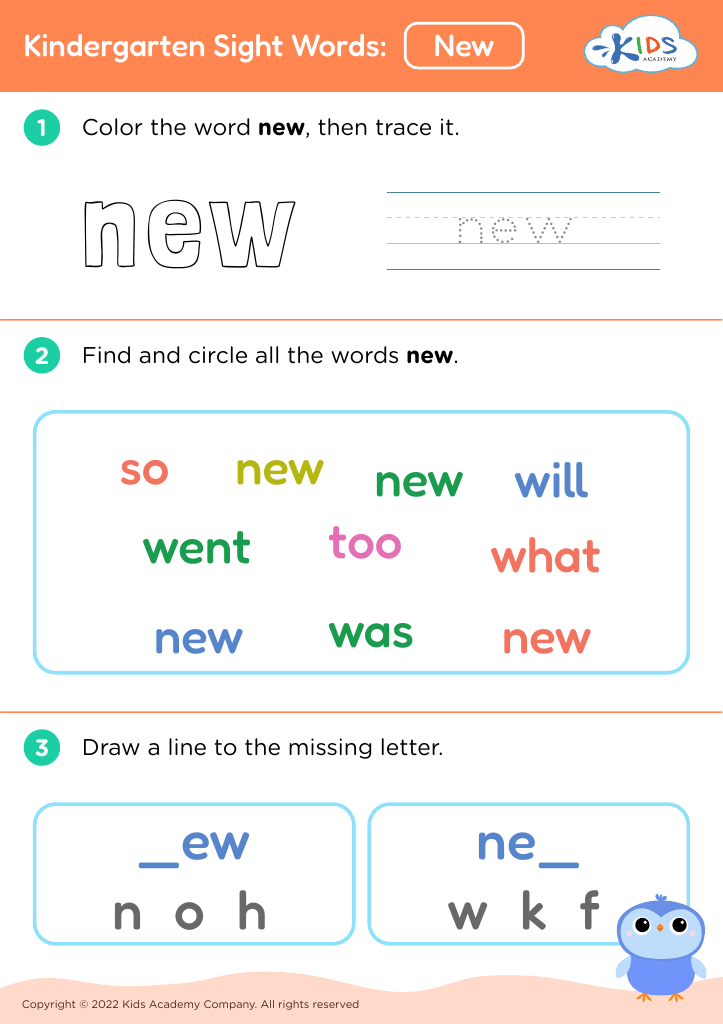
Enhance your child's literacy and math skills with our Counting Practice Sight Words Worksheets, designed specifically for ages 4-8. These engaging, printable worksheets seamlessly blend sight word recognition with foundational counting concepts. Children will enjoy fun activities that incorporate counting exercises alongside practicing essential sight words, fostering a love for learning. Perfect for homeschooling or supplementary learning, these worksheets help boost vocabulary, improve reading fluency, and strengthen number recognition. Each activity encourages independent and interactive learning, making counting and reading a delightful experience. Explore our resources today, and watch your child thrive as they gain confidence in literacy and numeracy!
Favorites
With answer key
Interactive







Join Kids Academy for Free
Who is primarily going to use this learning content?








Counting practice and sight words are essential components of early literacy and numeracy skills for children ages 4-8. Parents and teachers should prioritize these foundations for several reasons.
Firstly, counting practice enhances a child's understanding of number concepts, facilitating the development of problem-solving and critical thinking skills. Mastery of counting lays the groundwork for more complex mathematical operations, ensuring children become confident with numbers as they progress in their education.
On the other hand, sight words are vital for reading fluency. Recognizing common sight words allows children to read more smoothly and with better comprehension. This familiarity with words helps to reduce frustration and build confidence in young readers, promoting a love for reading and learning overall.
Furthermore, combining counting practice with sight words makes learning more engaging. Interactive activities, such as games and songs, can reinforce these skills while making them enjoyable.
Ultimately, the ability to count and read fluently fosters essential skills for lifelong learning, preparing children for academic success and everyday life. In nurturing these competencies, parents and teachers play a crucial role in shaping a child's future. Emphasizing counting practice and sight words is investment in their intellectual growth and overall development.