Practice addition Sight Words Worksheets for Ages 4-8
3 filtered results
-
From - To
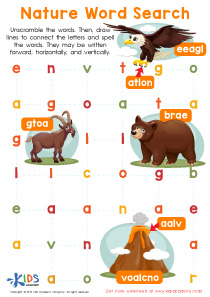
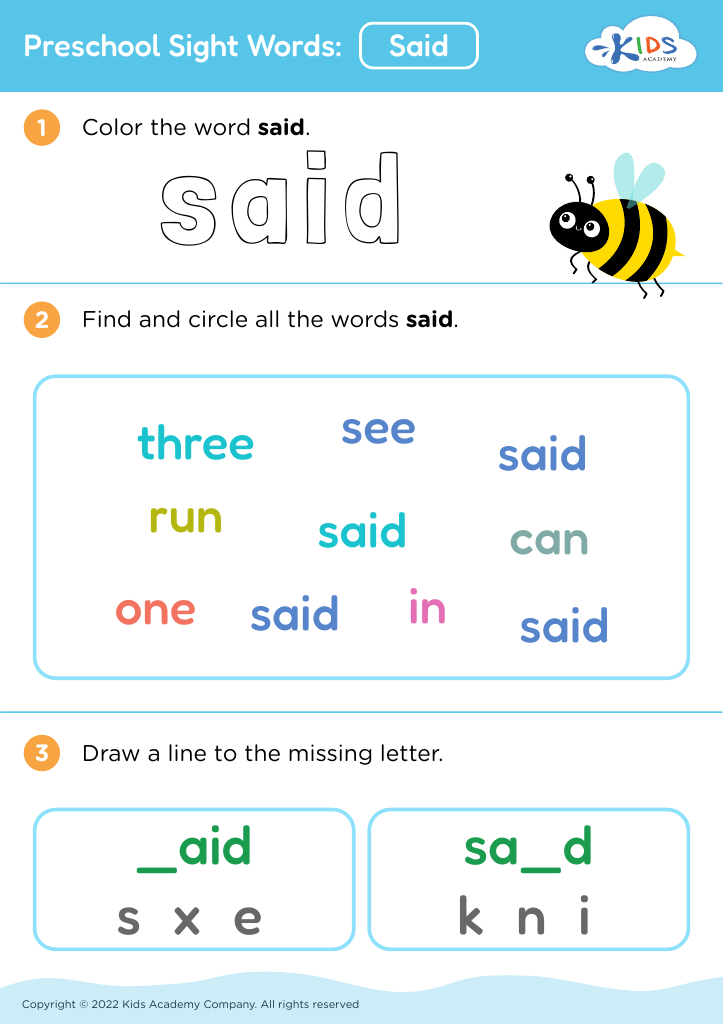
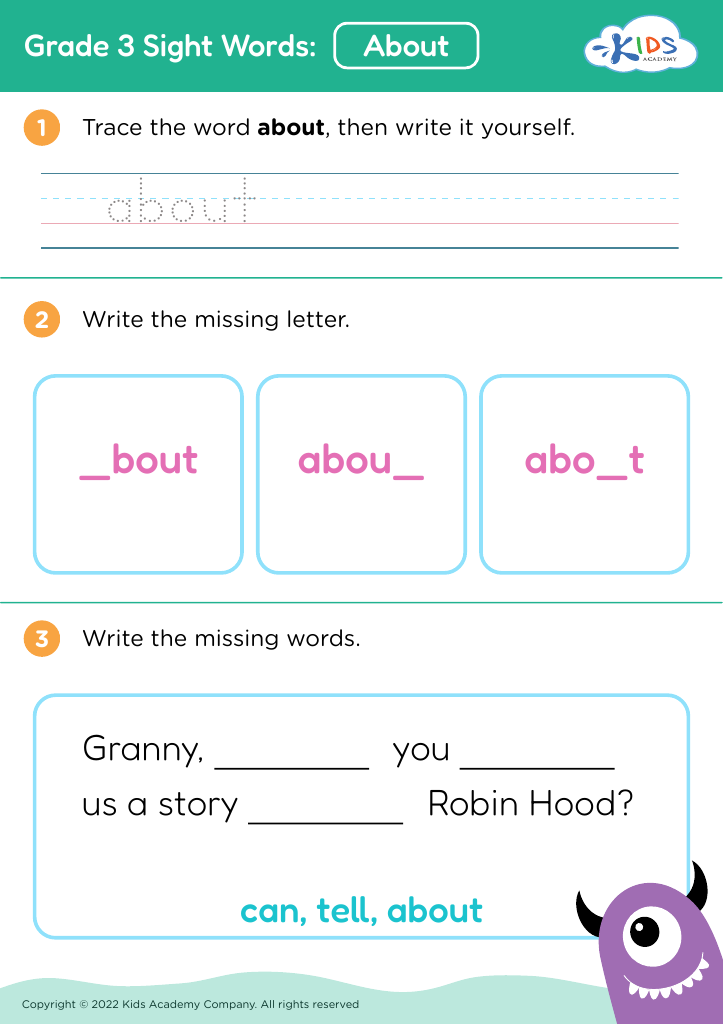
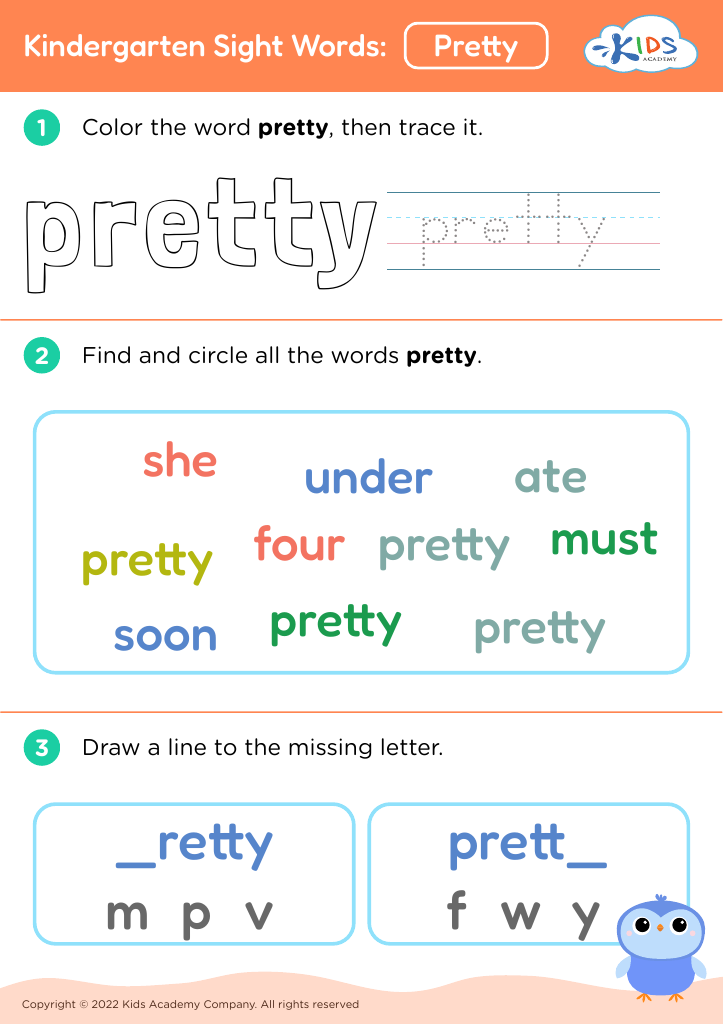
Welcome to our "Practice Addition and Sight Words Worksheets" page for children aged 4-8! Here, you’ll find engaging and interactive worksheets designed to enhance your child’s math and reading skills simultaneously. Our resources focus on building a strong foundation in addition while familiarizing kids with essential sight words. Each worksheet combines fun activities that promote learning through games and exercises, ensuring your child stays motivated. Perfect for home or classroom use, these worksheets help create a seamless connection between arithmetic and reading, setting the stage for future academic success. Encourage your young learners to explore, practice, and grow with us!













.jpg)

Practice addition sight words for ages 4-8 is crucial for early literacy and numeracy development. Sight words are high-frequency words that children should recognize instantly, enhancing their reading fluency. For young learners, mastering these words increases their confidence and engagement in reading, ultimately leading to improved comprehension. Similarly, practicing addition reinforces foundational math skills that are crucial during these formative years.
When children frequently encounter sight words and addition problems, they develop automaticity, allowing them to focus on understanding the text or mathematical concepts rather than getting caught up by individual words or numbers. This seamless reading and problem-solving experience fosters a love for learning and encourages exploration.
Parents and teachers play a vital role in creating supportive learning environments. By incorporating sight word and addition practice into daily routines, they strengthen kids' cognitive and language skills, preparing them for more advanced topics later. Encouragement and personalized attention are essential, as they cater to each child’s unique learning pace, making the process enjoyable rather than daunting. So, investing time in these practices ensures children build the confidence and competency they need for future academic success.