Critical thinking skills Animals Worksheets for Ages 4-8
3 filtered results
Difficulty Level
Grade
Age
-
From - To
Subject
Activity
Standards
Nurture young minds with our "Critical Thinking Skills Animals Worksheets for Ages 4-8". Designed to stimulate curiosity and sharpen analytical skills, these engaging worksheets explore the fascinating world of animals. Each activity encourages children to observe, compare, and reflect on various animal characteristics and habitats. Perfect for classroom or home use, our worksheets align with educational standards and are tailored to promote logical reasoning and problem-solving abilities in early learners. Help your child develop essential critical thinking capabilities while having fun discovering the wonders of the animal kingdom with our thoughtfully crafted resources!
Favorites
With answer key
Interactive
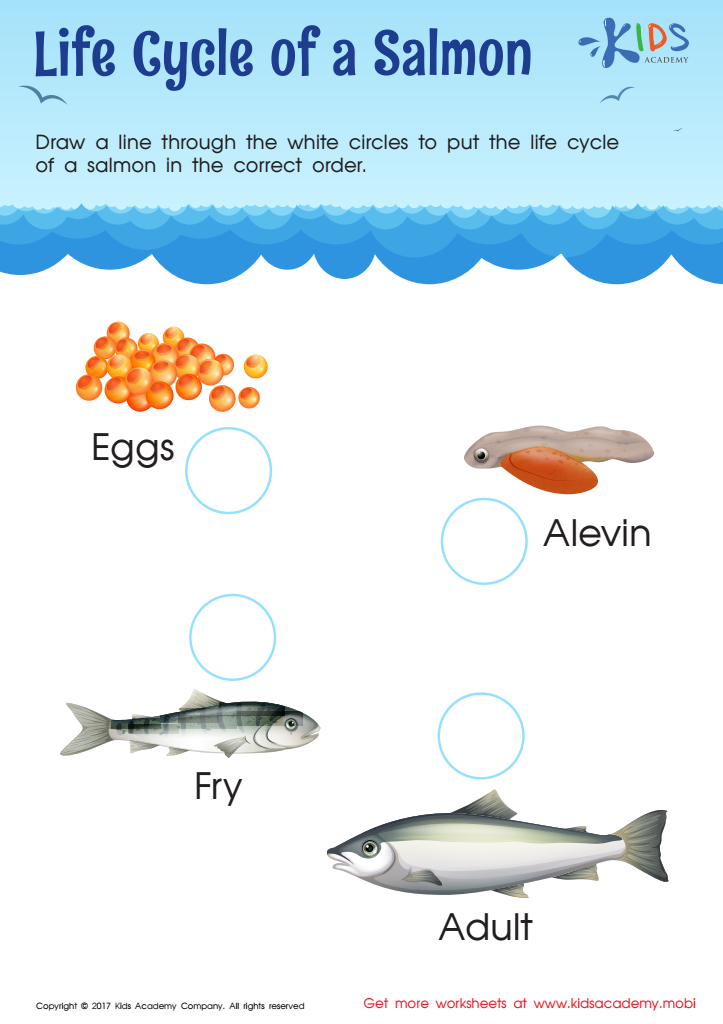
Cycle Of Salmon Worksheet
Explore the life cycle of a salmon with this grade 2 worksheet! Kids will learn by arranging the stages of the salmon's lifecycle in order. Science activities in this set cover a wide range of lifecycles in nature.
 Assign to My Students
Cycle Of Salmon Worksheet
Worksheet
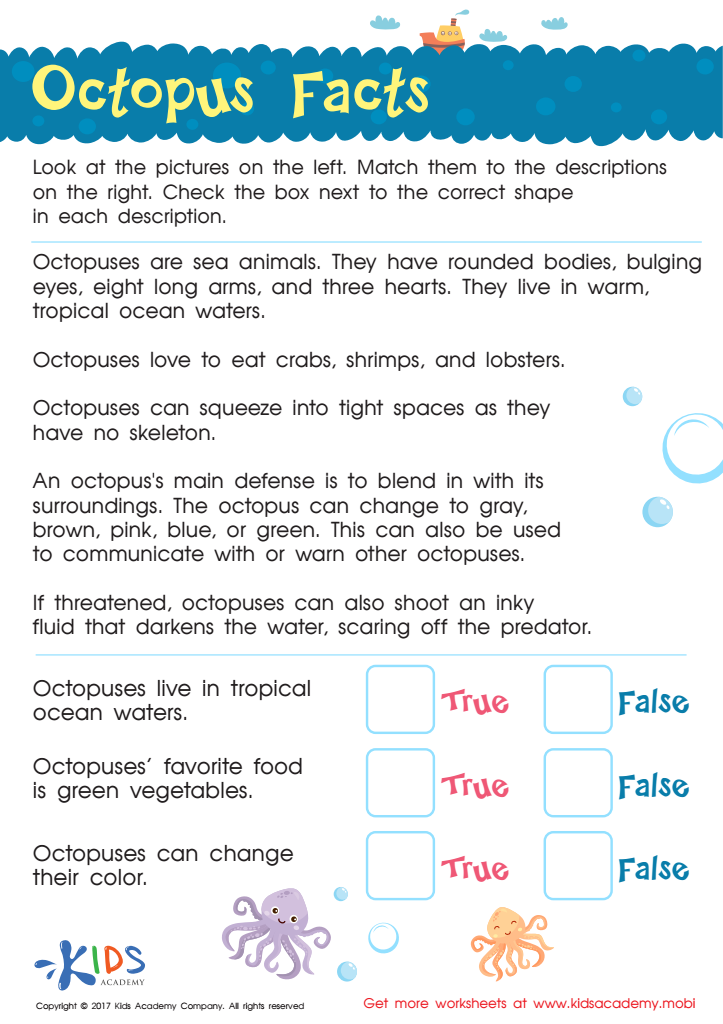
Octopus Facts Worksheet For Kids
Let your child dive into the world of octopuses with this fun worksheet. It offers invaluable practice in reading non-fiction texts, while they learn interesting facts about these strange sea creatures. It's a great way to help them hone their skills in reading comprehension.
Octopus Facts Worksheet For Kids
Worksheet
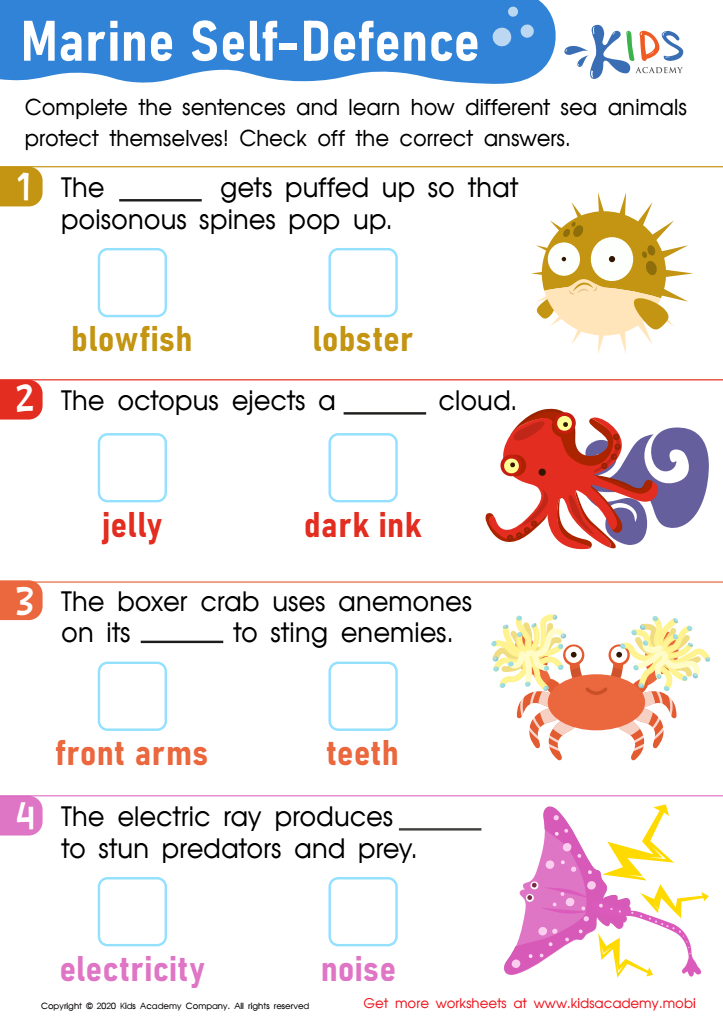
Marine Self-Defence Worksheet
Kids will love discovering the ingenious ways sea creatures protect themselves from predators such as sharks and whales! Let them explore the strategies with this fun science worksheet, which features vibrant illustrations. Have them fill in the blanks with each creature's defense strategy, such as shells, spikes, ink, or even electricity!
Marine Self-Defence Worksheet
Worksheet
Join Kids Academy for Free
Who is primarily going to use this learning content?








Cultivating critical thinking skills in children aged 4-8 is vital because it forms the foundation for lifelong learning and decision-making. Engaging kids in discussions about animals serves as an effective and engaging way to develop these skills. Animals naturally fascinate young minds, making them an excellent entry point for teaching basic concepts of observation, reasoning, and inquiry.
When parents or teachers encourage children to think critically about animals, they nurture curiosity and encourage the asking of questions like "Why do birds have different beak shapes?" or "How do fish breathe underwater?" Such questions require children to analyze information, draw comparisons, and make connections, which are fundamental aspects of critical thinking.
Discussing various animals' behaviors and habitats also helps children understand broader concepts such as ecosystems and adaptation. This not only enhances their appreciation of the natural world but also teaches them to recognize cause and effect, a principle applicable to all areas of learning and life.
Moreover, critical thinking about animals can improve empathy and ethical reasoning. By considering how animals live and what they need to thrive, children can develop a deeper sense of empathy and responsibility towards living creatures.
Overall, nurturing critical thinking through the lens of learning about animals equips children with cognitive and emotional skills essential for their academic and personal futures.