
Comprehension skills History Worksheets for Ages 4-8
4 filtered results
Difficulty Level
Grade
Age
-
From - To
Subject
Activity
Standards
Unlock a world of historical adventure with our Comprehension Skills History Worksheets for Ages 4-8. Designed by experts, these worksheets make learning history engaging and fun for young children. Each activity is crafted to build crucial comprehension skills, fostering curiosity and a love for learning. Through interactive and age-appropriate exercises, children will explore essential historical concepts and important figures while developing their ability to understand and process information. Perfect for at-home learning or classroom use, our worksheets provide a foundational step in historical literacy, ensuring young minds embark on a rewarding educational journey.
Favorites
With answer key
Interactive
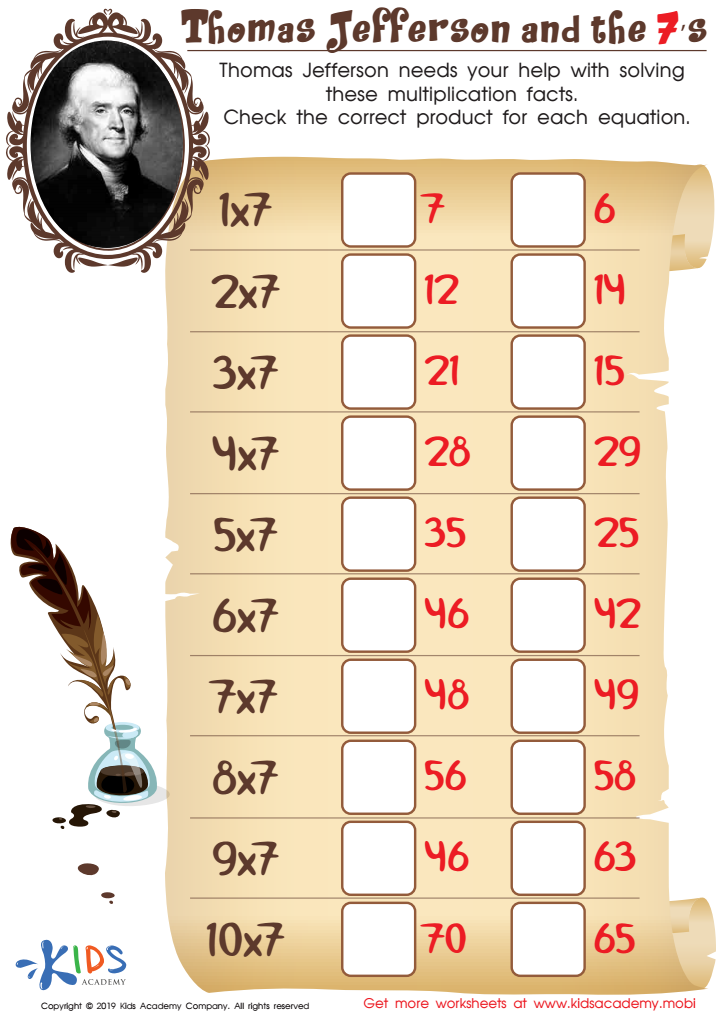
Thomas Jefferson and the 7’s Worksheet
Thomas Jefferson championed education and wants kids to know their times tables. Help your child with this worksheet focusing on 7's. Check the box for the correct answer for each multiplication problem. Make sure your child gets the facts right!
 Assign to My Students
Thomas Jefferson and the 7’s Worksheet
Worksheet
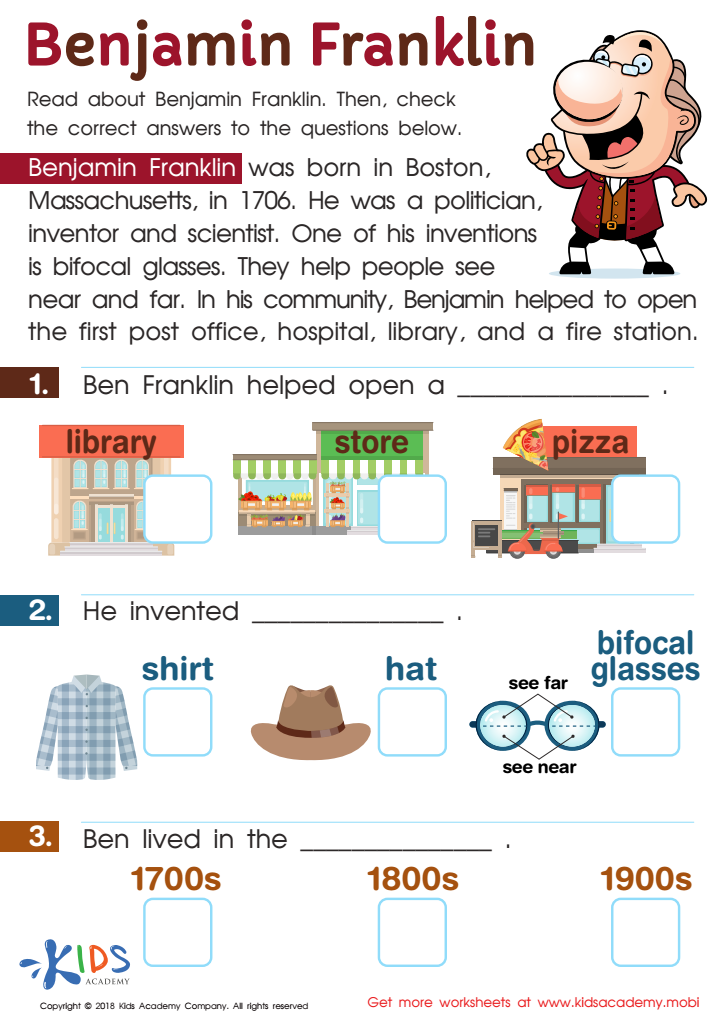
Benjamin Franklin Worksheet
Introduce your kids to one of history's most important figures - Benjamin Franklin! Tell them all about his remarkable contributions to the world and then use this worksheet to teach them even more. Read the text to them and check their answers against the questions afterwards.
Benjamin Franklin Worksheet
Worksheet
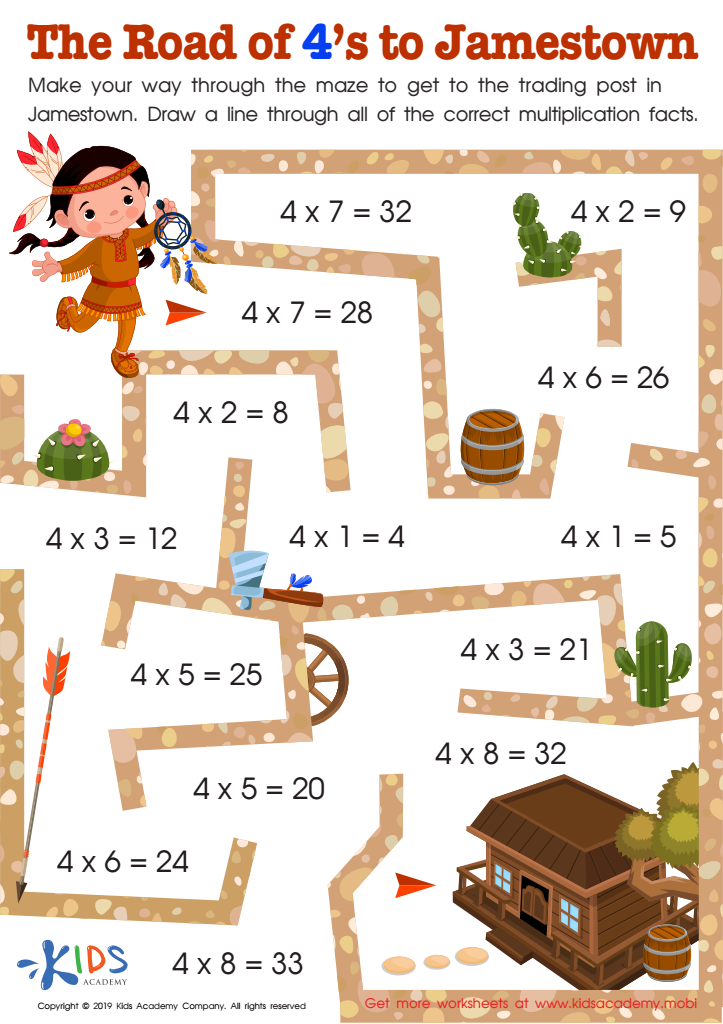
The Road of 4’s to Jamestown Worksheet
Does your child enjoy trips? Help them remember the best ones with this fun worksheet maze! Get your kid to look at the picture and draw a line through all the right multiplication facts to get to Jamestown's trading post. This worksheet is a great way to stimulate their problem-solving skills.
The Road of 4’s to Jamestown Worksheet
Worksheet
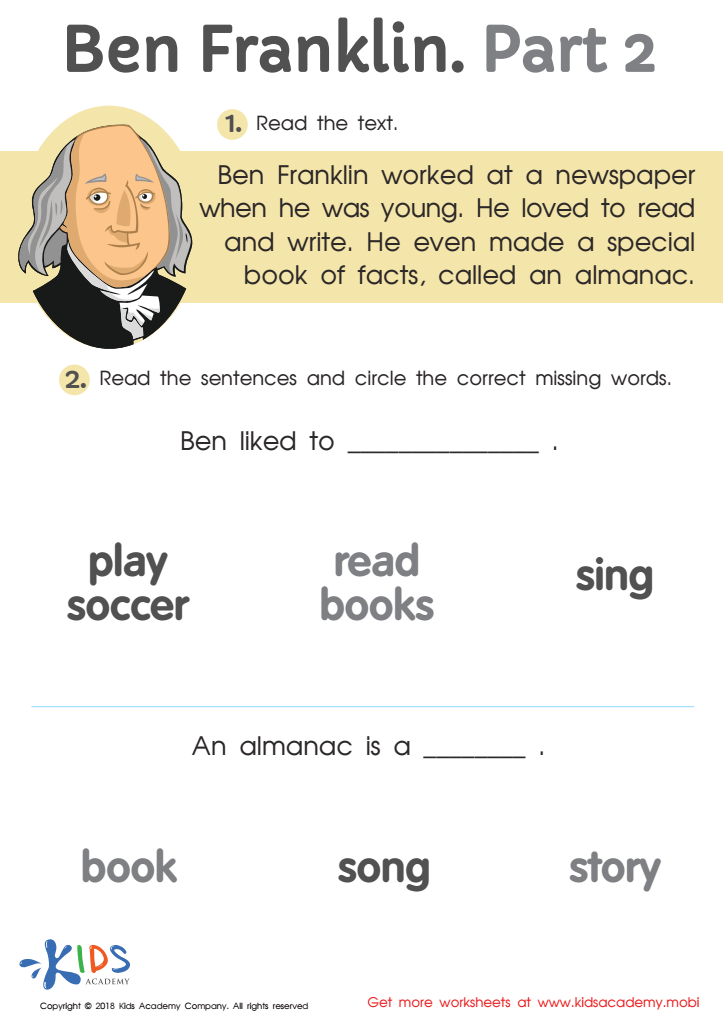
Ben Franklin Part 2 Worksheet
History is filled with great figures, like Benjamin Franklin. Let your kids in on the legacy by introducing them to the founder of the US fire department, diplomat, and inventor. Then, use a worksheet to have them fill in the blanks with the correct word to teach them more. Read the text, then read the sentences and have them circle the missing word.
Ben Franklin Part 2 Worksheet
Worksheet
Join Kids Academy for Free
Who is primarily going to use this learning content?







Comprehension skills are the foundation of all learning, making them crucial for young children aged 4-8. At this age, children are rapidly acquiring language and cognitive skills that will form the basis of their academic and social development. Understanding the history behind comprehension can provide insights into effective teaching practices and strategies for fostering these essential skills.
From an educational perspective, comprehension skill-building has evolved significantly. Early educational theories emphasized rote learning and memorization. However, contemporary approaches prioritize critical thinking and understanding, reflecting a history of educational reform aimed at enriching students' cognitive abilities. Teachers who understand this history are better equipped to employ methods that promote active engagement and deeper learning, such as storytelling, interactive reading, and discussion-based activities.
For parents, recognizing the history and importance of comprehension skills underscores the value of incorporating reading and dialogue into daily routines. Engaging children with diverse books, asking open-ended questions, and encouraging curiosity enriches their comprehension abilities. Strong comprehension skills aid not only in academic success but also in navigating social interactions and solving problems effectively.
In essence, investing in comprehension skills ensures that children develop the ability to think critically and understand complex ideas, setting a strong foundation for lifelong learning and personal growth. Understanding its historical evolution can guide educators and parents in adopting the most effective, evidence-based strategies for young learners.








