
Understanding patterns History Worksheets for Ages 4-8
3 filtered results
Difficulty Level
Grade
Age
-
From - To
Subject
Activity
Standards
Unlock the world of history for your little ones with our "Understanding Patterns History Worksheets" tailored for ages 4 to 8! These engaging worksheets are designed to help children recognize and explore historical patterns, making connections between past events and the present. Each worksheet includes fun activities that challenge young minds to identify sequences, trends, and relationships throughout history. Perfect for early learners, these materials promote critical thinking and enhance foundational social studies skills. Encourage a love for learning and history as your child discovers the significance of patterns in our world. Get started today and watch their curiosity grow!
Favorites
With answer key
Interactive
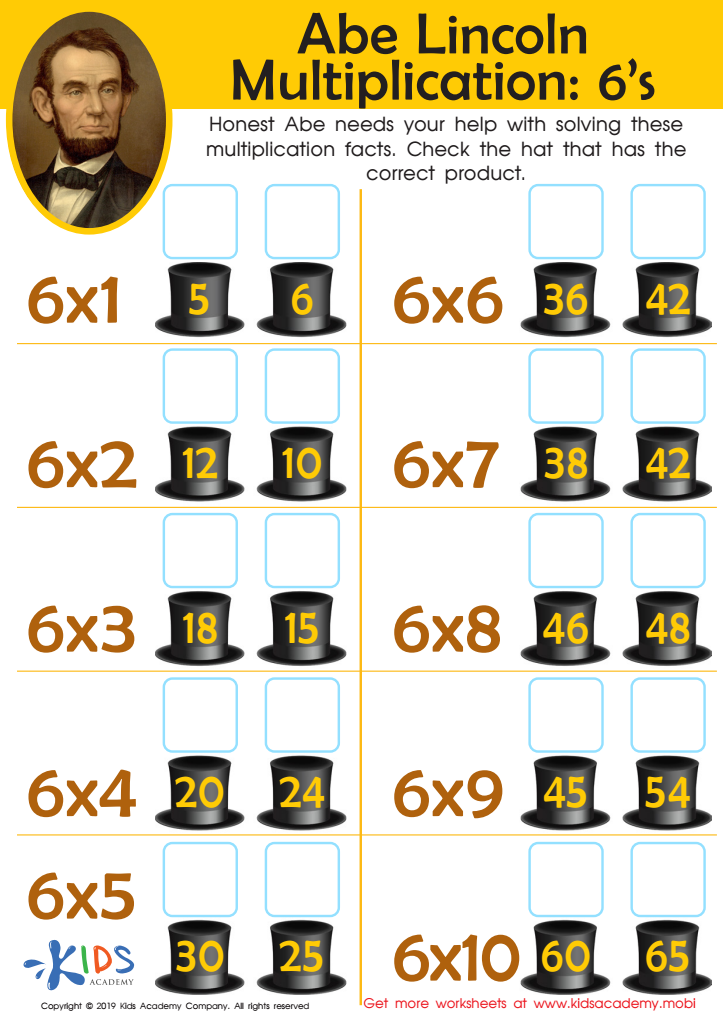
Abe Lincoln Multiplication: 6’s Worksheet
Abraham Lincoln is a key figure in US history. Remind your kids of his contributions and challenge them with this multiplication worksheet! Ask them to solve the facts in the picture and check the hat with the correct product.
 Assign to My Students
Abe Lincoln Multiplication: 6’s Worksheet
Worksheet
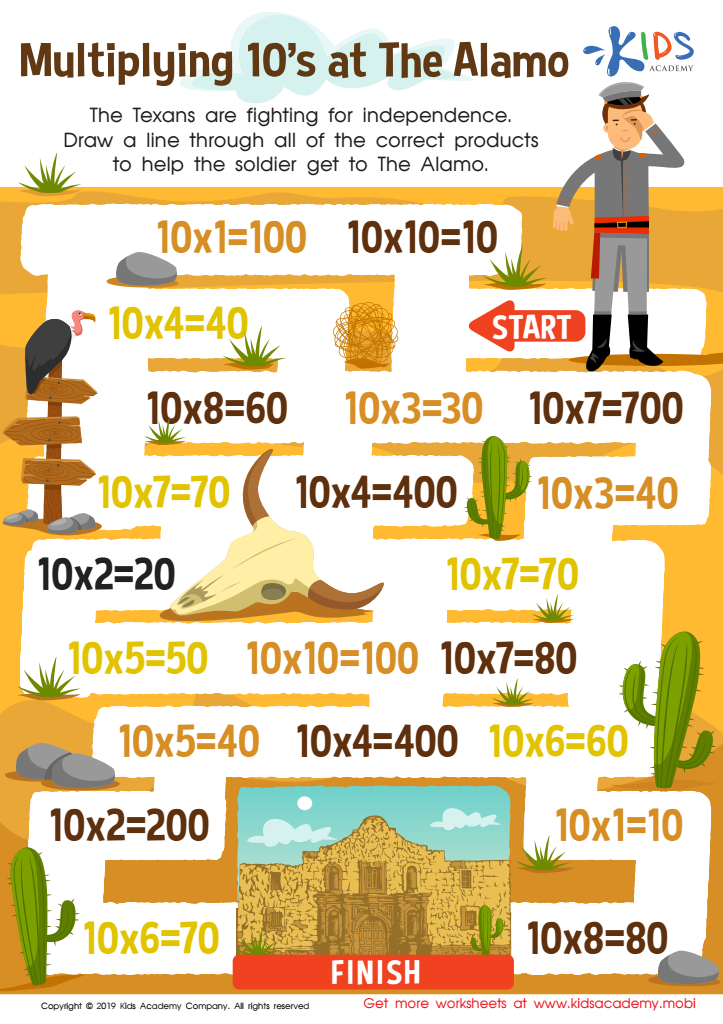
Multiplying 10’s at The Alamo Worksheet
Teach your kids easy tricks to simplify any multiplication problem. For example, when multiplying any number by 10, the result will always end in a zero. To help the Texans in this worksheet, draw a line through all of the correct products to get them to The Alamo.
Multiplying 10’s at The Alamo Worksheet
Worksheet
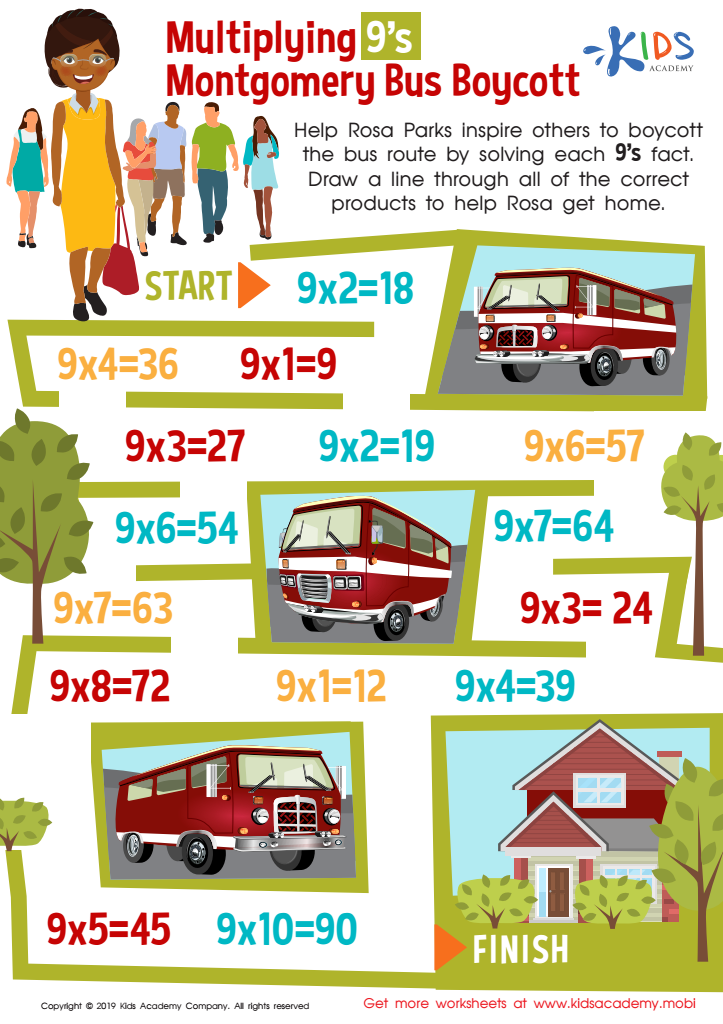
Multiplying 9’s Montgomery Bus Boycott Worksheet
As your students learn math, the numbers get bigger. This worksheet is great for learning the nine times table. Help Rosa Park get home - ask them to solve each multiplication fact, then draw a line through the correct products. Encourage your students to stand up for what's right!
Multiplying 9’s Montgomery Bus Boycott Worksheet
Worksheet
Join Kids Academy for Free
Who is primarily going to use this learning content?





.jpg)


Understanding patterns in history is crucial for children aged 4-8 as it lays the groundwork for vital cognitive skills and critical thinking. When parents and teachers emphasize historical patterns, children learn to recognize sequences and relationships, aiding in their ability to make sense of the world around them. These skills are not only foundational in geography and history but also enhance mathematical abilities, as identifying numerical and thematic patterns often parallels historical trends.
Moreover, contextualizing history through patterns fosters skills like empathy and perspective-taking. Children begin to grasp the social dynamics of different cultures, leading to greater awareness and respect for diversity. This understanding encourages open-mindedness as children consider various viewpoints, a vital component in navigating today’s interconnected world.
Incorporating historical patterns engages children’s curiosity and promotes discussions about cause-and-effect relationships, helping them recognize that actions—whether they be individual or collective—modestly shape the future. These interactions stimulate a love for learning and strengthen families’ and educators’ roles as guides in their growth. Ultimately, by understanding historical patterns, children become more informed citizens, equipping themselves with the tools necessary for responsible participation in society.








