Understanding prepositions Grammar Worksheets for Ages 4-8
4 filtered results
-
From - To
Discover our engaging "Understanding Prepositions" grammar worksheets designed specifically for children ages 4 to 8. These interactive activities help young learners grasp the essential role of prepositions in language, enhancing their writing and communication skills. Each worksheet is crafted to make learning fun, featuring colorful illustrations and relatable context. Children will explore various prepositions through enjoyable exercises, reinforcing their understanding as they practice in a variety of ways. Perfect for classroom use or at-home practice, these resources aim to build confidence and competence in language skills. Start your child’s journey to mastery in prepositions today!
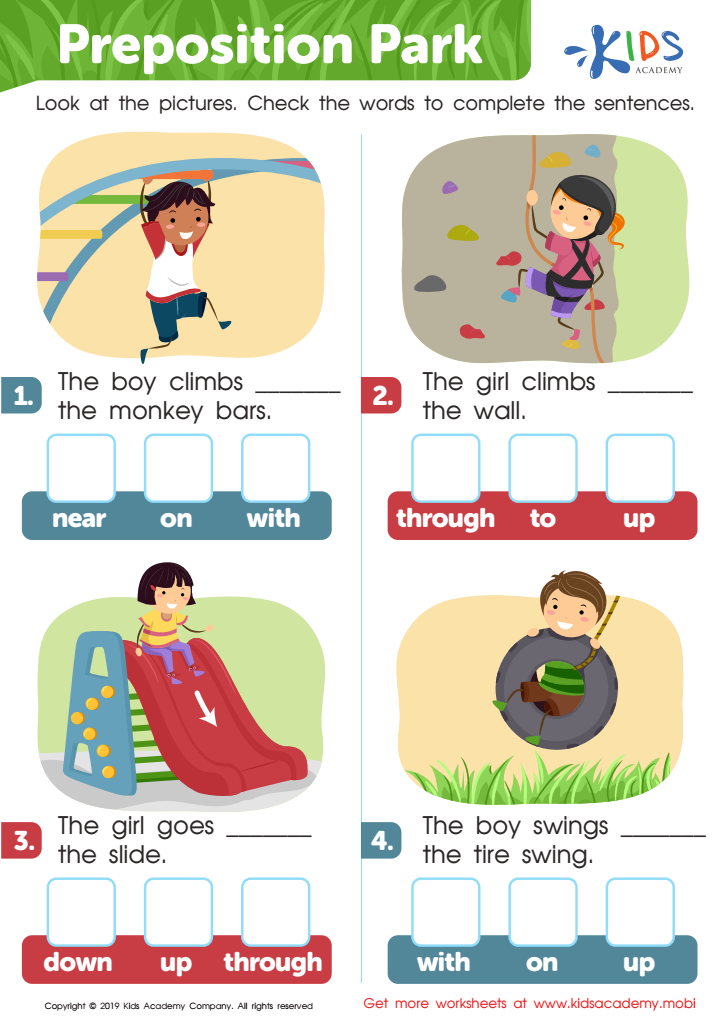
Preposition Park Worksheet
 Assign to My Students
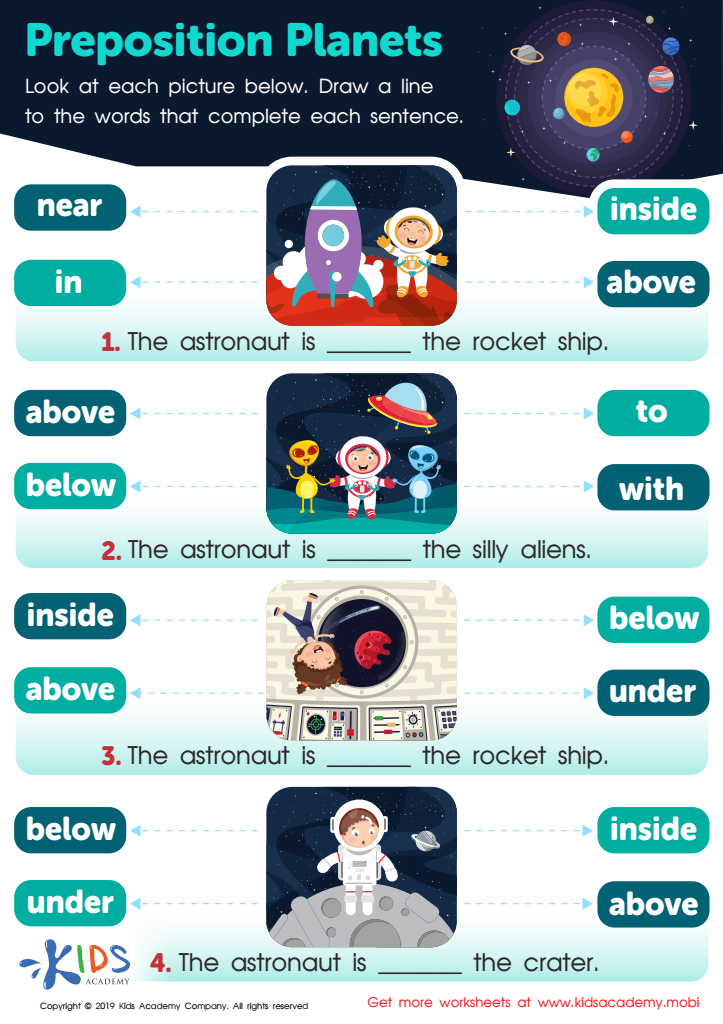
Preposition Planets Worksheet
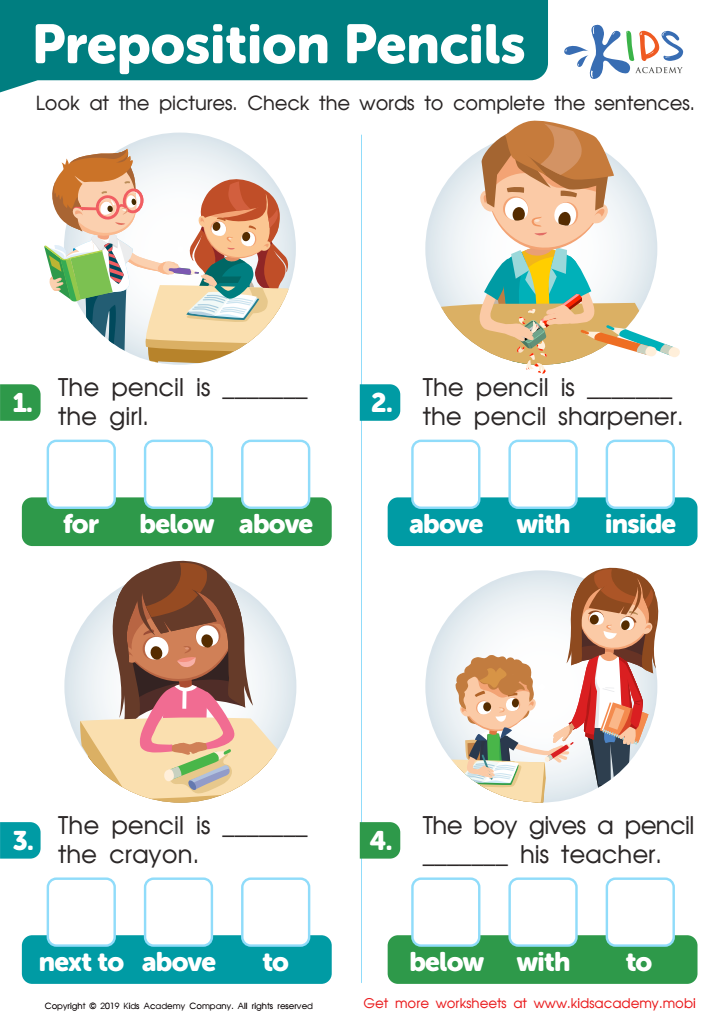
Preposition Pencils Worksheet
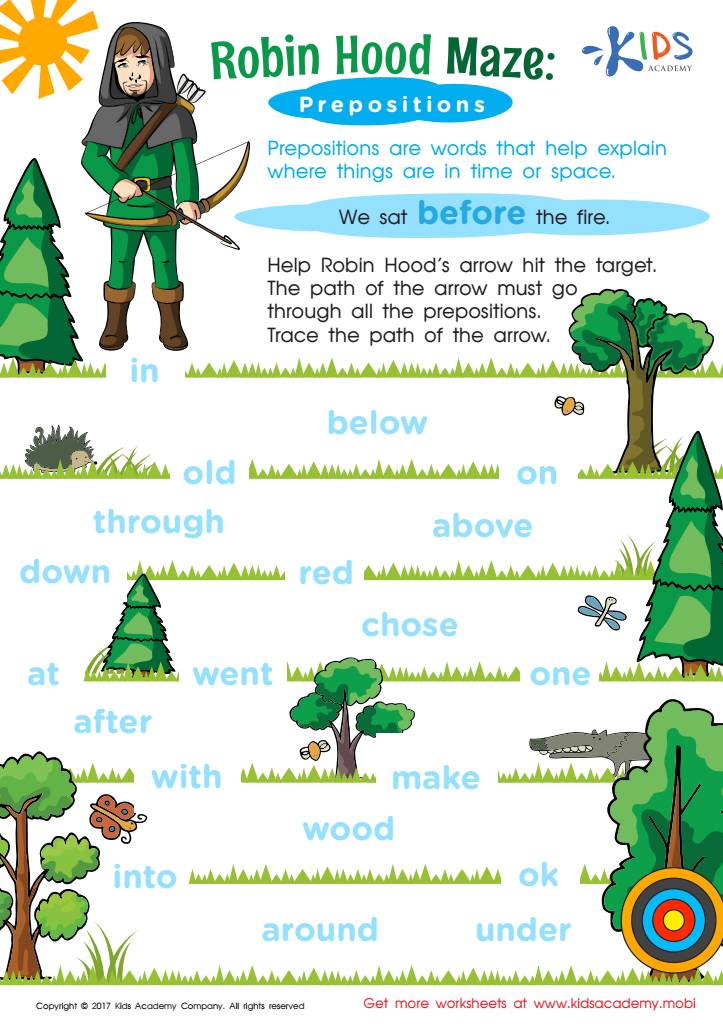
Prepositions Worksheet




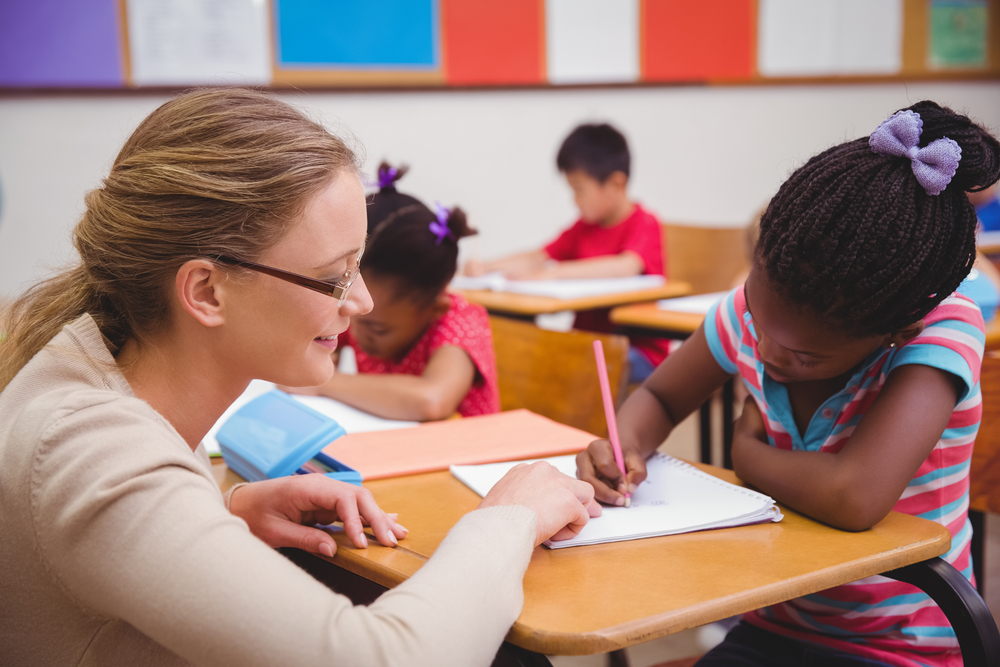

Understanding prepositions is essential for children ages 4-8 as it serves as a foundational element of their language development. Prepositions, which express relationships between different elements in a sentence, help young learners convey ideas clearly and comprehensively. Knowing how to use prepositions like "in," "on," "under," and "between" allows children to describe their surroundings, express actions, and create meaningful connections between objects and people.
For parents and teachers, focusing on prepositions aids in enhancing comprehension skills as children read and listen to stories. When they grasp prepositional phrases, they can understand instructions and narratives better, fostering more engaged and capable learners. Additionally, mastering prepositions promotes critical thinking, as children learn to understand spatial and temporal concepts, which are vital for problem-solving in everyday situations.
Furthermore, early grammar education gives children a boost in their writing skills, equipping them to express their thoughts precisely as they progress through their academic journey. The more adept they are with language, the more confident they become in communication, both verbally and in writing. For these reasons, prioritizing preposition understanding is key to supporting holistic linguistic development in young learners.








