Vowel Recognition Grammar Worksheets for Ages 4-8
4 filtered results
-
From - To
Enhance your child's reading and writing skills with our engaging Vowel Recognition Grammar Worksheets tailored for ages 4-8. These thoughtfully designed activities focus on vowel identification, helping young learners distinguish between short and long vowels through various interactive exercises. Our printable worksheets include fun games, matching activities, and colorful illustrations that captivate children’s attention while promoting phonetic awareness. Ideal for home or classroom use, these resources foster a solid foundation in language arts, ensuring a smooth transition into more complex literacy skills. Start your child's journey towards becoming a confident reader and writer today with our engaging vowel recognition activities!
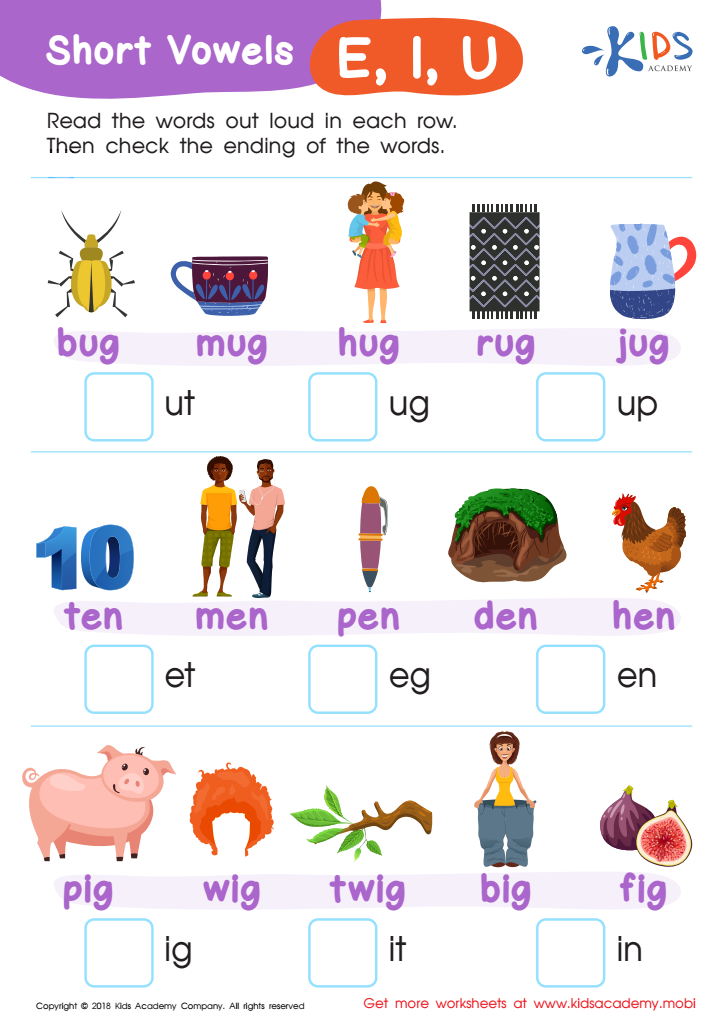
Short Vowels /e/, /i/, and /u/ Worksheet
 Assign to My Students
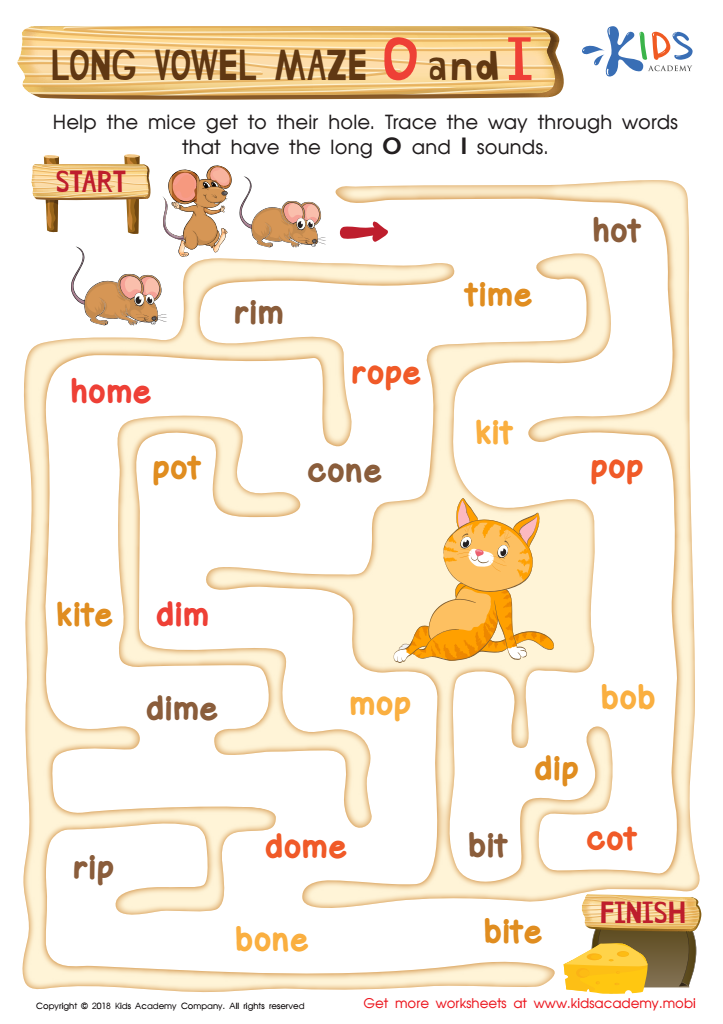
Long Vowel Maze /o/ and /i/ Worksheet
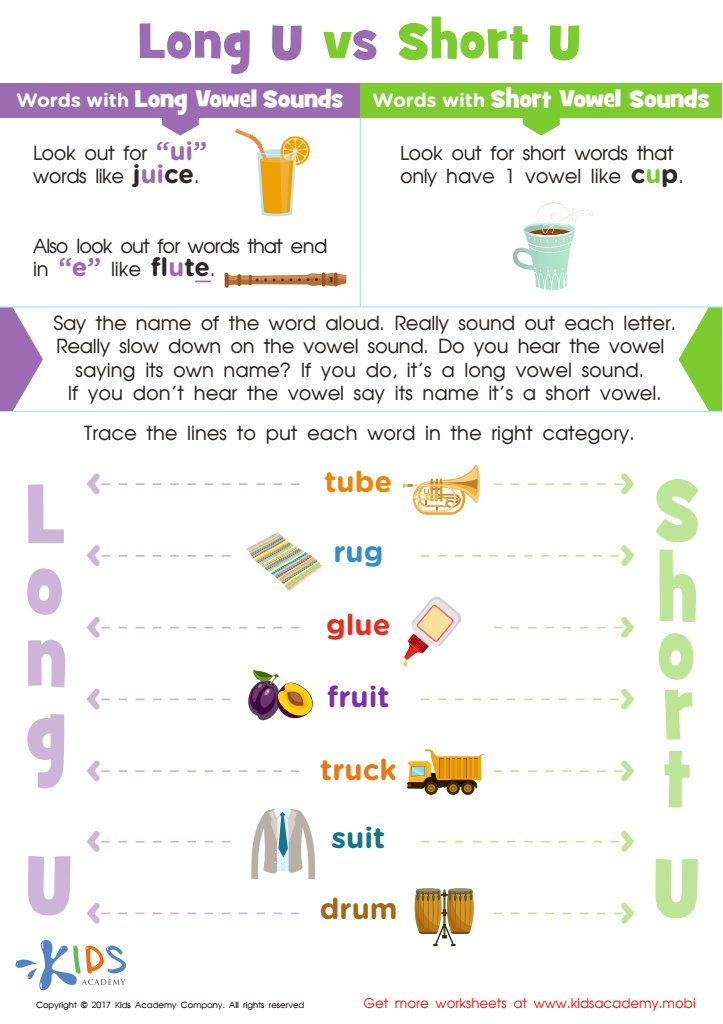
Long and Short Vowel U Spelling Worksheet
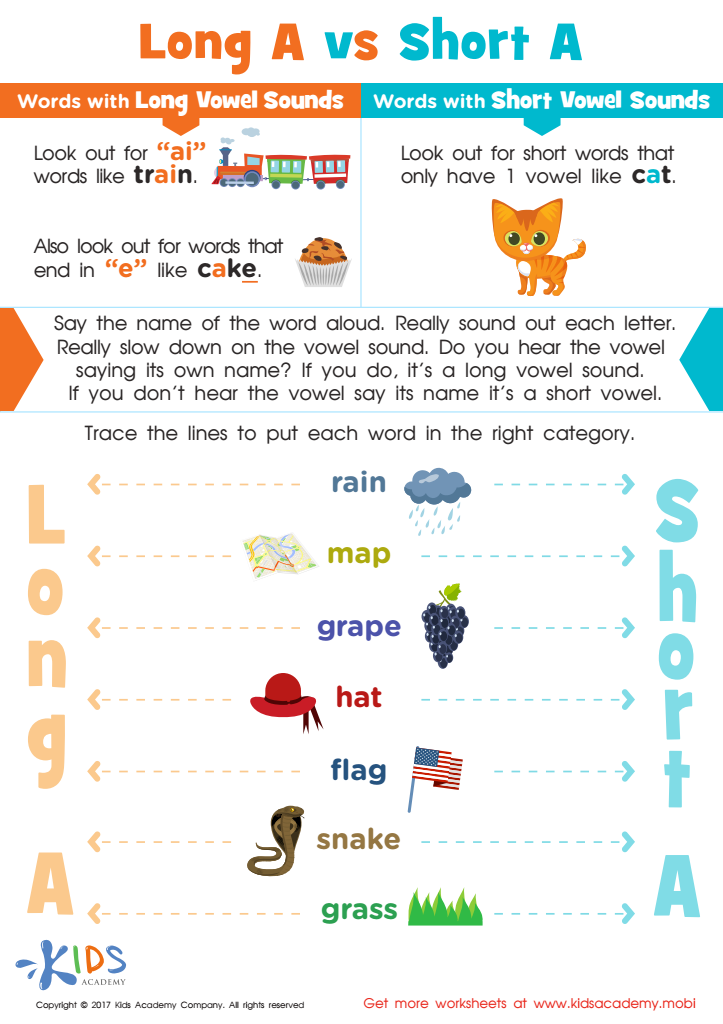
Long and Short Vowel A Spelling Worksheet







Vowel recognition is a fundamental aspect of early literacy development for children aged 4 to 8. Parents and teachers should prioritize this skill because it significantly impacts a child's reading and writing abilities. Vowels are the core components of language; they help form syllables and words, making vocabulary comprehension essential for effective communication.
Fostering vowel recognition enhances phonemic awareness, allowing children to decode unfamiliar words and develop strong reading fluency. This skill lays the groundwork for more complex language concepts as children advance in their education. Furthermore, early mastery of vowel recognition helps prevent reading difficulties in the future, which can lead to challenges in academic performance and self-esteem.
Additionally, engaging with vowel recognition exercises can make learning enjoyable. Parents and teachers can incorporate games, songs, and interactive activities to create a positive learning environment. This not only strengthens children's phonetic skills but also fosters a love for learning.
Ultimately, investing time in teaching vowel recognition enables children to become confident readers and writers, laying the foundation for a lifelong appreciation of literacy. By recognizing the importance of this aspect of language development, parents and educators can set children on a successful educational path.








