Phonics skills improvement Writing Worksheets for Ages 4-8
3 filtered results
-
From - To
Boost your child's reading and writing abilities with our Phonics Skills Improvement Writing Worksheets specifically designed for ages 4-8. These engaging worksheets from Kids Academy combine fun activities with effective learning strategies centered around phonics. Children will recognize letter sounds, enhance word formation skills, and improve their overall literacy. Perfect for use at home or in the classroom, our structured exercises ensure a smooth learning curve tailored to young students' needs. Developed by education experts, these printables make learning to read and write an interactive and delightful process. Start your child's literacy journey today with Kids Academy!
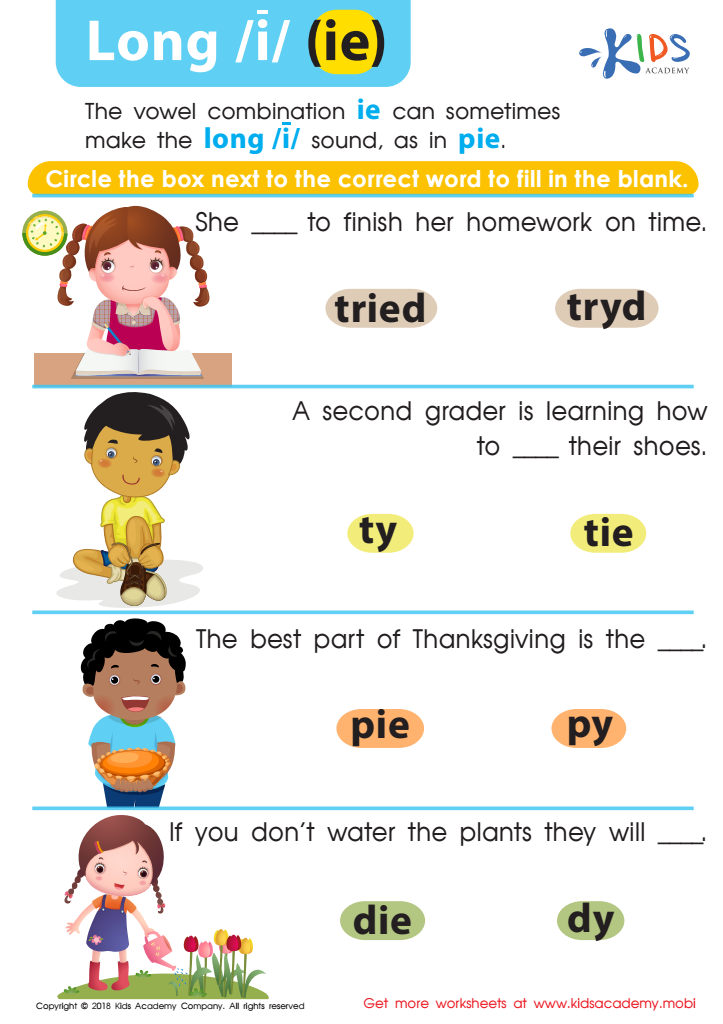
Reading: Long I and IE Worksheet
 Assign to My Students
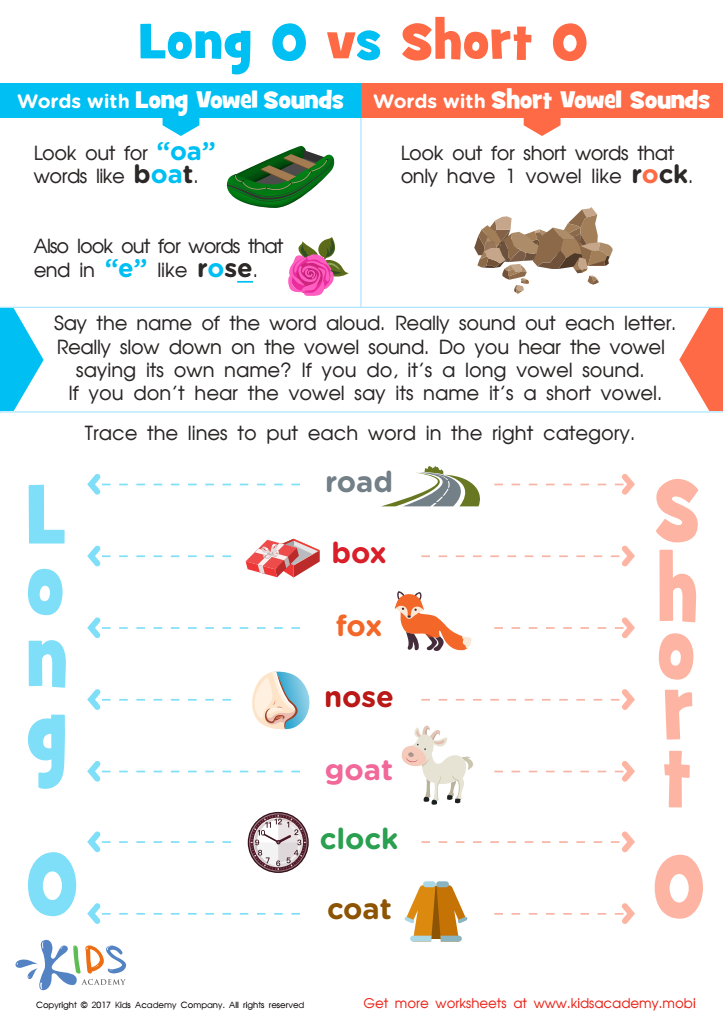
Long and Short Vowel O Spelling Worksheet
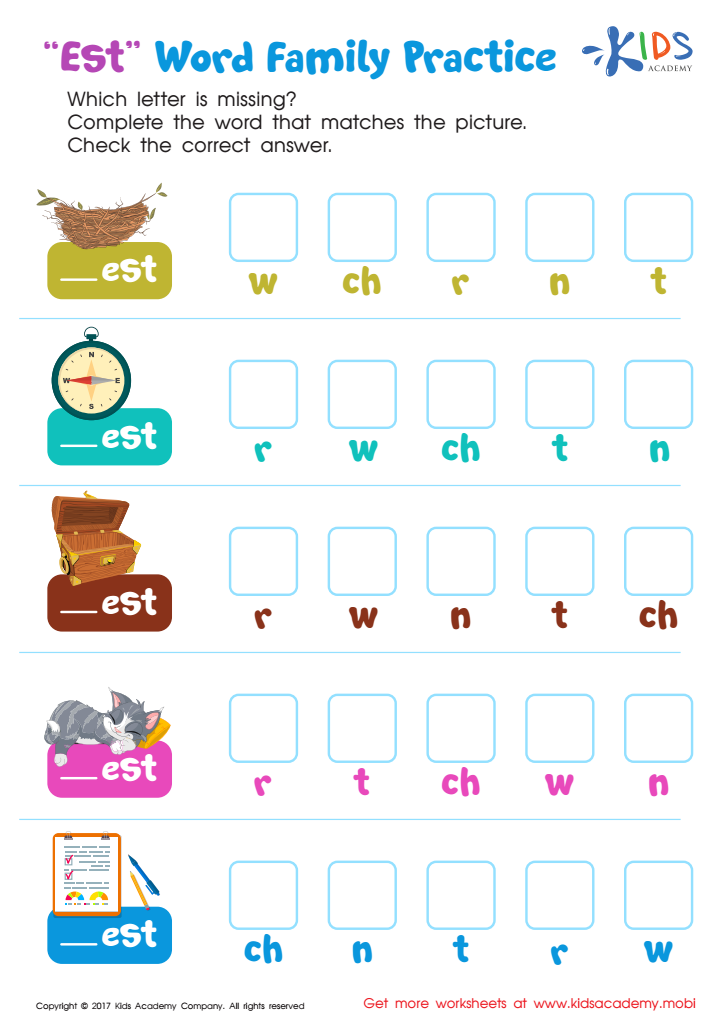
Words Family "est" Spelling Worksheet


.jpg)



Phonics skills are foundational for young learners, particularly in the critical age range of 4-8 years, as it directly impacts their ability to read and write effectively. During these formative years, children's brains are incredibly receptive to linguistic development. Phonics instruction, which focuses on the relationships between sounds and their corresponding letters, helps children decode written language, enhancing their reading fluency and comprehension.
When parents and teachers prioritize phonics improvement, they are setting children up for academic success. Proficient reading skills are integral not just for language arts, but across all subjects, as they enable students to grasp instructions, solve problems, and expand their knowledge base through reading.
Moreover, early success in reading strengthens self-confidence and fosters a lifelong love for learning. Struggling with reading, on the other hand, can lead to frustration, decreased motivation, and a negative attitude toward education.
Effective phonics teaching also makes writing easier, as students understand how sounds translate into written words. This dual emphasis on reading and writing ensures balanced literacy development, equipping children with essential communication skills for their future education and daily life.
In summary, investing in phonics skills improvement for young learners is an investment in their overall academic trajectory, personal empowerment, and lifelong success.








