Reading practice Writing Worksheets for Ages 4-8
3 filtered results
-
From - To
Unlock the joy of reading and writing for children ages 4-8 with our engaging Reading Practice Writing Worksheets. Designed to boost comprehension and writing skills, these worksheets transform learning into a fun adventure. Packed with colorful illustrations and age-appropriate exercises, our worksheets cover a range of topics, including phonics, vocabulary, and grammar. Encouraging young learners to build a strong foundation in literacy, these resources support parents and educators in nurturing confident readers and writers. Perfect for both classroom and home use, our worksheets make reading and writing practice enjoyable and effective for early learners.
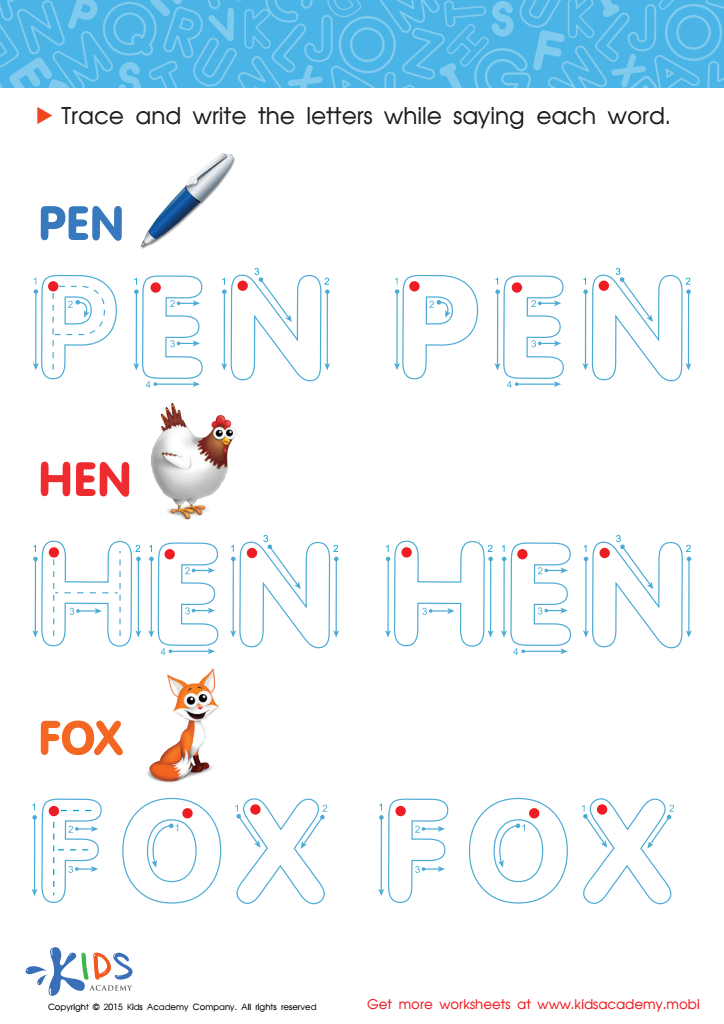
A Pen, a Hen and a Fox Spelling Worksheet
 Assign to My Students
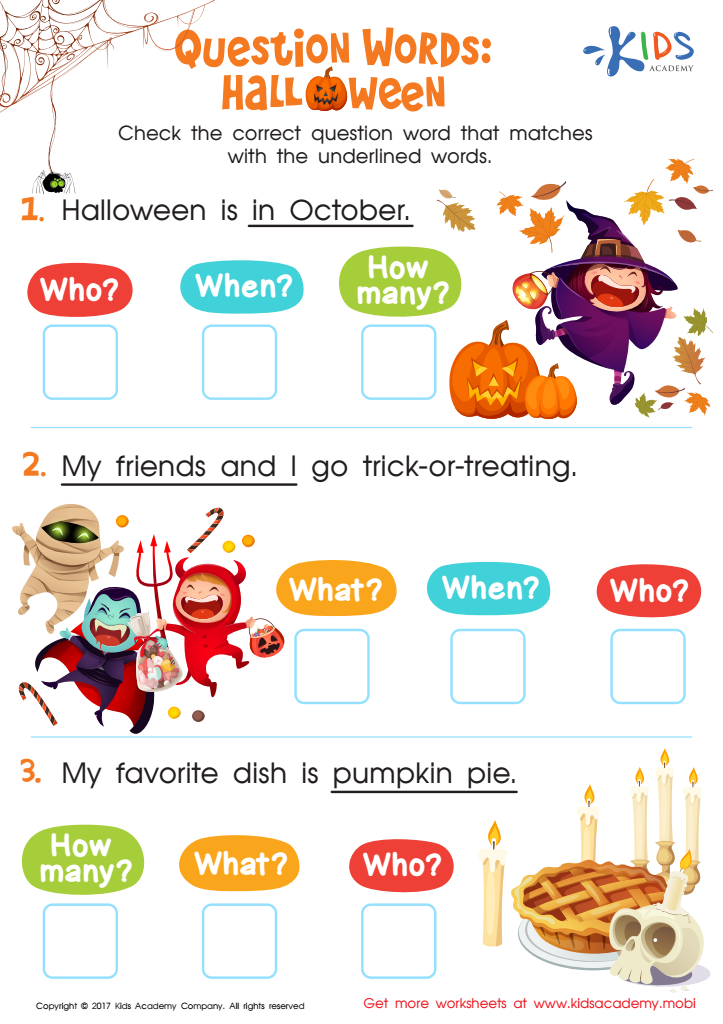
Question Words: Halloween Worksheet
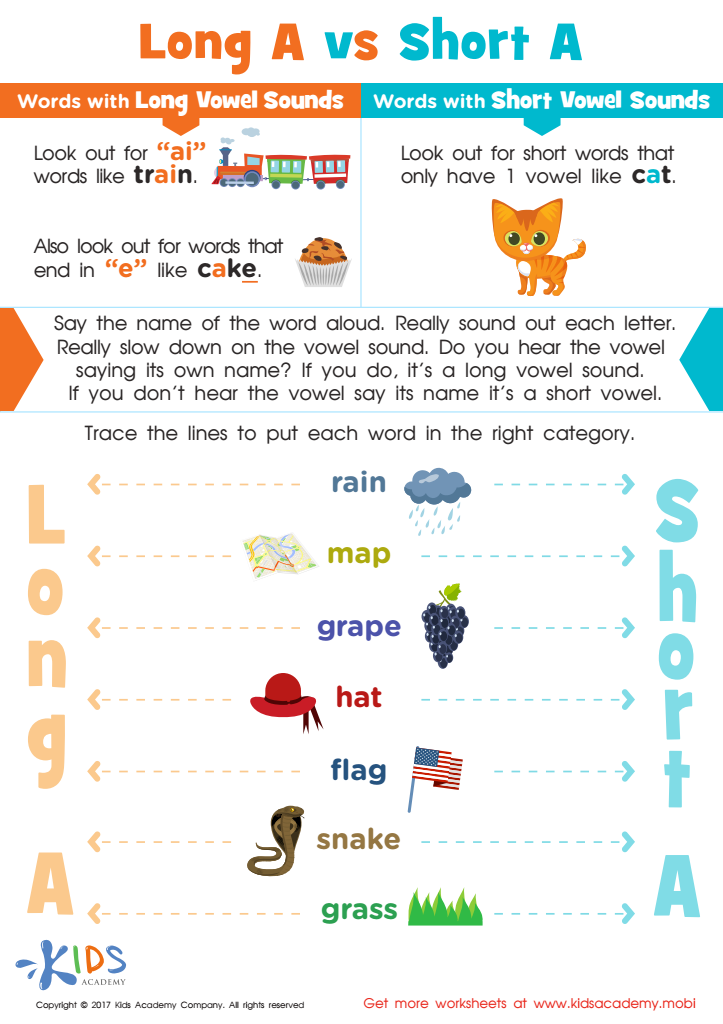
Long and Short Vowel A Spelling Worksheet








Reading and writing practices for children aged 4-8 are essential for their overall development. During these formative years, children’s brains are highly receptive, making it a crucial period for developing literacy skills. Reading helps to expand a child’s vocabulary and introduces language structures in context, fostering cognitive abilities like critical thinking, comprehension, and creativity.
Engaging in regular reading and writing also helps children develop fine motor skills as they learn to handle books and writing tools. For instance, turning pages or holding a pencil properly can strengthen hand-eye coordination. Moreover, storytelling, whether through reading or writing, encourages imagination and helps children articulate their thoughts.
It is also a time when children can start building a love for reading and writing. Cultivating these practices early on lays a foundation for lifelong learning. For parents and teachers, supporting reading and writing activities can turn children into confident communicators. It prepares them for the academic language demands of later schooling, ensuring they are not only able to decode texts but also express their ideas clearly in writing.
Lastly, literacy development is closely linked to emotional and social growth. Stories provide children with perspectives that enhance empathy and understanding, and writing offers them an outlet to express emotions. Therefore, prioritizing these practices supports wholesome, balanced development.








