Understanding punctuation Writing Worksheets for Ages 4-8
3 filtered results
-
From - To
Unlock the world of effective communication with our "Understanding Punctuation Writing Worksheets for Ages 4-8." Specially crafted to engage young learners, these worksheets blend fun activities with educational content, helping kids grasp essential punctuation rules. From recognizing periods, question marks, and exclamation points to practicing proper sentence endings, our worksheets cater to early learners' developmental stages. These resources support children’s writing skills, enhance their reading comprehension, and build a strong foundation for sophisticated language use. Ideal for both classroom and home learning, they offer a delightful way for children to explore the magic of punctuation!
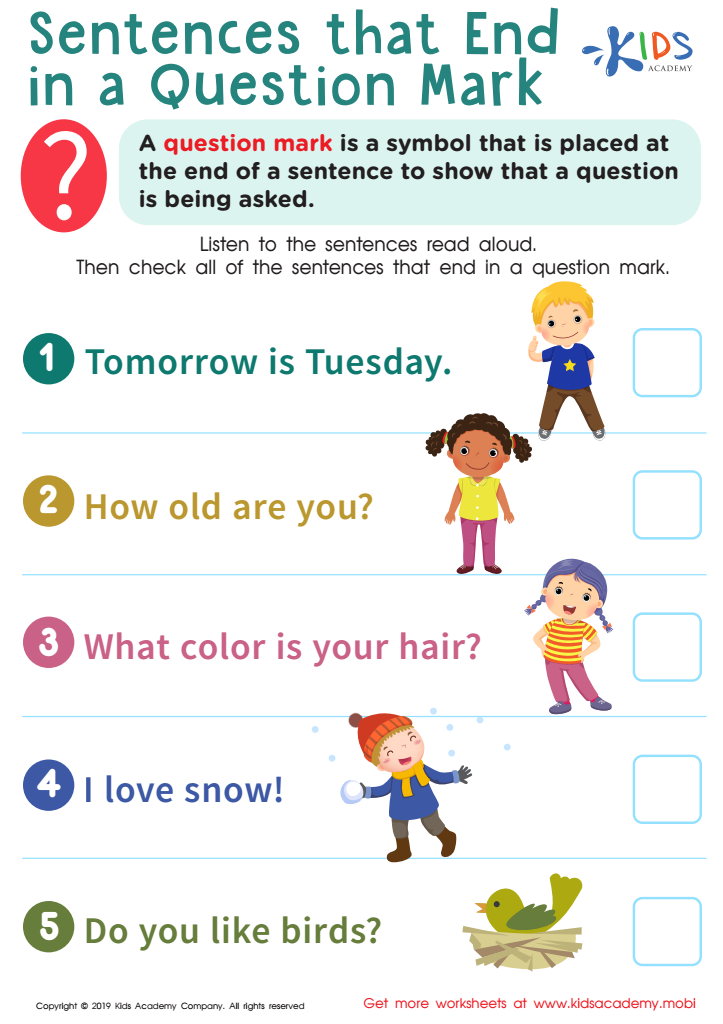
Sentences That End in an Question Mark Worksheet
 Assign to My Students
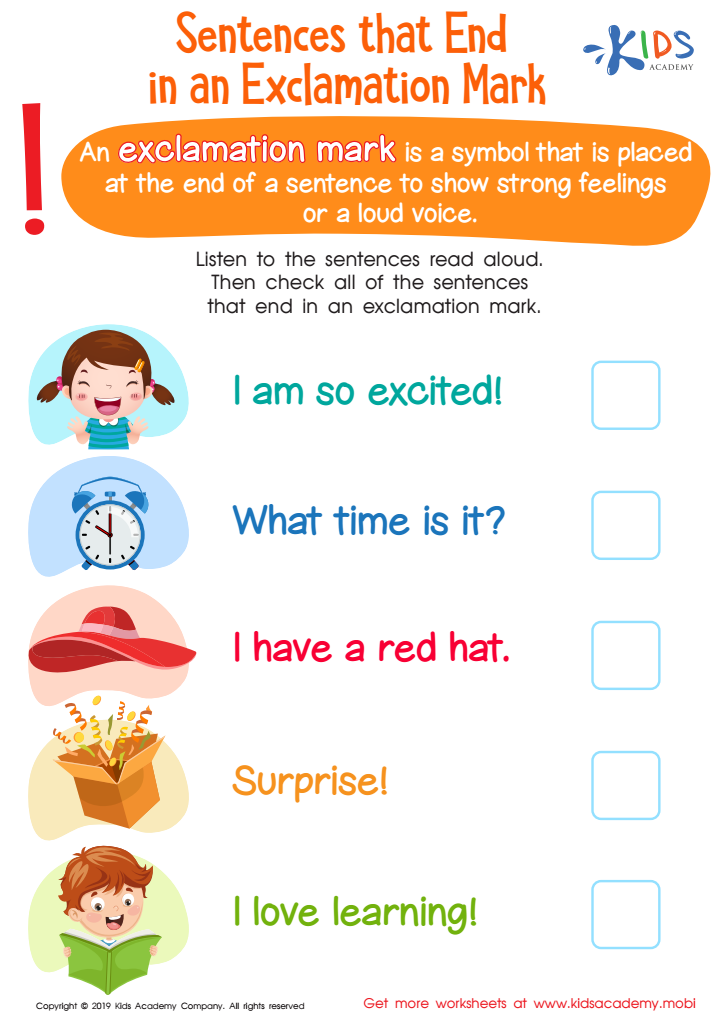
Sentences That End in an Exclamation Mark Worksheet
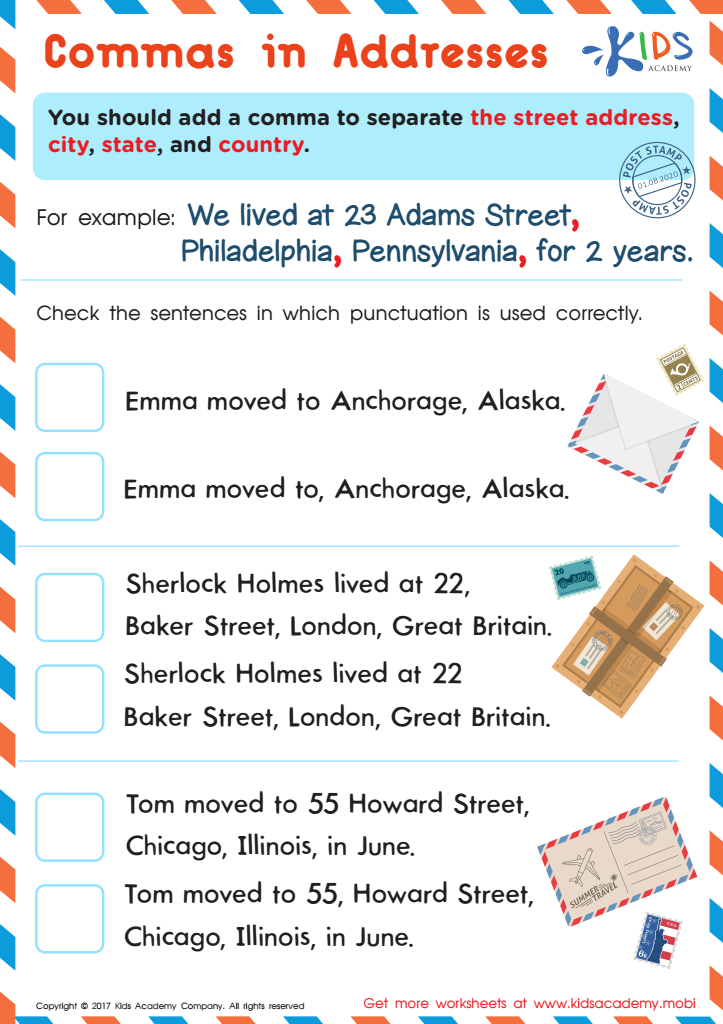
Commas in Addresses Worksheet







Understanding punctuation is essential for young learners aged 4-8 as it significantly influences their reading and writing development. At this formative age, children are building the fundamental skills they will use throughout their academic journey and beyond. Teaching punctuation helps kids grasp the structure and flow of language. By learning where to place periods, commas, question marks, and exclamation points, children begin to understand how to express their thoughts more clearly and accurately.
Correct punctuation aids in comprehension when they move from decoding words to understanding whole sentences and paragraphs. For example, periods signify the end of a thought, helping young readers break down complex information into manageable chunks. Commas create natural pauses that improve the readability of prose, while question marks and exclamations add emotional tone and context, which can make storytelling more engaging and accessible.
Additionally, early instruction in punctuation supports cognitive and social development. It teaches attention to detail and improves listening skills, as kids learn to hear the difference that punctuation can make in spoken language. Developing these skills early lays a strong foundation for effective communication, boosting both academic success and personal confidence. Therefore, parents and teachers should prioritize understanding punctuation as a core component in their child's early literacy education.








