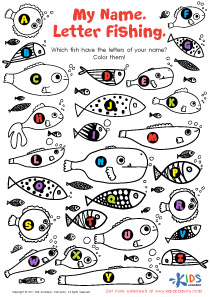
Letter formation ABC Order Worksheets for Ages 4-9
3 filtered results
Difficulty Level
Grade
Age
-
From - To
Subject
Activity
Standards
Our "Letter Formation ABC Order Worksheets for Ages 4-9" make learning fun and interactive for young learners. These well-designed printables help children practice forming and ordering letters of the alphabet, enhancing their handwriting skills and letter recognition. With engaging activities tailored for early childhood education, kids develop fine motor skills and gain confidence in their writing abilities. Perfect for classroom or home use, these worksheets are a valuable tool for parents and educators alike. Give your child the head start they need with our comprehensive and easy-to-follow letter formation exercises. Improve your child’s literacy journey today!
Favorites
With answer key
Interactive
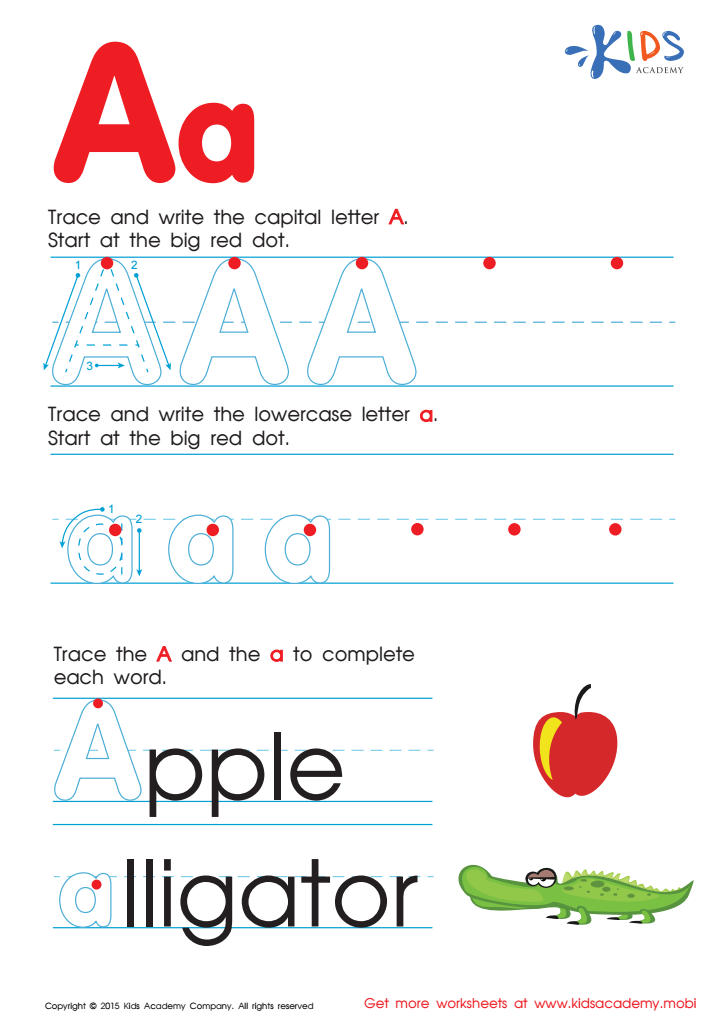
Letter A Tracing Page
Trace and write the letter "A"! Start with the big red dot, then do the capital and lowercase versions. Then write it again with two words - apple and alligator. Download more tracing worksheets at Kids Academy.
 Assign to My Students
Letter A Tracing Page
Worksheet


Letter P Tracing Page
Trace the lines from the red dot to learn to write "P"! Then practice this letter with the fun activities: complete the word "Pig" and "Pumpkin". Check out Kids Academy to get more free ABC worksheets.
Letter P Tracing Page
Worksheet
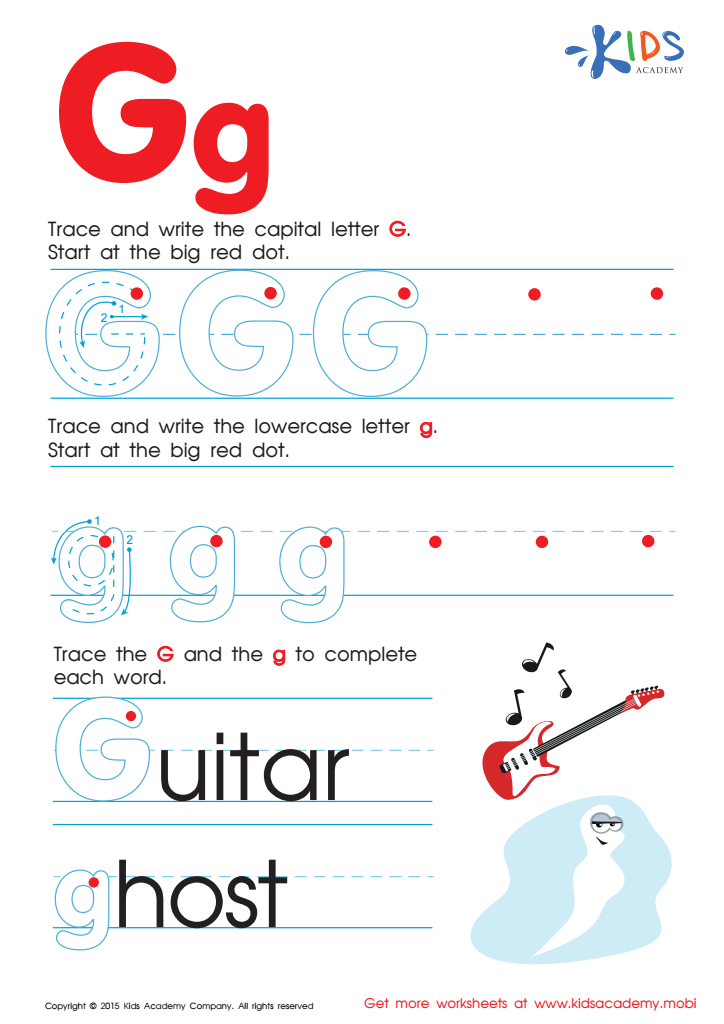
Letter G Tracing Page
Get ready to trace the letter "G" – with a big red spot as the starting point, trace the lines and watch the letter appear. Uppercase and lowercase letters are both easy and fun to write. Give it a go and finish the word "go". Play the guitar and say "hello" to a funny ghost!
Letter G Tracing Page
Worksheet
Join Kids Academy for Free
Who is primarily going to use this learning content?







Parents and teachers play a crucial role in a child's early literacy development, and focusing on letter formation and ABC order is vital for children aged 4-9. Mastery in these foundational skills contributes significantly to their academic success. Proper letter formation helps children develop fine motor skills, enabling them to write legibly and fluently. When young learners can form letters correctly, they tend to write faster and more efficiently, which is important for later academic tasks.
Moreover, understanding the alphabetical order fosters essential reading and organizational skills. ABC order is often the first step toward learning how to use a dictionary, understand alphabetical indices in books, and efficiently search digital content. It lays the groundwork for sorting, classifying, and retrieving information, which enhances both reading comprehension and independent learning.
Additionally, consistency in letter formation and knowledge of alphabet order help children feel more confident and competent in classroom tasks. This boost in self-esteem often results in a greater enthusiasm for learning and participating in educational activities. By making letter formation and ABC order a priority, parents and teachers can support a child's cognitive development and provide a strong foundation for all future learning experiences.