
Alphabetical order understanding ABC Letters Worksheets for Ages 4-9
3 filtered results
Difficulty Level
Grade
Age
-
From - To
Subject
Activity
Standards
Enhance your child's literacy skills with our engaging Alphabetical Order Understanding ABC Letters Worksheets, designed specifically for ages 4 to 9. These interactive worksheets help young learners grasp the concept of alphabetical order through fun activities that promote letter recognition and sorting skills. As children complete exercises ranging from arranging words to identifying letters in sequence, they develop essential reading and writing foundations. Ideal for classroom use or at-home learning, these worksheets cater to diverse learning styles. Foster confidence in your little one's abilities with our comprehensive resources that make learning the alphabet enjoyable and effective! Start your alphabet adventure today!
Favorites
With answer key
Interactive

Letter G Tracing Page
Get ready to trace the letter "G" – with a big red spot as the starting point, trace the lines and watch the letter appear. Uppercase and lowercase letters are both easy and fun to write. Give it a go and finish the word "go". Play the guitar and say "hello" to a funny ghost!
Letter G Tracing Page
Worksheet

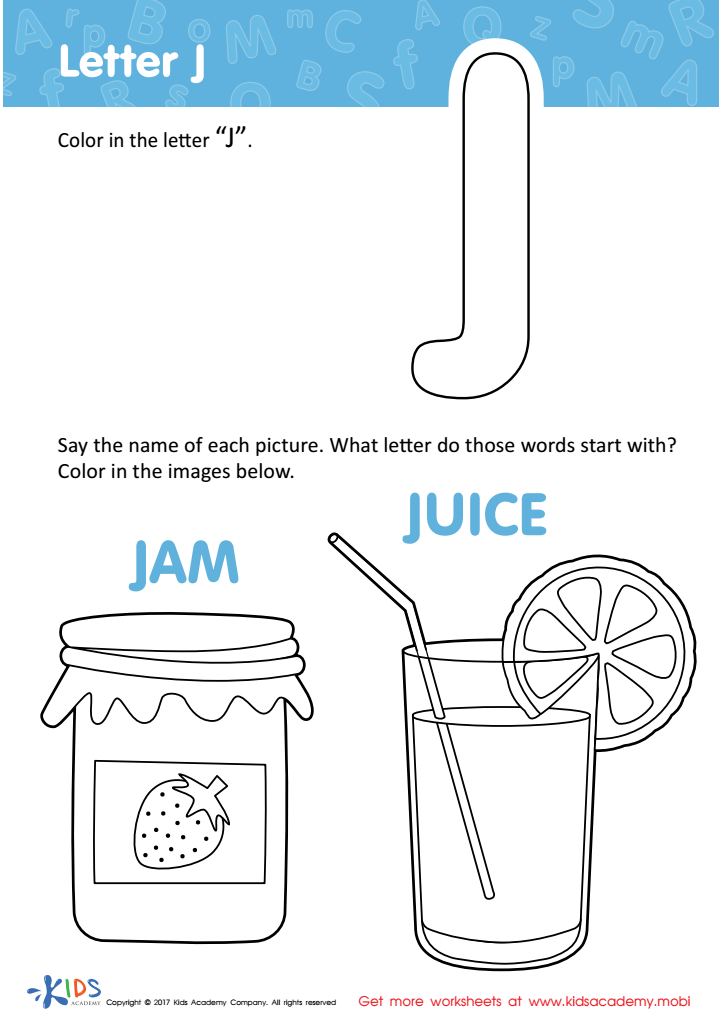
Letter J Coloring Sheet
Practice the letter 'J' with your little one with this fun coloring page! Pictures of jar, juice, jam and jelly make it an enjoyable experience for kids. Learning the letter and coloring is fun for even the youngest learners.
Download (PDF)
 Assign to My Students
Assign to My Students
Letter J Coloring Sheet
Worksheet
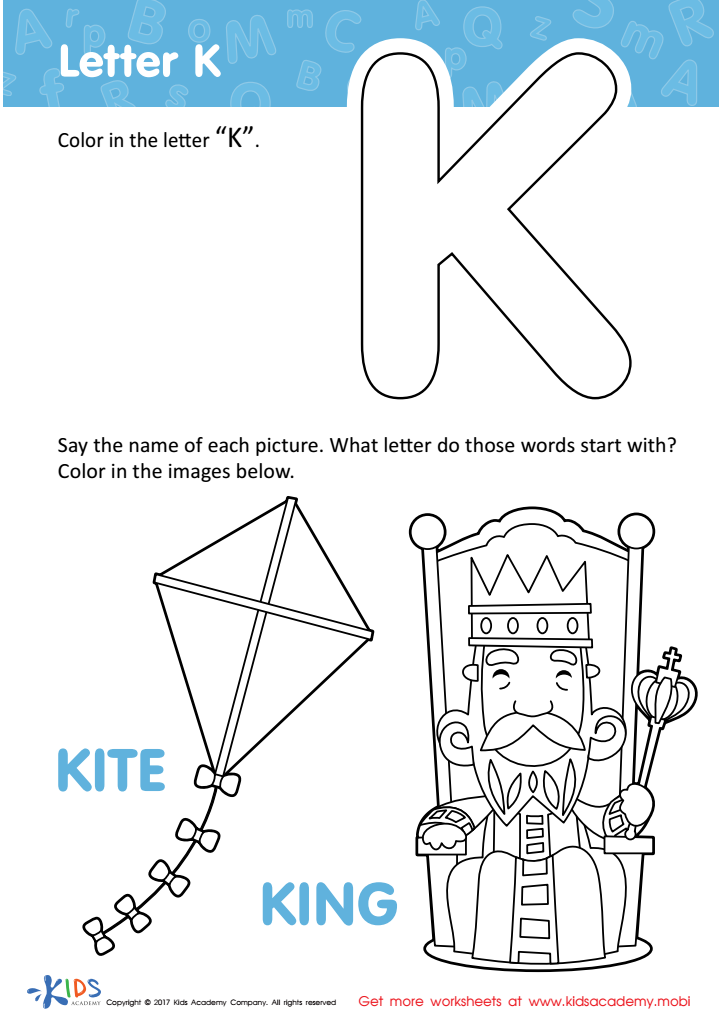
Letter K Coloring Sheet
This letter K coloring page captivates your child's creativity while learning the letter! Showcasing a king and kite, common words for their age group, it's sure to spark their imagination.
Download (PDF)
Assign to My Students
Assign to My Students
Letter K Coloring Sheet
Worksheet
Join Kids Academy for Free
Who is primarily going to use this learning content?








Understanding alphabetical order is crucial for children aged 4-9 as it lays the foundation for important literacy skills. First, recognizing the sequence of letters enhances reading and writing proficiency. When children grasp that letters belong to a fixed order, they find it easier to decode words, enabling them to develop fluency in reading. This skill not only aids in identifying words but also reinforces vocabulary acquisition.
Furthermore, familiarity with alphabetical order promotes organizational skills. Children will learn how to locate words quickly in dictionaries, encyclopedias, and even online resources, fostering independence in their research and academic efforts. It serves as an essential tool for learning to categorize and sort information, which is vital in diverse subjects, from language arts to science.
In addition to enhancing literacy and organizational abilities, understanding the ABCs in order boosts children's confidence in school settings. They feel empowered when they can navigate information proficiently. Lastly, recognizing alphabetical order nurtures a sense of achievement and motivation, making learning engaging and enjoyable. For these reasons, parents and teachers should prioritize developing this skill in young learners to support their overall educational growth.







