Fine motor skills development ABC Letters Worksheets for Ages 4-9
3 filtered results
-
From - To
Enhance your child's fine motor skills with our engaging ABC Letters Worksheets, specifically designed for ages 4-9! These printable resources combine letter recognition and writing practice to nurture essential skills in young learners. Each worksheet features fun activities that encourage preschool and early elementary students to develop their hand coordination and dexterity while enjoying interactive exercises related to the alphabet. From tracing letters to completing activities, children will build confidence in their writing skills. Perfect for classroom use or at-home learning, our worksheets provide a valuable resource for parents and teachers aiming to promote academic success and fine motor development. Enjoy learning together!
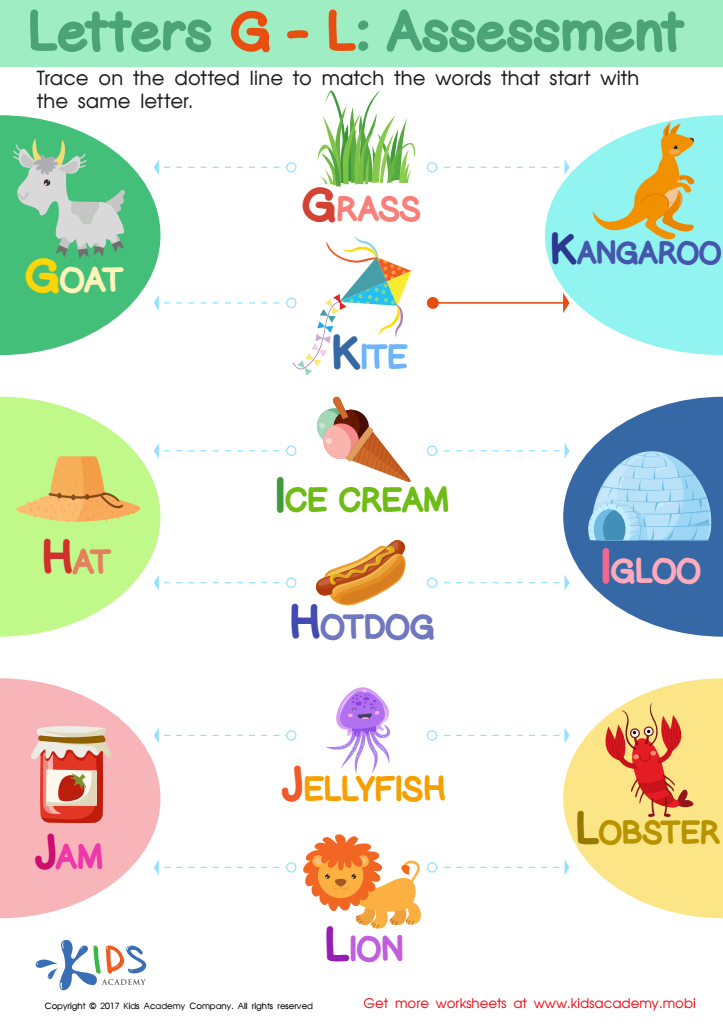
Letters G-L Worksheet











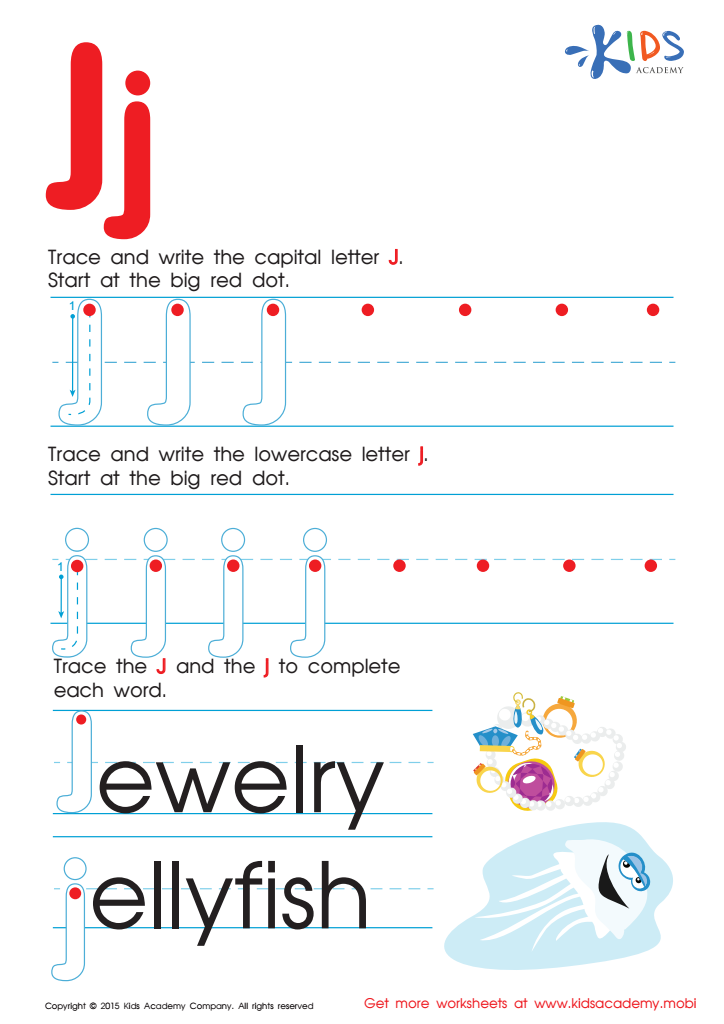
Letter J Tracing Page
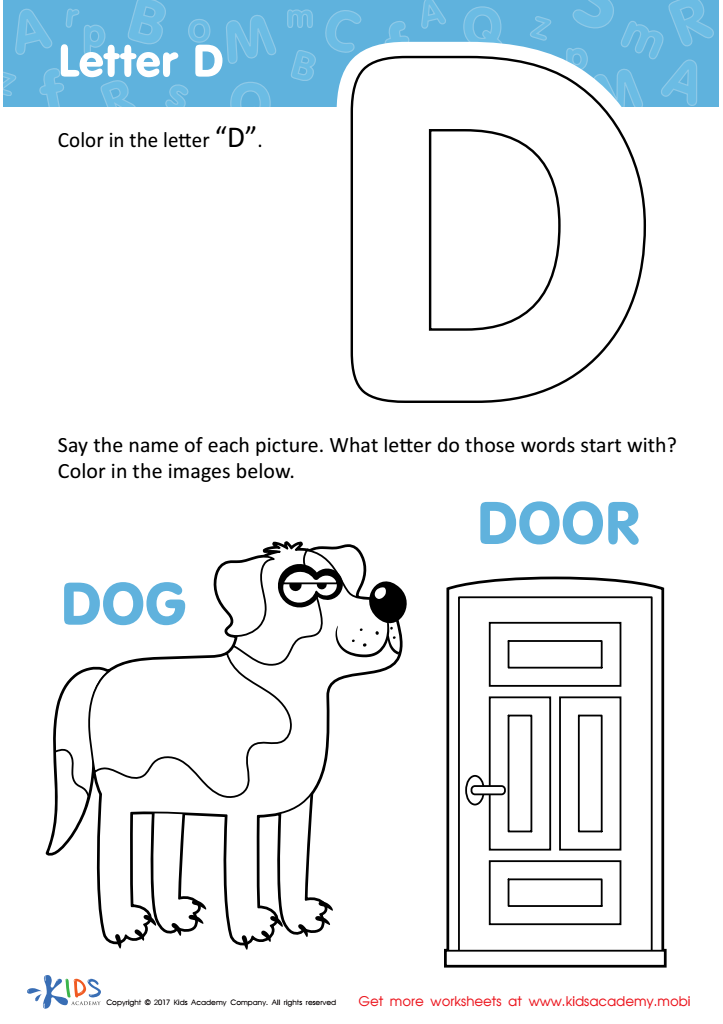
Letter D Coloring Sheet
 Assign to My Students








Fine motor skills are crucial for children's overall development, especially for those aged 4-9, as these skills are foundational for tasks they will encounter in their educational journey and everyday life. Developing fine motor skills, such as dexterity, coordination, and control, enables children to perform essential tasks like writing letters, tying shoelaces, and even using scissors.
Focusing on fine motor skill development in conjunction with learning ABC letters establishes a strong connection between physical abilities and literacy skills. Writing and drawing not only improve hand strength and finger control but also promote early literacy development, as children learn letter shapes, sound recognition, and proper handwriting techniques.
Furthermore, these skills contribute to fostering independence and self-esteem. As children master tasks like writing their names or forming letters, they gain confidence in their abilities, encouraging a lifelong love of learning.
By engaging in activities that target fine motor skills, parents and teachers can help children build a strong foundation for both academic success and daily tasks. This foundation is vital for their social interactions, problem-solving abilities, and overall cognitive development, making it essential for adults to prioritize fine motor skills in early childhood education.







