Handwriting practice ABC Letters Worksheets for Ages 4-9 - Page 2
26 filtered results
-
From - To
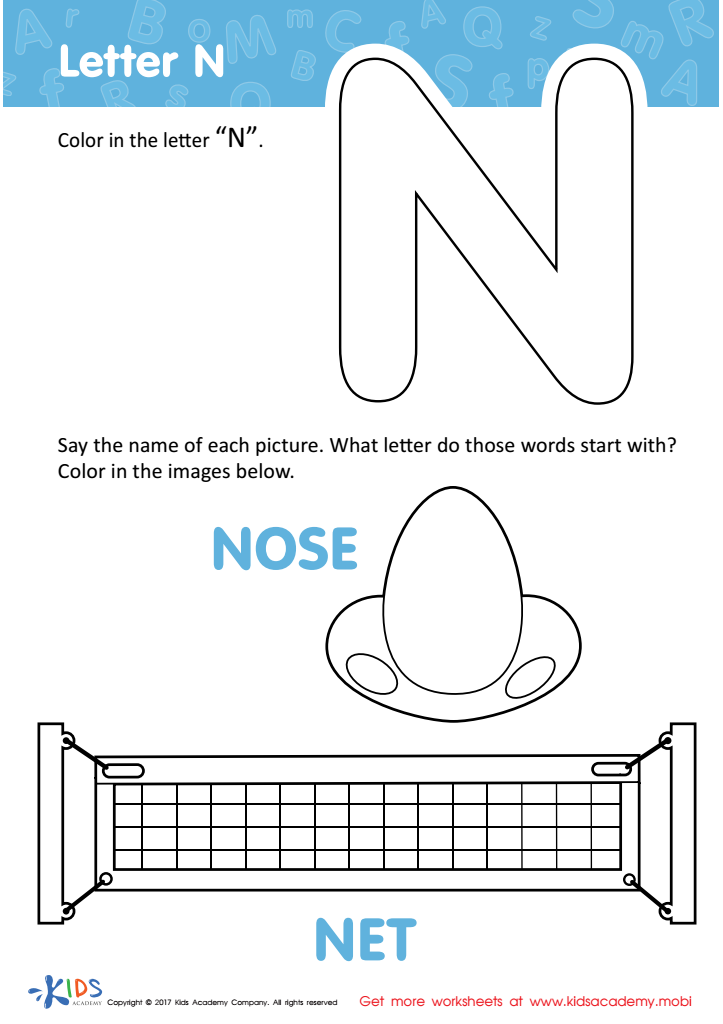
Letter N Coloring Sheet
 Assign to My Students






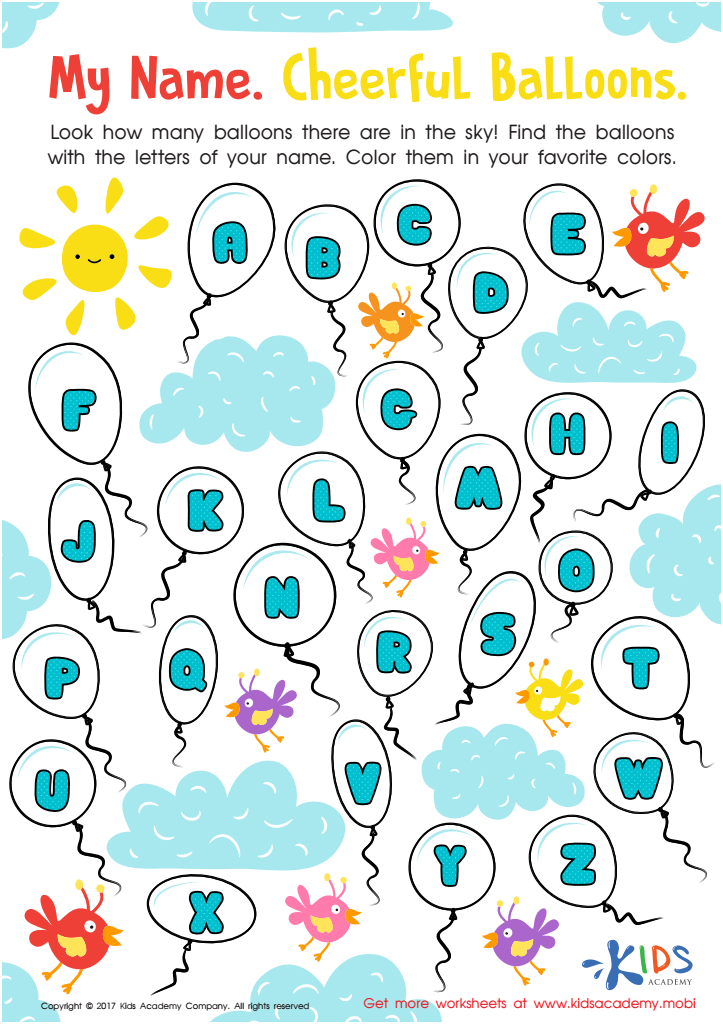
My Name: Cheerful Balloons Worksheet
Assign to My Students








Handwriting practice, particularly with ABC letters, is fundamental for children ages 4-9 as it lays the groundwork for their overall educational development and daily functioning. For young learners, mastering handwriting is not just about neat penmanship; it directly influences their cognitive growth and motor skills. Practicing ABC letters enhances their fine motor coordination, which is crucial for tasks like buttoning clothes, using scissors, or handling tools.
Moreover, handwriting is closely tied to literacy development. As children repeatedly trace and write letters, they become more familiar with the alphabet, which is essential for reading and spelling. This practice builds neural pathways that enhance memory, learning, and comprehension skills. By focusing on handwriting, parents and teachers also encourage students to take their time with each letter, fostering patience and attention to detail.
Emotionally, being able to write legibly boosts confidence. When children can clearly express their thoughts on paper, they are more likely to engage in school activities, contribute to classroom discussions, and feel a sense of accomplishment. In today’s digital age, grounding these skills can provide a balanced approach that creates a strong educational foundation. Consequently, investing time and effort into handwriting practice is an investment in a child's overall academic and personal success.







