Sound Association Consonants Worksheets for Ages 4-9
3 filtered results
-
From - To
Discover our engaging Sound Association Consonants Worksheets designed specifically for children ages 4-9! These printable resources are perfect for helping young learners connect sounds with their corresponding consonant letters through fun activities. Our worksheets include colorful illustrations and interactive exercises that promote phonemic awareness, making learning both enjoyable and effective. Children will engage in identifying, matching, and practicing consonant sounds, reinforcing their foundational literacy skills. Ideal for classroom or home use, these worksheets support early reading development and prepare kids for future academic success. Explore our collection today and give your child a head start in their reading journey!
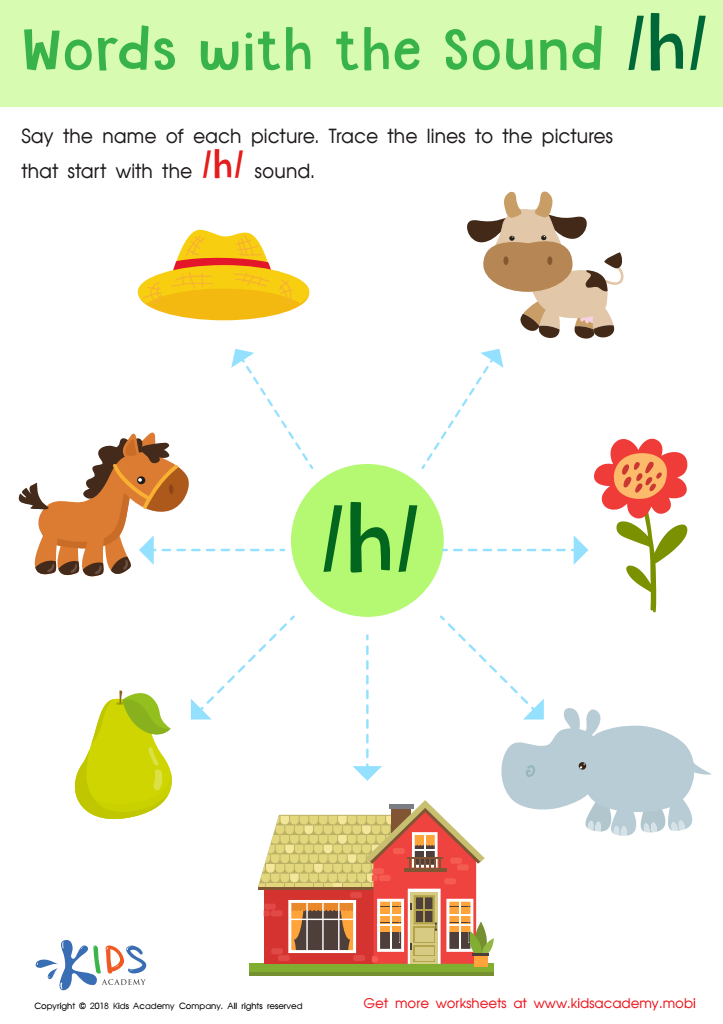
Words with sound h Reading Worksheet
 Assign to My Students
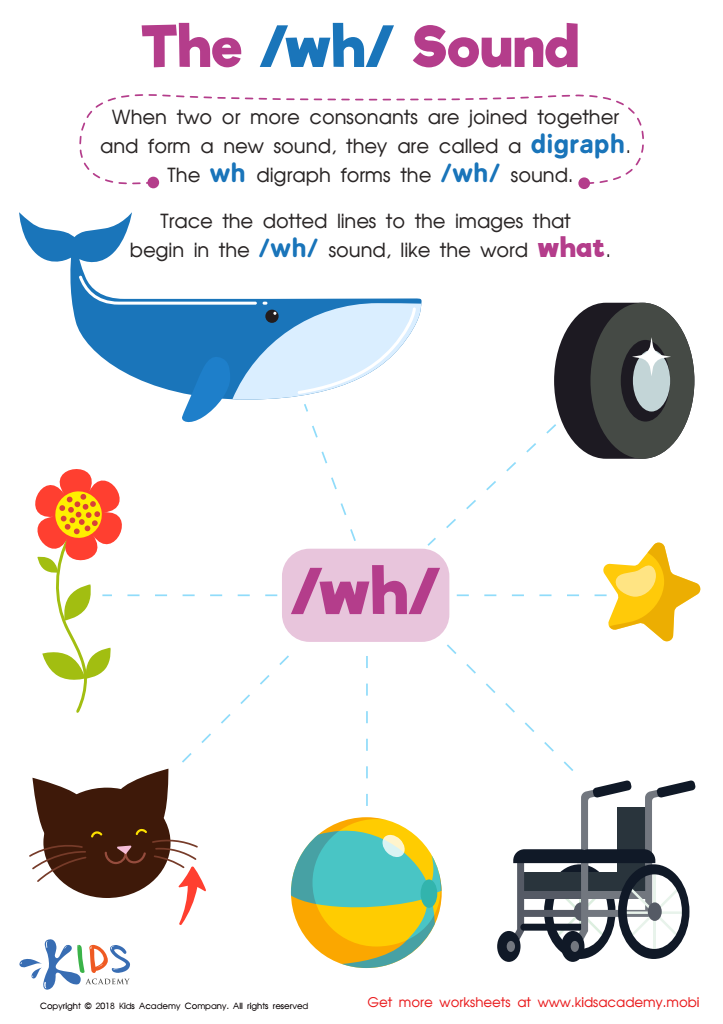
The /wh/ Sound Worksheet
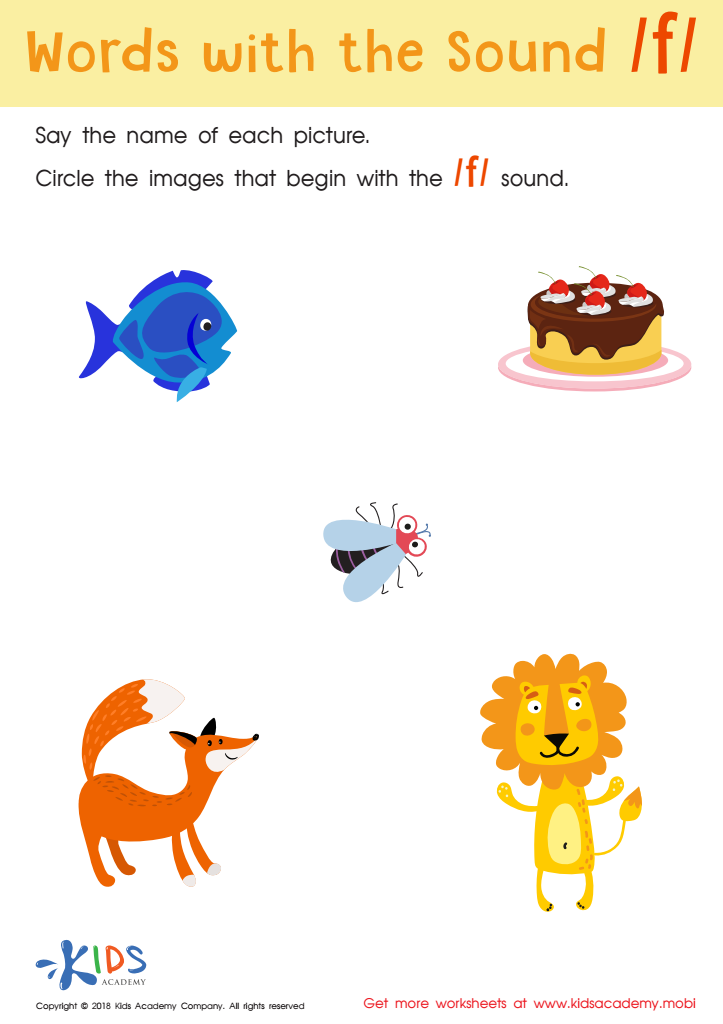
Words with sound f Reading Worksheet



Sound association consonants are crucial for children aged 4-9 because they serve as foundational building blocks for literacy skills. During these formative years, children begin to make connections between letters and their corresponding sounds, which is vital for reading and writing. Understanding consonant sounds aids in the development of phonemic awareness, a critical skill that enables children to segment, blend, and manipulate sounds in words.
Teachers and parents play a pivotal role in nurturing these skills. By engaging children in activities that emphasize sound associations—such as phonics games, songs, and rhymes—they help strengthen their sound recognition and boost confidence in their reading abilities. This early focus on consonants and their sounds not only aids in reading proficiency but also enhances spelling and overall language development.
Furthermore, the ability to decode words influences a child’s academic performance across subjects. As children learn to read fluently, they can access a wider range of texts, fostering a love for reading and further expanding their knowledge. In essence, promoting sound association consonants in the early grades encourages lifelong learning and literacy, laying the groundwork for success in school and beyond. Thus, it is vital for parents and teachers to provide support in this area.







