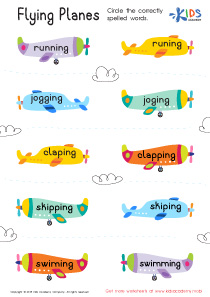
Listening skills Elementary Phonics Worksheets for Ages 4-9
4 filtered results
Difficulty Level
Grade
Age
-
From - To
Subject
Activity
Standards
Enhance your child's listening skills with our engaging Elementary Phonics Worksheets, designed for ages 4-9. These interactive worksheets encourage young learners to develop auditory skills while mastering phonics in a fun and effective way. Each activity is tailored to build comprehension, focus, and retention through playful exercises that capture children's attention. Whether identifying sounds or following auditory instructions, these worksheets provide a strong foundation for early literacy. Foster your child's love for learning and strengthen their phonetic abilities with our easy-to-use printable resources. Perfect for teachers and parents seeking to inspire confident communication skills in their little ones!
Favorites
With answer key
Interactive
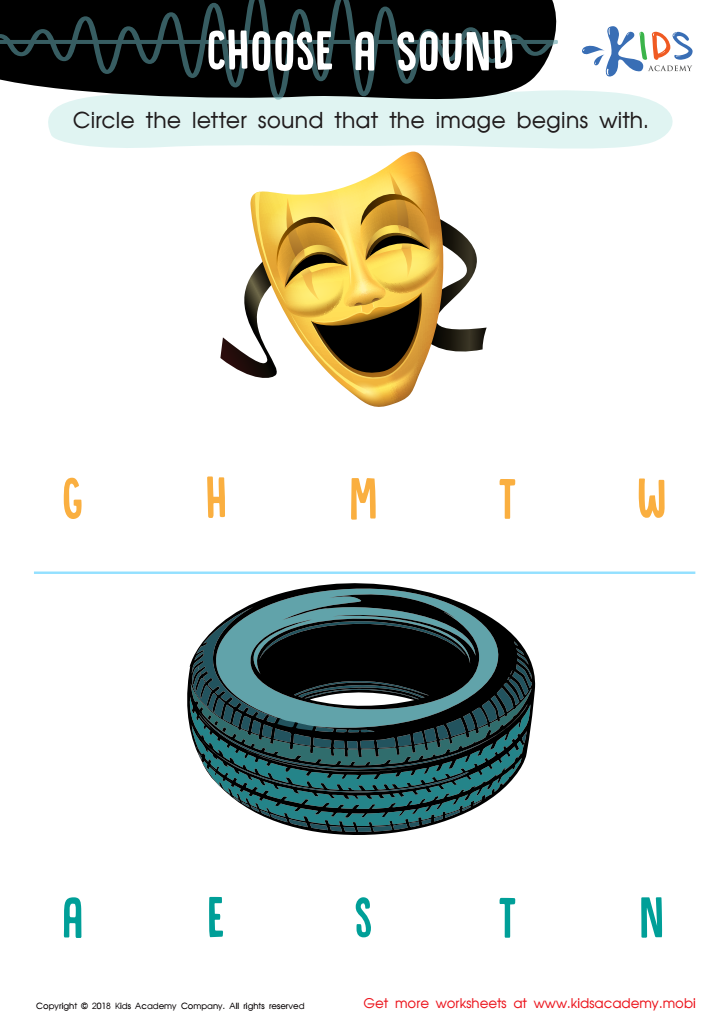
Choose a Sound Worksheet
Help your child hone pre-reading skills with this colorful worksheet! They'll practice tracing letter sounds, develop phoneme awareness, and gain confidence. Plus, it's a fun way to work on their fine motor skills.
 Assign to My Students
Choose a Sound Worksheet
Worksheet
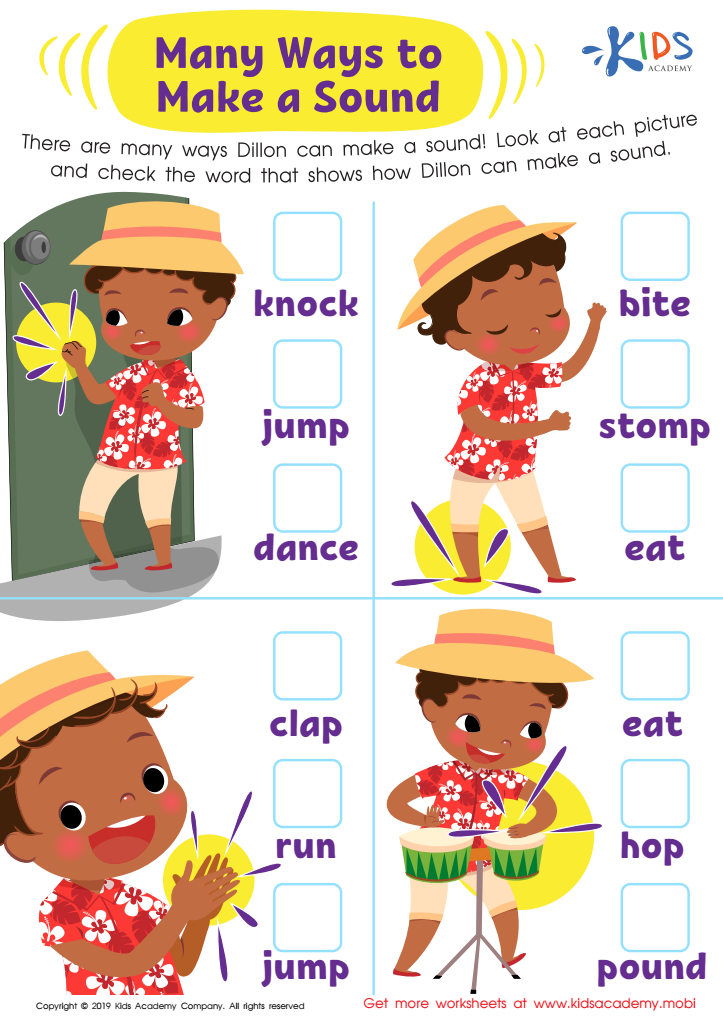
Many Ways to Make a Sound Worksheet
This interactive worksheet encourages creativity and imagination as kids use picture clues to match sound words. It helps them identify the sound methodology and build fine motor skills. Plus, with learning through play, they'll develop stronger vocabularies without even knowing it!
Many Ways to Make a Sound Worksheet
Worksheet
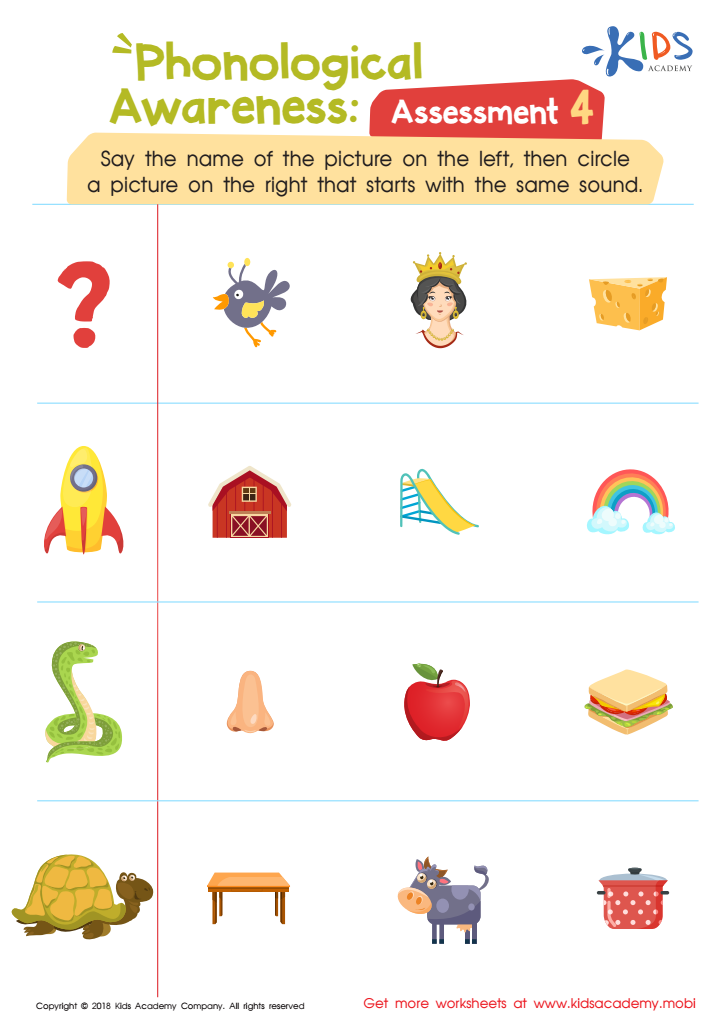
Phonological Awareness: Assessment 4 Worksheet
It can be tricky for young readers to differentiate between sounds in words. Make it fun with this downloadable worksheet! Ask your child to name each picture on the left and match the starting sound with an image on the right. This helps assess their phonics skills and make learning enjoyable.
Phonological Awareness: Assessment 4 Worksheet
Worksheet
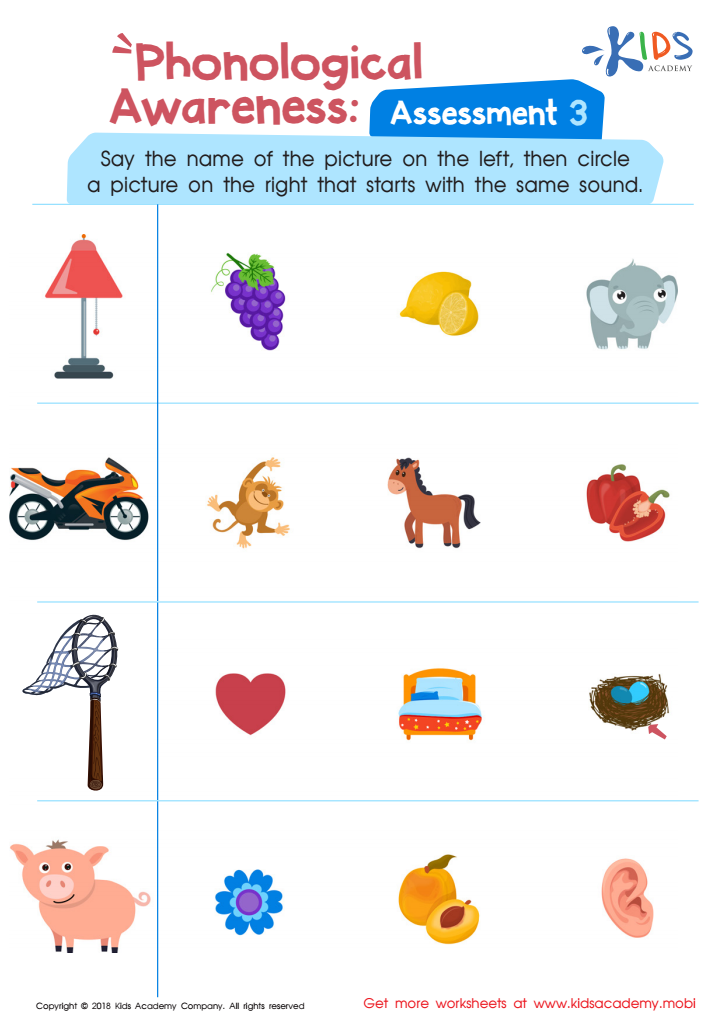
Phonological Awareness: Assessment 3 Worksheet
Test kids' reading readiness with a phonological awareness worksheet! With this PDF exercise, encourage children to name each picture aloud and match left to right. Help them learn to recognize word sounds at the start, middle and end of words. They'll be sure to remember that lamp doesn't sound like elephant!
Phonological Awareness: Assessment 3 Worksheet
Worksheet
Join Kids Academy for Free
Who is primarily going to use this learning content?




Listening skills are fundamental to the development of proficient reading and phonics abilities in children aged 4-9. During these formative years, children are highly receptive to sound and language, making it critical for parents and teachers to prioritize listening in their educational approach.
Firstly, strong listening skills enhance phonemic awareness, which is the ability to recognize and manipulate sounds in words. This is essential for phonics, as it lays the groundwork for identifying letters and their corresponding sounds. Children who engage in effective listening are better equipped to decode words, essential for reading fluency.
Moreover, listening fosters comprehension skills. When children listen attentively, they learn to process information, follow directions, and connect ideas, which are invaluable not only in reading but across all subjects.
Involving parents in this process encourages meaningful interactions at home, reinforcing the lessons learned in school. Activities such as reading aloud, storytelling, and singing can greatly boost a child's listening abilities.
Ultimately, when children acquire strong listening skills, they are more likely to succeed academically and engage meaningfully in their learning environments, setting the stage for lifelong literacy and communication skills. This shared responsibility among parents and educators is pivotal to nurturing a child's growth.