Sound identification Elementary Phonics Worksheets for Ages 4-9
4 filtered results
-
From - To
Unlock the power of reading with our engaging "Sound Identification Elementary Phonics Worksheets" designed for kids aged 4-9! These interactive worksheets help young learners master the essential skill of sound identification, a critical building block for phonetic awareness. Featuring vibrant illustrations and age-appropriate activities, our phonics worksheets promote recognition of letter sounds and pronunciation through fun exercises that keep children motivated and excited. Children will develop their reading skills naturally and confidently as they explore various engaging tasks—from matching sounds to letter recognition. Perfect for classrooms or homeschooling, these worksheets make learning phonics enjoyable and effective! Start your journey in literacy today!
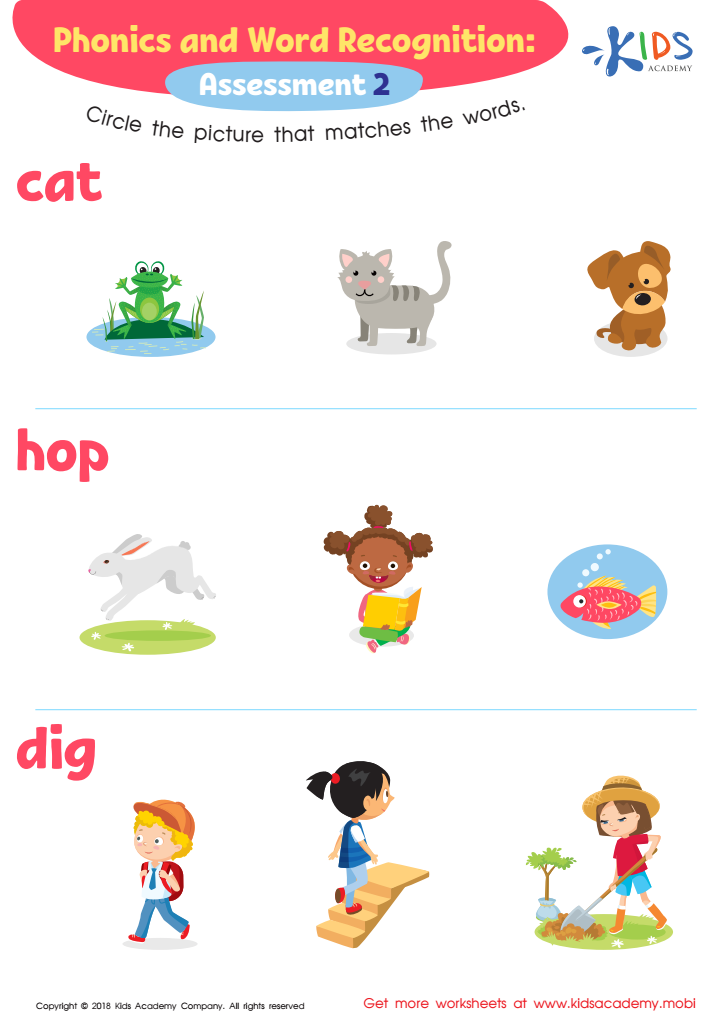
Phonological Awareness: Assessment 2 ELA Worksheet
 Assign to My Students
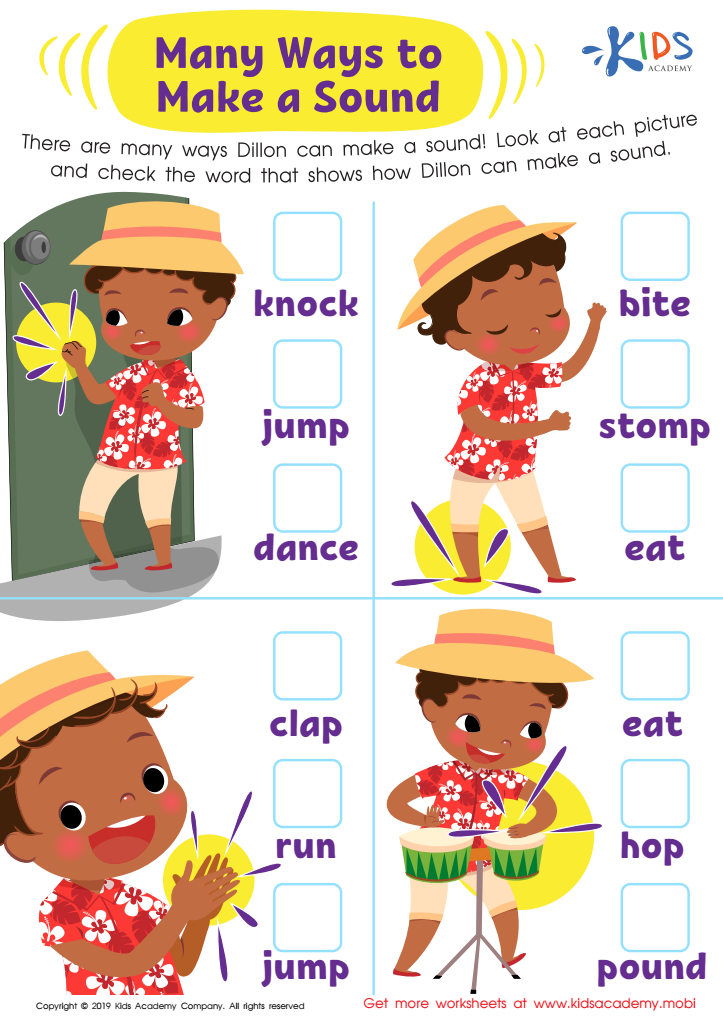
Many Ways to Make a Sound Worksheet
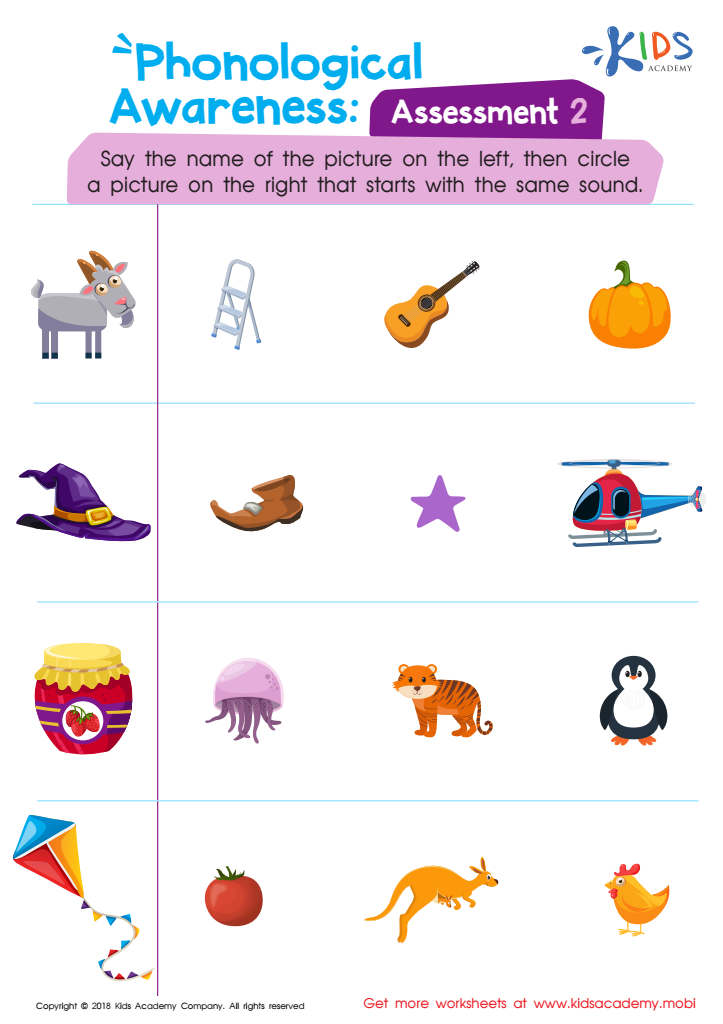
Phonological Awareness: Assessment 2 Worksheet
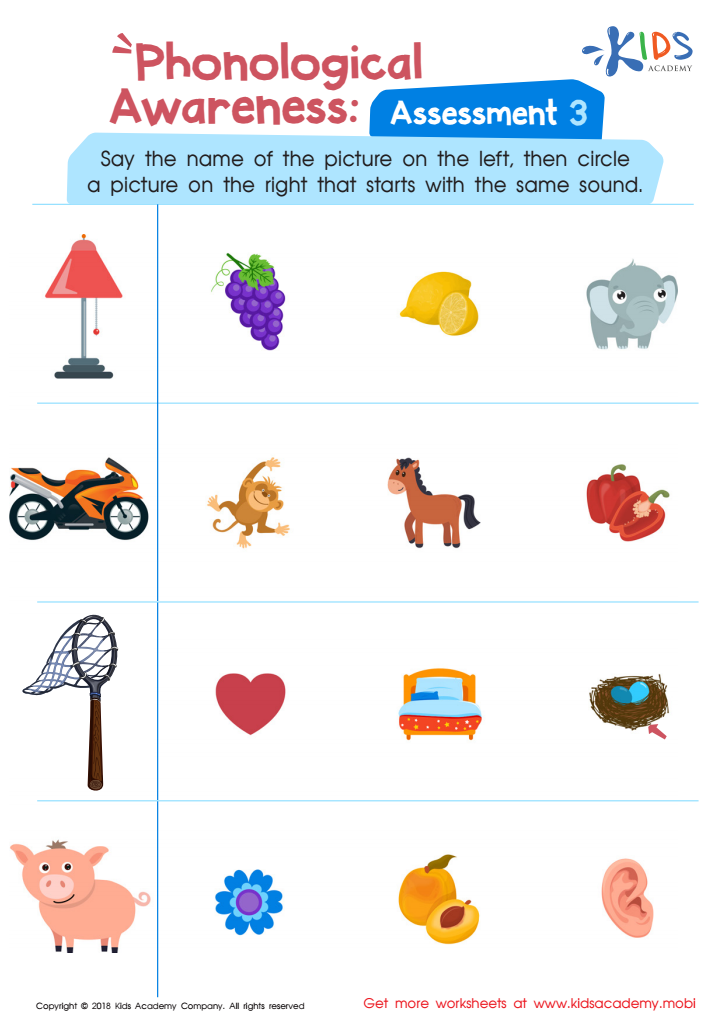
Phonological Awareness: Assessment 3 Worksheet




Sound identification is a crucial component of elementary phonics for children aged 4-9, as it lays the foundation for reading and language development. During these formative years, children are learning to recognize and manipulate the sounds that make up words, a process known as phonemic awareness. This skill is essential for unlocking the rules of reading and writing, aiding them in decoding words independently.
Parents and teachers should care about sound identification because it directly influences children's literacy outcomes. Children who struggle with sound identification are likely to face difficulties in reading fluency and comprehension. By prioritizing phonics instruction, adults can provide targeted support that builds a child’s confidence and reading skills.
Furthermore, engaging children in sound identification activities—such as rhyming games, sound matching, and blending exercises—enhances their auditory discrimination and memory. Encouraging a playful approach to phonics makes learning enjoyable and fosters a love for reading.
Equipping children with strong phonics skills empowers them socially and academically, setting them up for success in future educational endeavors. In a world where literacy is critical, understanding the importance of sound identification can ensure that children become competent, confident readers. Parents and teachers play a vital role in making this happen.







