
Spelling practice Elementary Phonics Worksheets for Ages 4-9
7 filtered results
Difficulty Level
Grade
Age
-
From - To
Subject
Activity
Standards
Unlock your child's language potential with our Spelling Practice Elementary Phonics Worksheets, ideal for ages 4-9. These engaging worksheets are expertly designed to enhance foundational spelling skills through fun and interactive activities. Each worksheet ties together colorful illustrations and student-friendly exercises that foster sound-letter recognition and word formation. As children progress, they naturally develop stronger literacy skills, building the confidence needed for future reading and writing success. Whether used at home or in the classroom, our worksheets make learning an enjoyable experience, ensuring your child excels at spelling and phonics. Start their educational journey today!
Favorites
With answer key
Interactive
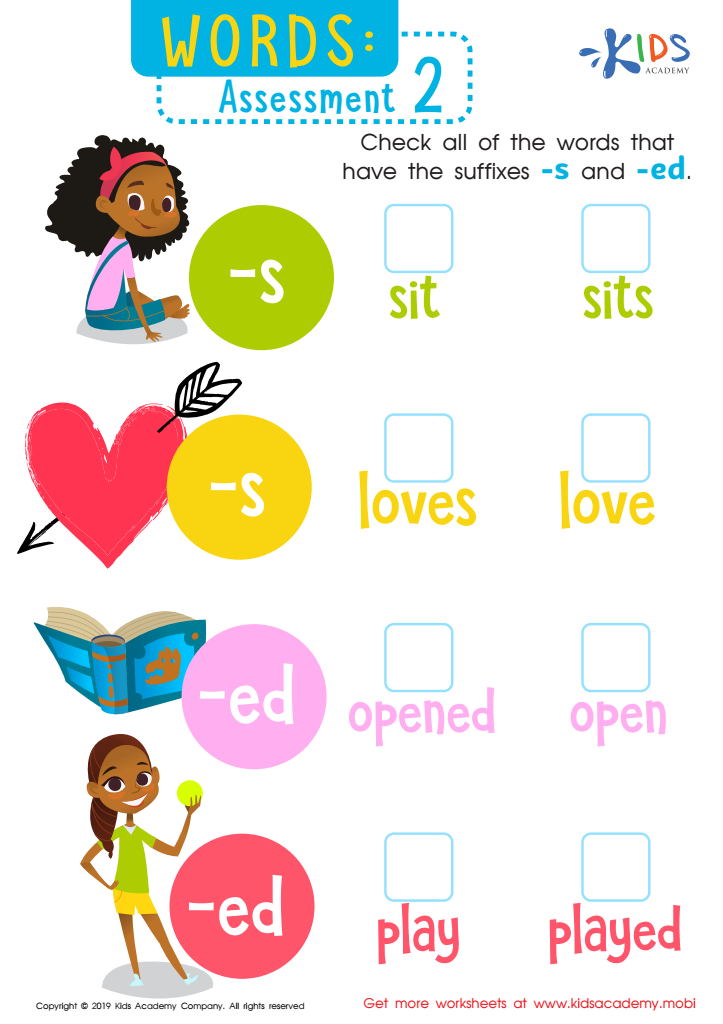
Words: Assessment 2 Worksheet
Test your child’s knowledge of -s and -ed word endings with this fun worksheet! They'll look at images and read the words, then choose the correct suffix to finish each one. Vivid illustrations make this an enjoyable learning experience!
Words: Assessment 2 Worksheet
Worksheet
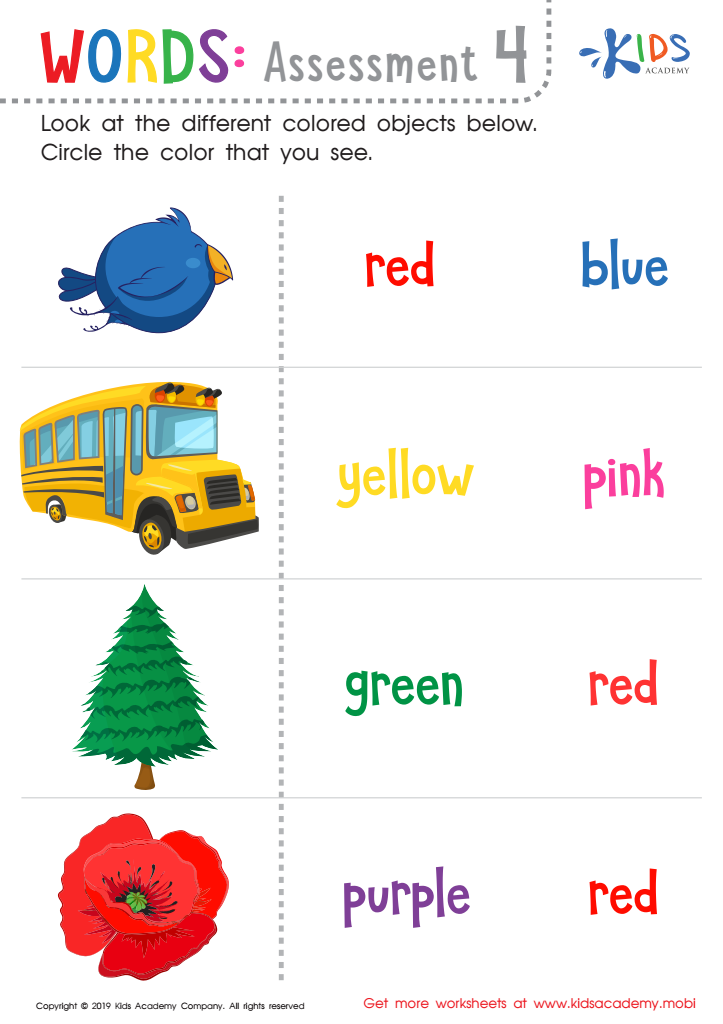
Words: Assessment 4 Worksheet
Look at the pictures and have your child circle the color they see. This free worksheet is great for assessing their knowledge of vocabulary words. It offers familiar images with words for kids to read and match with the colors. Help your child build their reading and understanding skills with this fun activity!
Words: Assessment 4 Worksheet
Worksheet
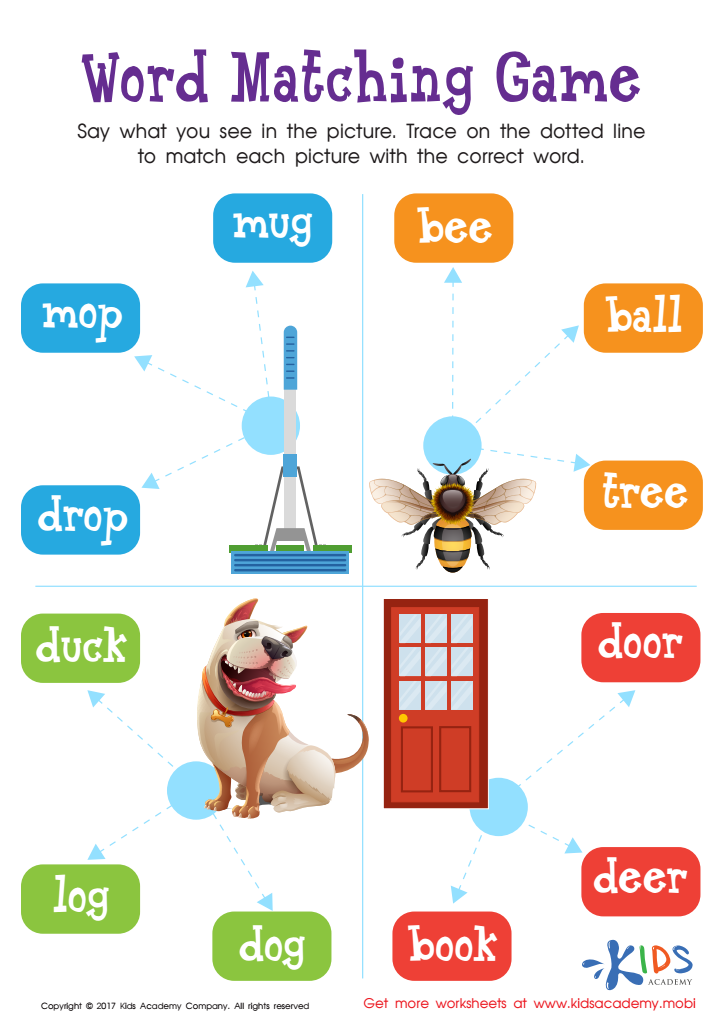
Word Matching Game Worksheet
Help your early reader develop prereading skills with this fun matching worksheet! Visual cues help them learn sight words, decode words in word families, and identify phonetic patterns. They'll practice discerning sounds past initial consonants while saying the name of the picture and finding the matching word - and reading at the same time!
Word Matching Game Worksheet
Worksheet
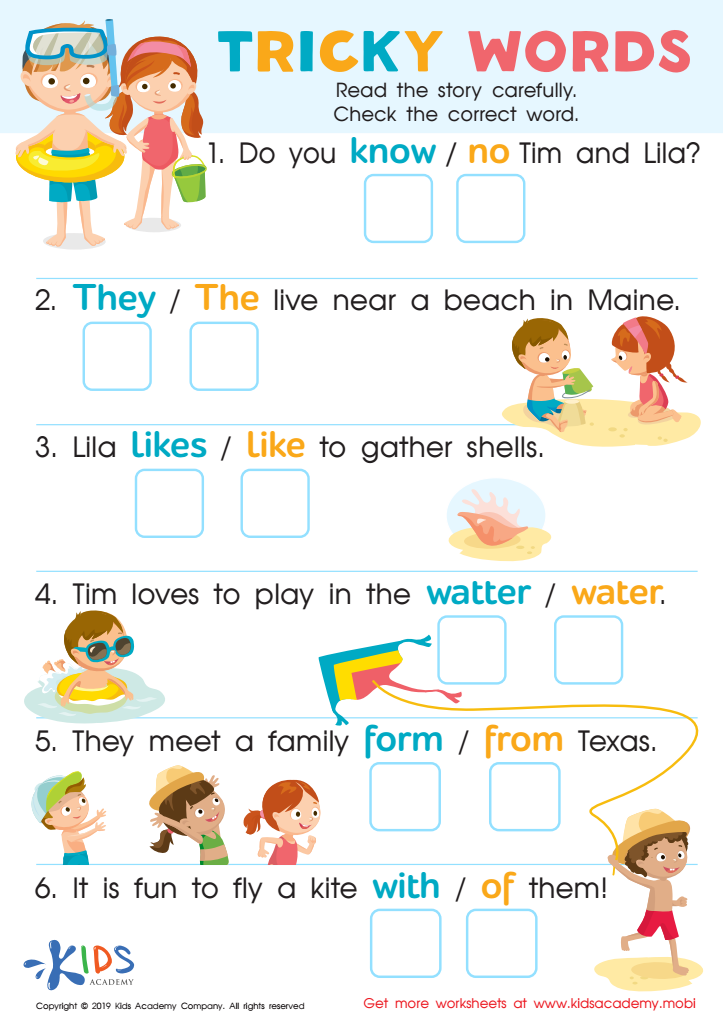
Tricky Words Worksheet
Reading can be tricky to start with, but this worksheet helps kids learn the basics of editing and strengthens their attention to detail. They'll select the right word from tricky choices, improving their reading and grammar skills.
Tricky Words Worksheet
Worksheet
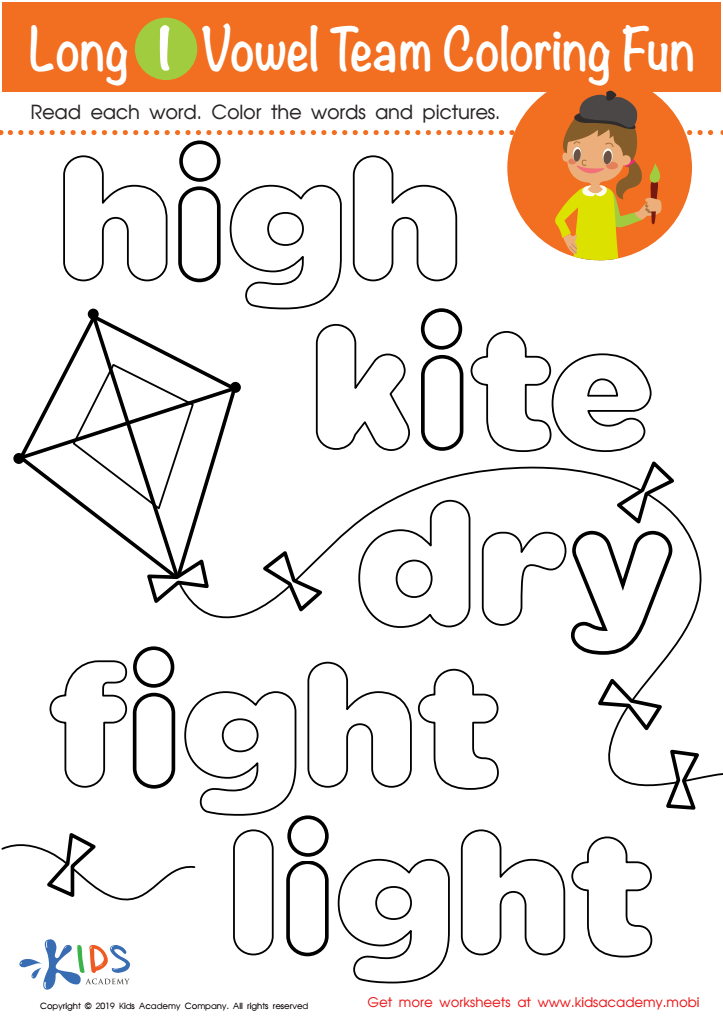
Long I Vowel Team Coloring Worksheet
This worksheet provides practice with letter combinations that make the long "i" sound while enhancing creativity and motor skills with a fun coloring activity. Unknowingly, new readers learn key phonics skills while having fun!
Download (PDF)
 Assign to My Students
Assign to My Students
Long I Vowel Team Coloring Worksheet
Worksheet
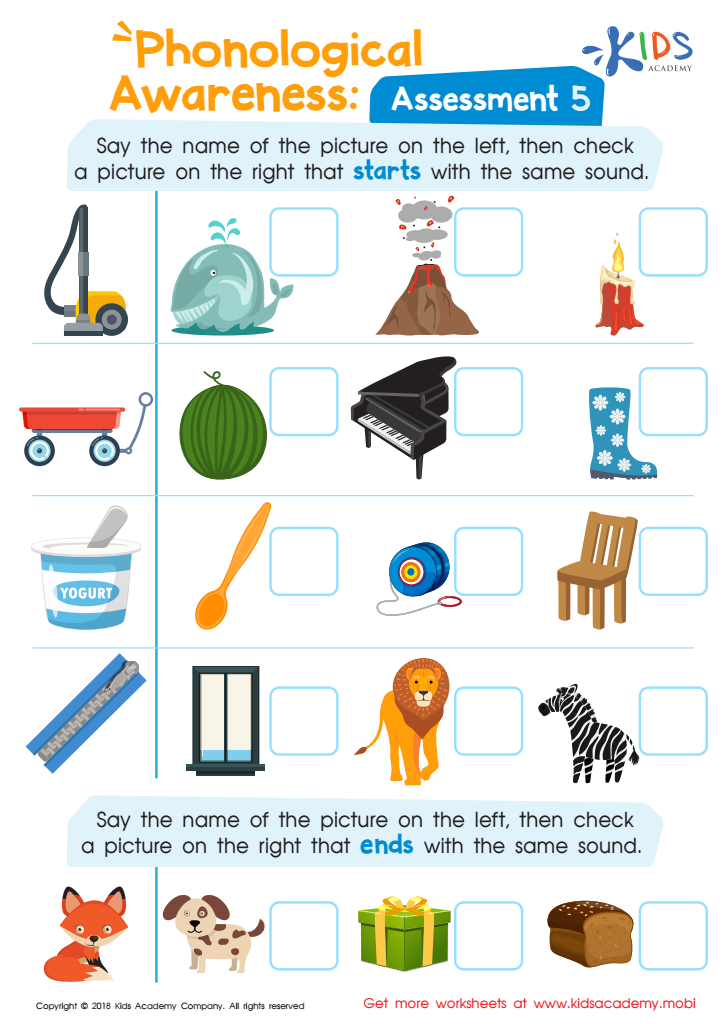
Phonological Awareness: Assessment 5 Worksheet
Repetition is key to success! This worksheet tests kids' ability to match beginning and ending sounds in words. Instruct them to say each word and listen closely to the sounds they make. Focus on the starting sounds for the first four pics, then the last one to hear ending sounds and find the right match!
Phonological Awareness: Assessment 5 Worksheet
Worksheet
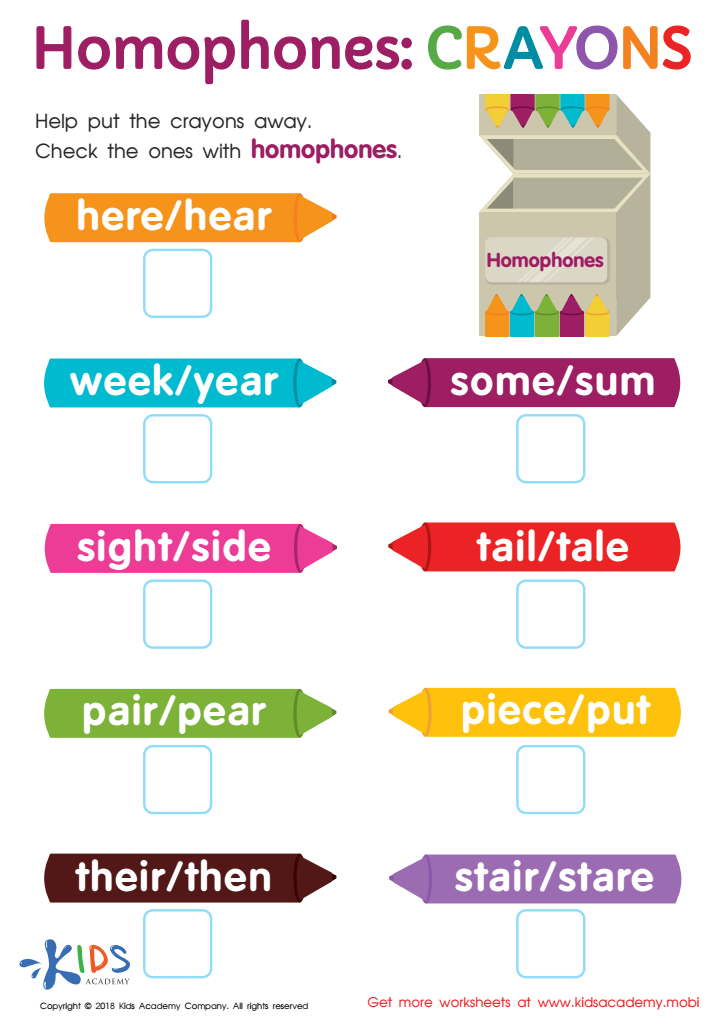
Homophones: Crayons Worksheet
Ask your kids: "What are homophones?" Explain that homophones are words that sound alike but have different meanings, like 'dare' and 'deer'. Ask them to identify homophones by putting the crayons in this printout away according to the words.
Homophones: Crayons Worksheet
Worksheet
Join Kids Academy for Free
Who is primarily going to use this learning content?




Spelling practice and elementary phonics are foundational building blocks in a child's literacy development, typically geared for ages 4-9. During this developmental stage, children are highly receptive to language acquisition, making it the perfect time to establish essential reading and writing skills.
Phonics, which focuses on the relationship between sounds and their corresponding letters, provides students with the tools to decode new words, aiding in both reading fluency and comprehension. Mastery of phonics contributes to the ability to spell words correctly, which consolidates learning and boosts confidence in written communication.
Spelling practice reinforces memory and understanding of word structures and patterns. It helps children recognize standard rules and exceptions in the English language, supporting them in becoming proficient readers and effective communicators. Regular practice improves attention to detail, critical thinking, and problem-solving skills, as children learn to predict spelling based on syllable combinations and phonemic patterns.
Investing in spelling and phonics at an early age translates into long-term educational benefits. It sets the stage for academic success, as strong literacy skills are predictive of future performance in all subjects. Parents and teachers who prioritize these practices are not only enhancing children's language abilities but also shaping their confidence, creativity, and love for learning.







