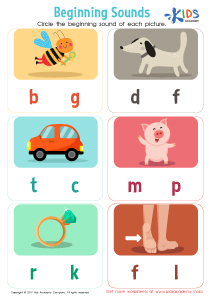
Vocabulary development Elementary Phonics Worksheets for Ages 4-9
4 filtered results
-
From - To
Enhance your child's vocabulary with our engaging Elementary Phonics Worksheets specifically designed for ages 4-9. These printable resources provide a fun and interactive way to build essential vocabulary skills while reinforcing phonetic understanding. Featuring colorful illustrations and user-friendly layouts, these worksheets encourage young learners to explore words in context, improving reading comprehension and language abilities. Perfect for both classroom and home settings, our vocabulary development activities ensure that children develop a solid foundation for lifelong learning. Help your little ones embark on their literacy journey today with our thoughtfully created phonics worksheets, designed to make learning enjoyable and effective!
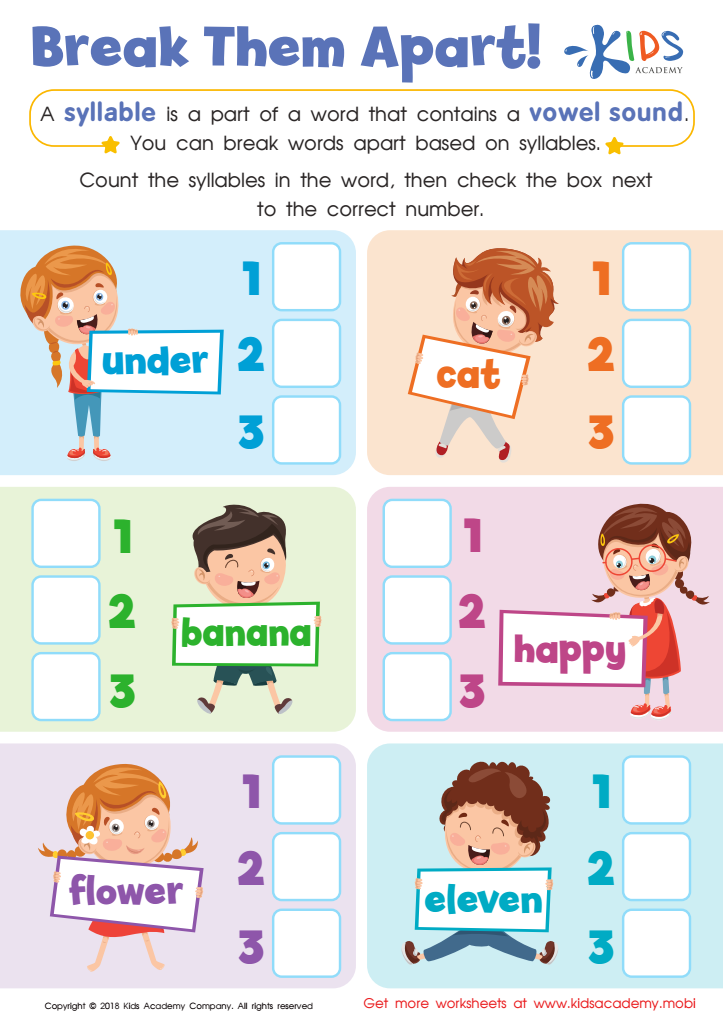
Reading: Break Them Apart Worksheet
 Assign to My Students
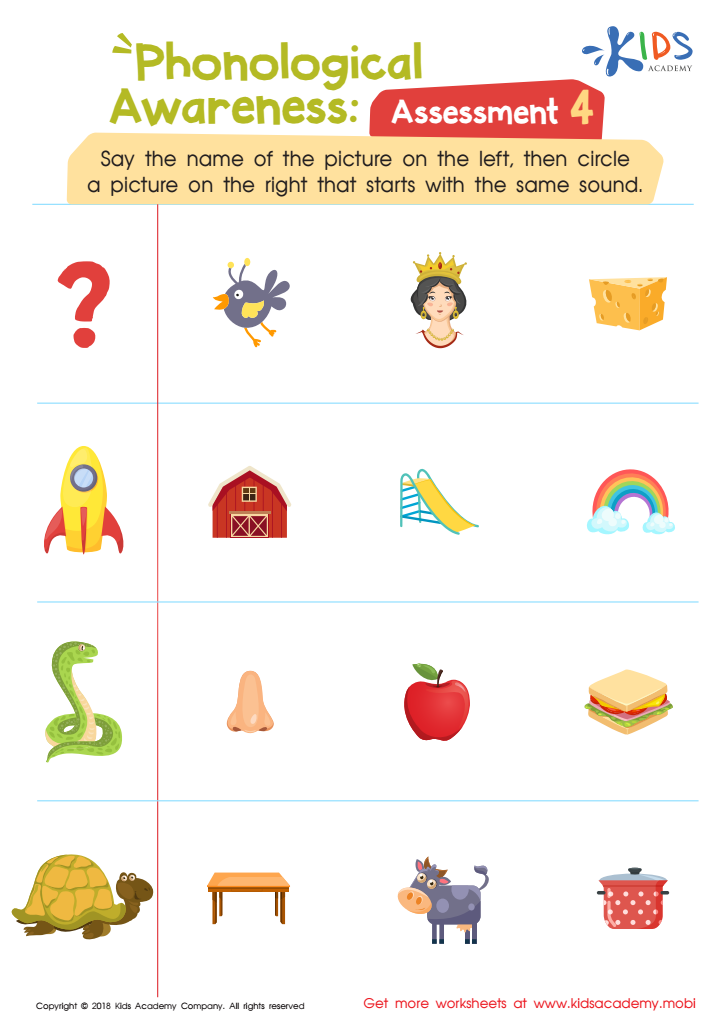
Phonological Awareness: Assessment 4 Worksheet
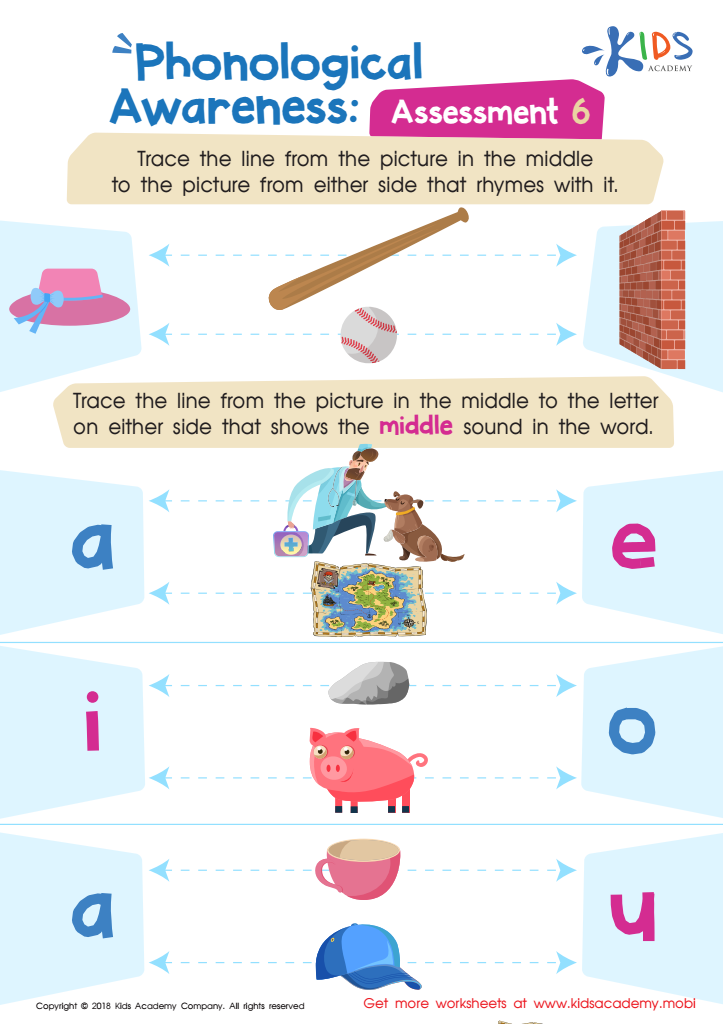
Phonological Awareness: Assessment 6 Worksheet
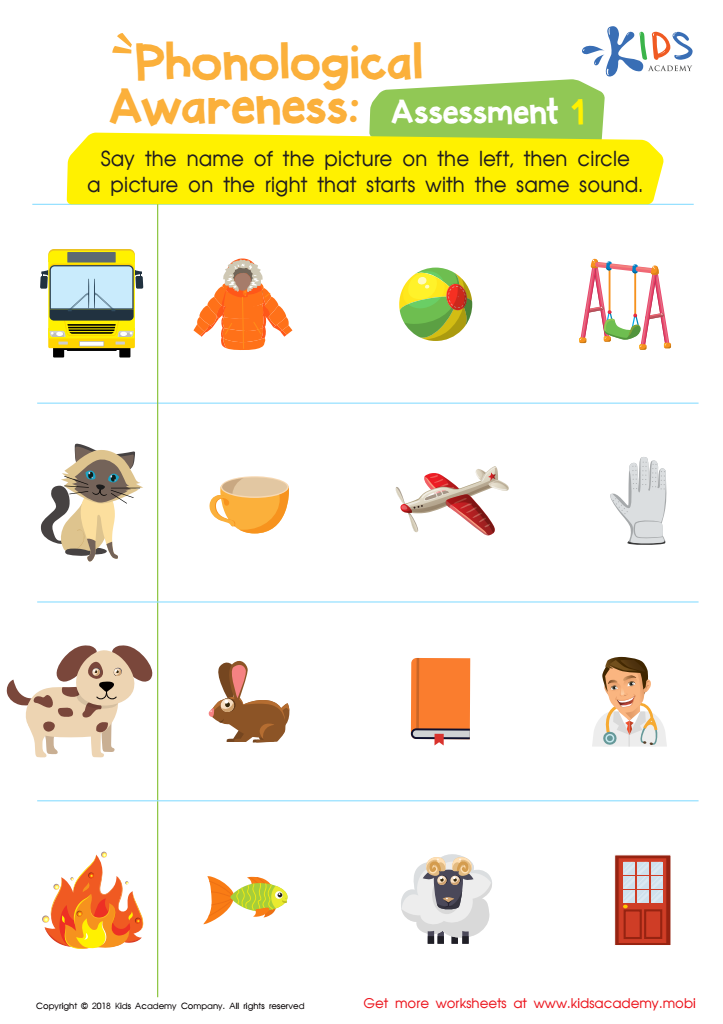
Phonological Awareness: Assessment 1 Worksheet




Vocabulary development and phonics are crucial for children ages 4-9 as they form the foundation for reading and writing skills. During these formative years, children are like sponges, rapidly absorbing new words and sounds that enhance their language abilities. A rich vocabulary enables kids to communicate effectively, express their thoughts and needs, and build comprehension skills, allowing them to understand stories and instructions better.
Implementing phonics, which involves sound-letter relationships, helps children decode unfamiliar words, improving their reading fluency and confidence. Research shows that strong phonics skills can lead to higher literacy rates. When children grasp how sounds correspond to letters, they become independent readers, fostering a love for books and learning.
Moreover, vocabulary development impacts academic success beyond reading and writing. It enhances listening and speaking skills, essential for classroom participation and social interaction. Teachers and parents play a vital role in nurturing vocabulary by engaging children in conversations, reading daily, and introducing new words in varied contexts, such as play. Investing in phonics and vocabulary growth at an early age not only eases the transition into formal education but also empowers children with the tools they need for lifelong learning and success.