
Reading comprehension Ending Sounds Worksheets for Ages 4-9
3 filtered results
Difficulty Level
Grade
Age
-
From - To
Subject
Activity
Standards
Enhance your child's reading skills with our engaging "Reading Comprehension Ending Sounds Worksheets" designed for ages 4-9! Perfect for early learners, these worksheets focus on identifying and understanding ending sounds in words, fostering essential phonetic awareness. Each activity encourages children to differentiate sound patterns, boosting their overall reading comprehension and literacy skills. With colorful visuals and fun exercises, kids will enjoy learning as they practice recognizing word endings. Tailored for classrooms or home learning, these worksheets are a fantastic resource for teachers and parents alike. Download our worksheets today and set your child on a path to reading success!
Favorites
With answer key
Interactive
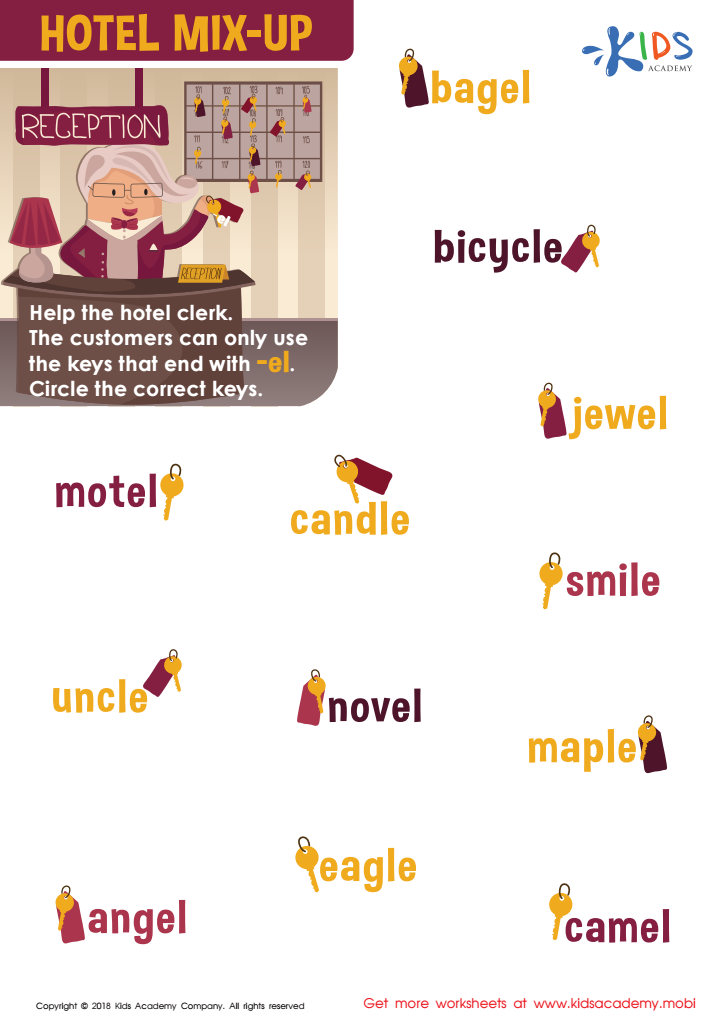
Hotel Mix-up Worksheet
Before doing this worksheet, explain to your kids what a hotel is. It's a building where guests can stay for a few days and pay for their stay. In this exercise, the hotel clerk needs help finding the correct keys. Have your kids circle words ending with -el to find the right ones.
 Assign to My Students
Hotel Mix-up Worksheet
Worksheet
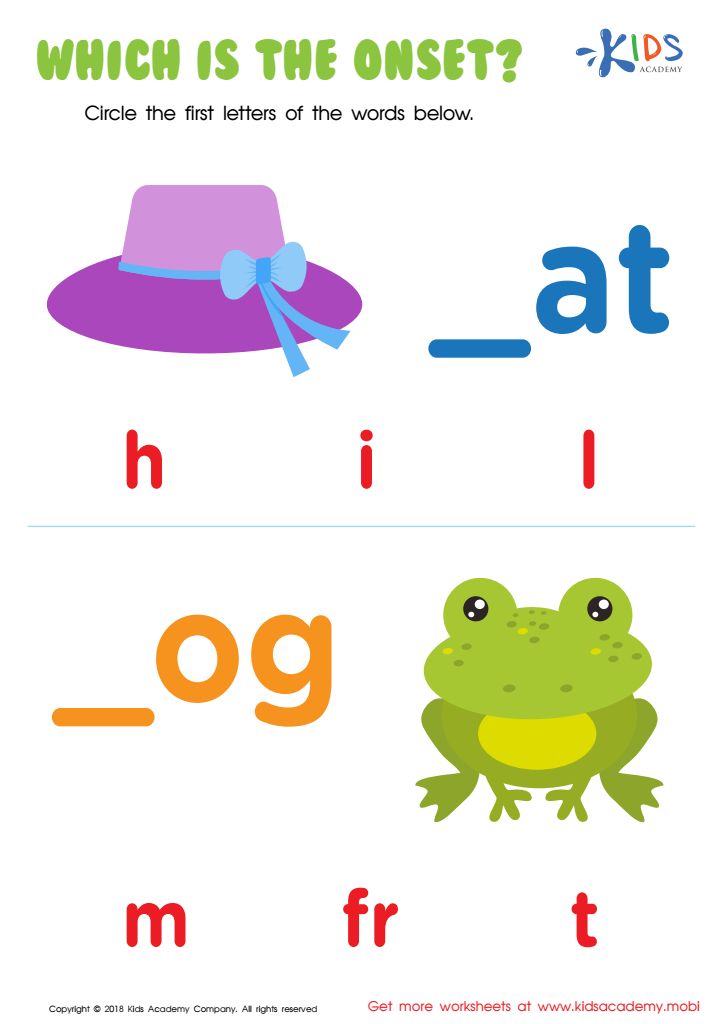
Which Is the Onset? Worksheet
Help your children learn to spell with this bright, fun worksheet. Struggling with spelling small words can make reading and writing sentences difficult. Encourage them to look at the pictures, say the names aloud and circle the correct first letter from the options. They will soon overcome any reluctance to spell.
Which Is the Onset? Worksheet
Worksheet
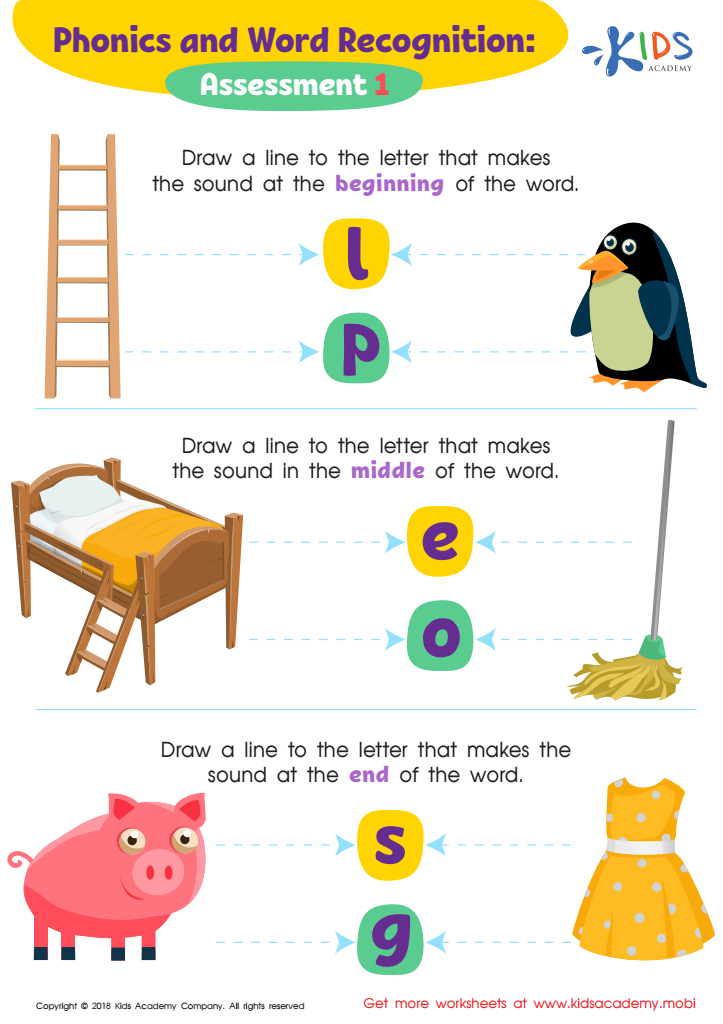
Phonics and Word Recognition: Assessment 1 ELA Worksheet
This fun worksheet tests your child's sound recognition skills for each part of a word. Ask your child to name each image and trace the line to match it with the corresponding letter. Listen for beginning sounds on 1st, middle sounds on 2nd, and ending sounds on 3rd. Encourage learning with this colorful and interactive activity!
Phonics and Word Recognition: Assessment 1 ELA Worksheet
Worksheet
Join Kids Academy for Free
Who is primarily going to use this learning content?






Reading comprehension, particularly the awareness of ending sounds, is a critical skill for children aged 4-9. This early phase of literacy development sets the foundation for effective reading and communication. Understanding ending sounds helps children identify word families, recognize rhymes, and segment words, enhancing their phonemic awareness—the ability to hear, identify, and manipulate sounds in words.
Parents and teachers should care about this aspect of reading comprehension because it directly impacts children's ability to decode unfamiliar words and improve their vocabulary. Mastery of ending sounds not only aids in reading fluency but also fosters a deeper understanding of the text, empowering children to make predictions, comprehend meaning, and engage critically with what they read.
Additionally, focusing on ending sounds creates an engaging and interactive learning experience, encouraging children to participate through rhymes, songs, and playful exercises. By prioritizing this skill, educators and parents facilitate a love for reading and a solid literacy foundation, nurturing confident and competent readers ready to tackle more complex materials in the future.
Ultimately, prioritizing reading comprehension—including ending sounds—equips children with essential skills that support their academic journey and lifelong learning.








