Fine motor skills improvement Alphabet Worksheets for Ages 4-9
5 filtered results
-
From - To
Enhance your child's fine motor skills with our Alphabet Worksheets for ages 4-9. Designed by educational experts, these printable worksheets offer fun and engaging activities that promote hand-eye coordination, pencil grip, and precision. Our resources include a variety of tasks such as tracing letters, coloring, and matching games, which help young learners develop essential writing skills while mastering the alphabet. Perfect for classroom settings or at-home learning, these worksheets support early literacy and prepare children for future academic success. Boost your child's fine motor abilities and alphabet knowledge with Kids Academy’s expertly crafted materials.
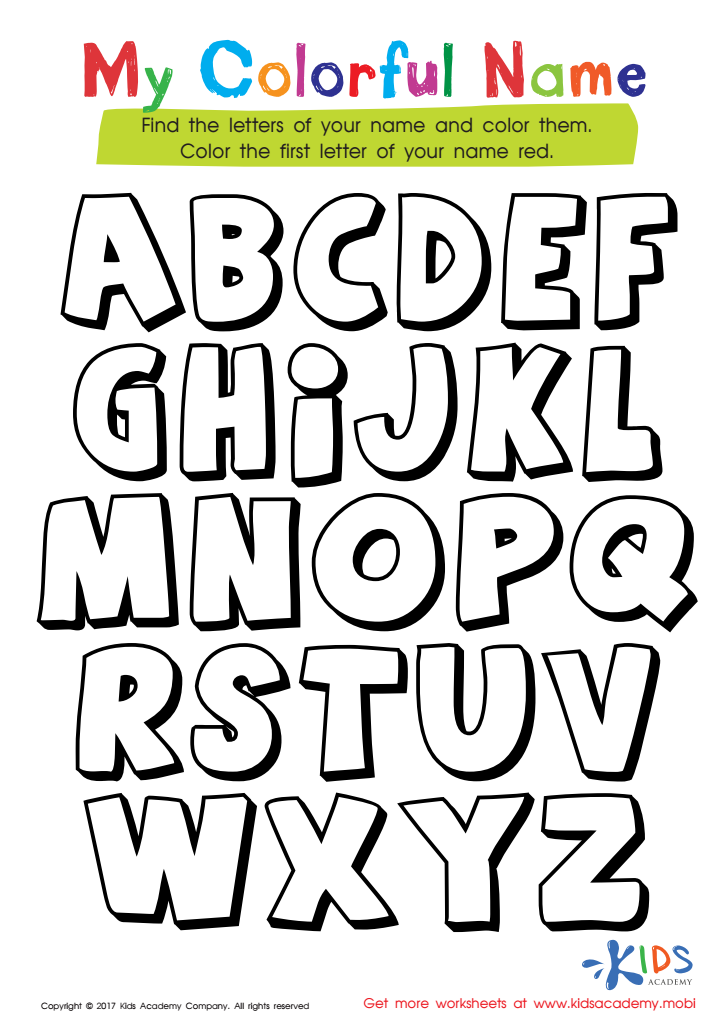
My Colorful Name Worksheet
 Assign to My Students
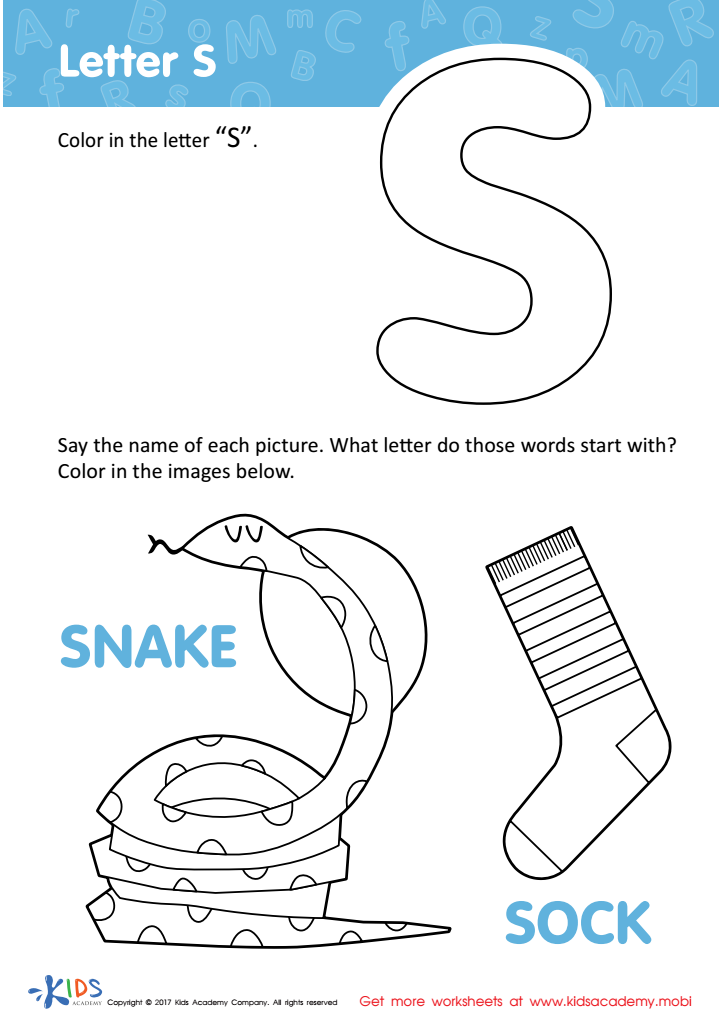
Letter S Coloring Sheet
Assign to My Students
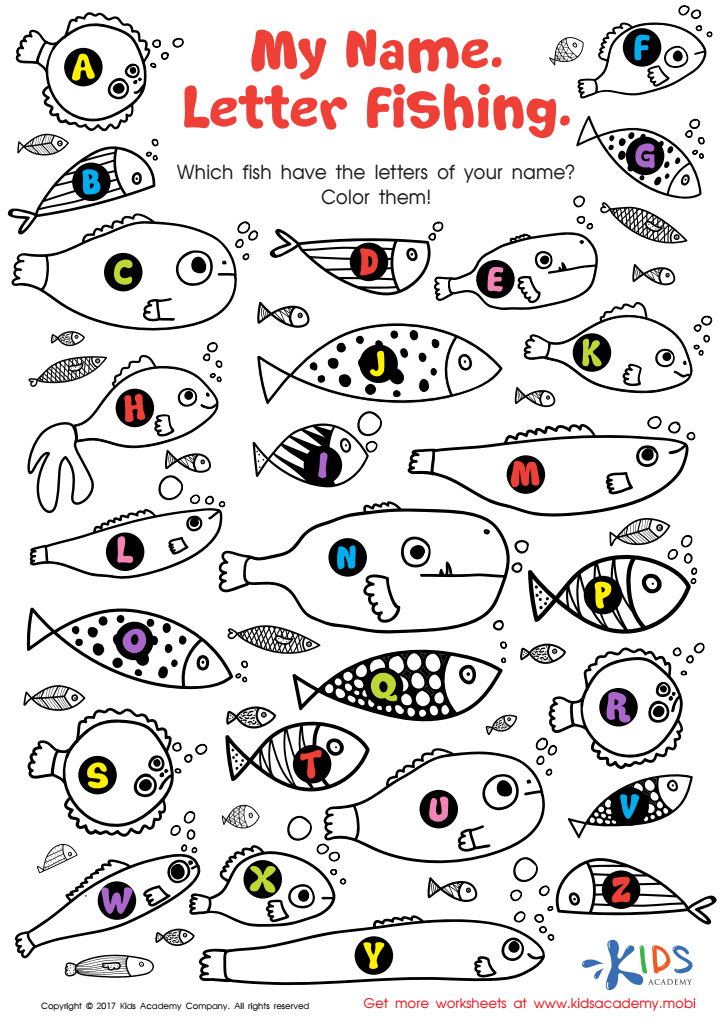
My Name: Letter Fishing Worksheet
Assign to My Students
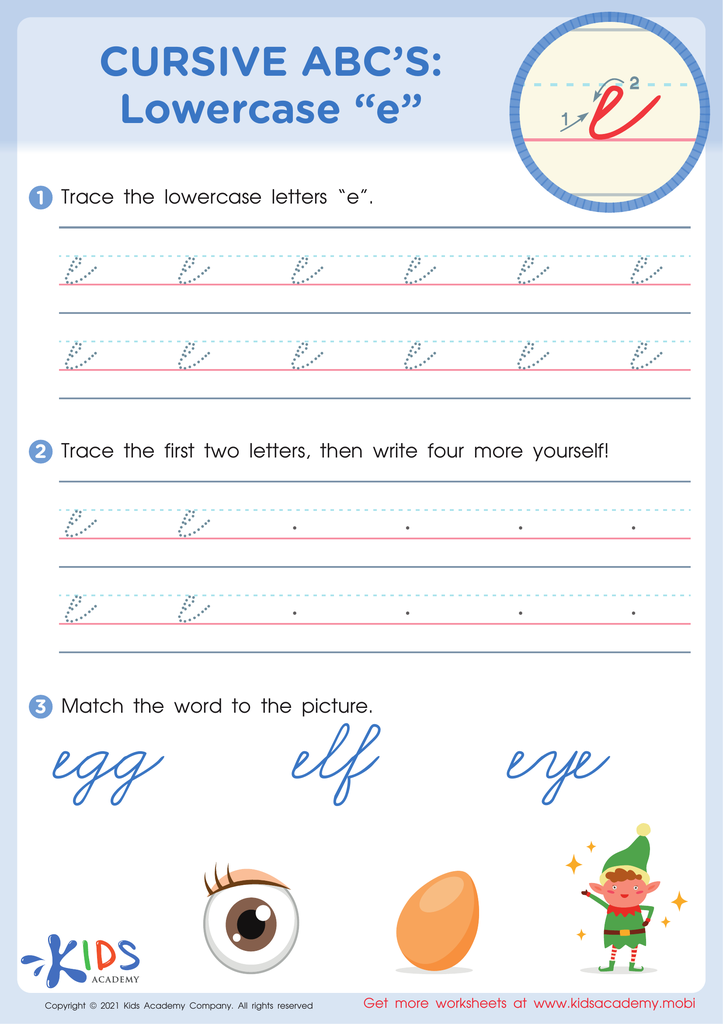
Cursive ABCs: Lowercase e
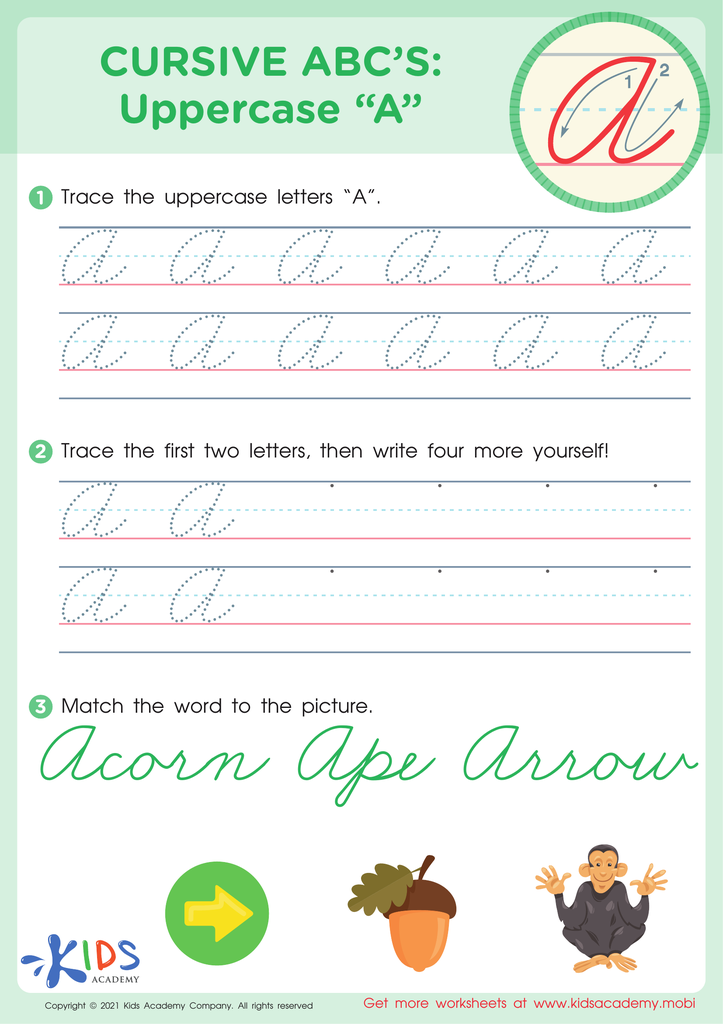
Cursive ABCs: Uppercase A






Fine motor skills are crucial for young children aged 4-9, as they form the foundation for many essential tasks they will encounter in both school and daily life. Fine motor skills involve the coordination of small muscles in the hands and fingers, which are critical for writing, cutting, and manipulating objects. By improving these skills early on, children develop better hand-eye coordination, which is fundamental for writing the alphabet clearly and legibly. This not only affects their ability to express themselves through written language but also influences their overall academic performance as writing is pivotal in many subjects.
Moreover, enhancing fine motor skills through engaging activities like alphabet games can increase focus, patience, and perseverance—key attributes for academic success and personal development. For parents, fine motor skills improvement means more than helping their child draw or write neatly; it can reduce frustrations associated with difficulty in completing tasks that require precision, such as tying shoelaces or buttoning clothes, fostering greater independence.
For teachers, paying attention to the development of fine motor skills ensures that students can perform well in activities like drawing, crafting, and especially writing, creating a more inclusive and supportive classroom environment. Thus, fine motor skills improvement is essential for holistic child development and should be a priority for parents and teachers alike.







