Alphabet familiarity Letter Recognition Worksheets for Ages 4-9
7 filtered results
-
From - To
Introduce your child to the world of letters with our Alphabet Familiarity Letter Recognition Worksheets, designed for ages 4-9. These engaging, educational printables from Kids Academy focus on enhancing letter recognition and alphabet familiarity, essential building blocks for early reading skills. Our meticulously curated activities, rich with vibrant images and interactive tasks, make learning the ABCs fun and effective. Perfect for preschoolers, kindergartners, and early elementary students, these worksheets will help your child confidently identify and write each letter. Foster a love for literacy with Kids Academy’s expertly developed resources, setting your little learner on a path to reading success.
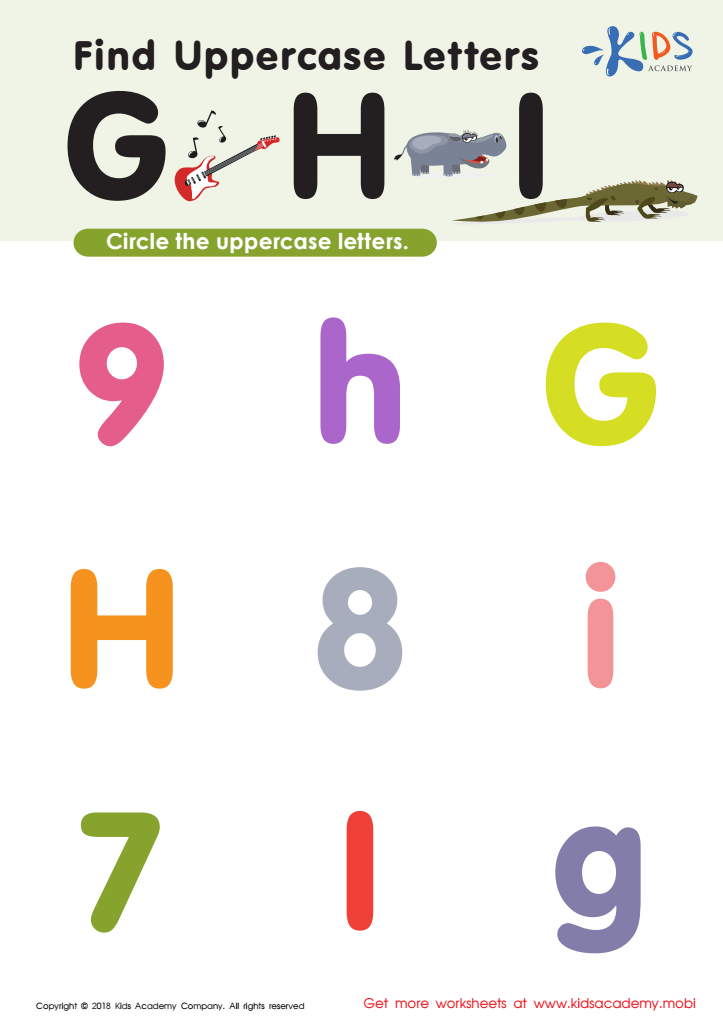
Find Uppercase Letters G, H, and I Worksheet
 Assign to My Students
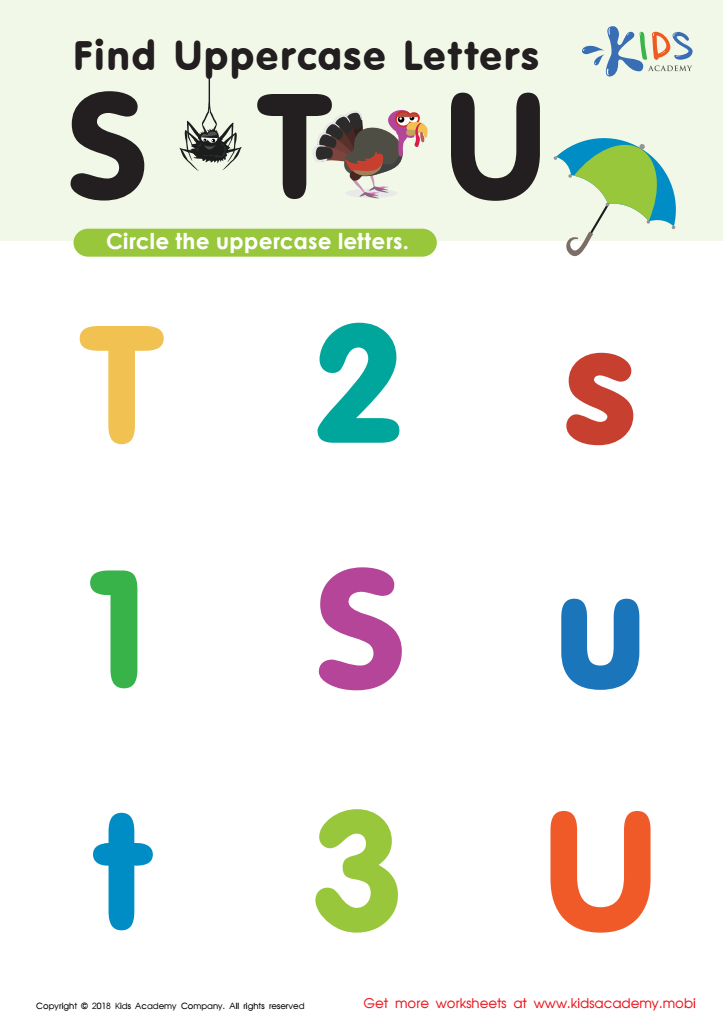
Find Uppercase Letters Worksheet
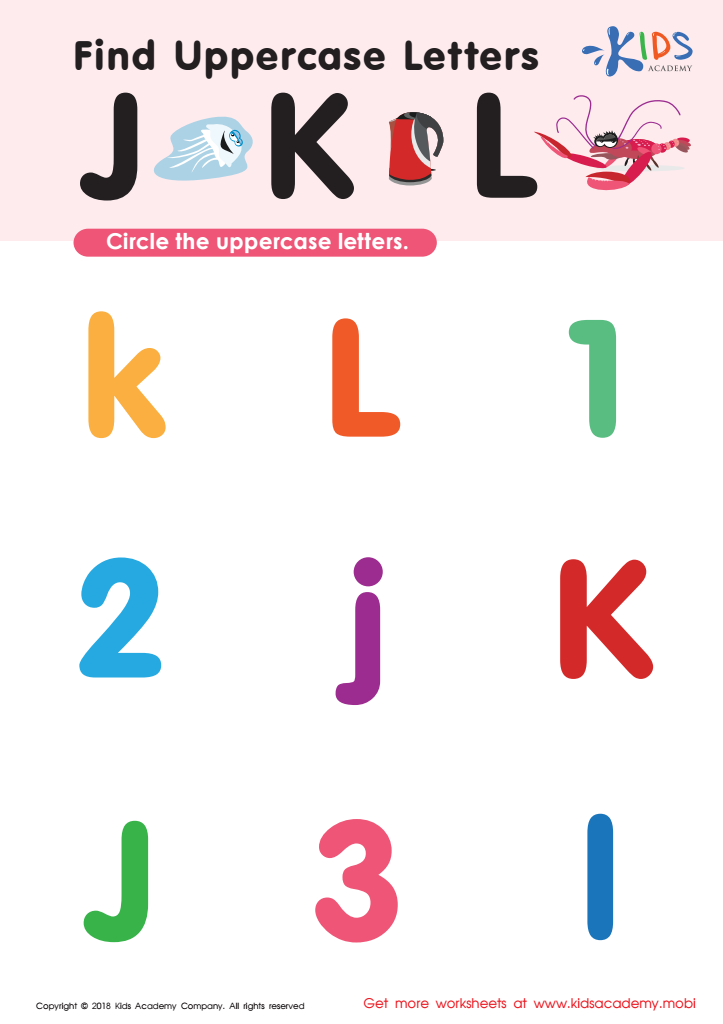
Find Uppercase Letters J, K, and L Worksheet
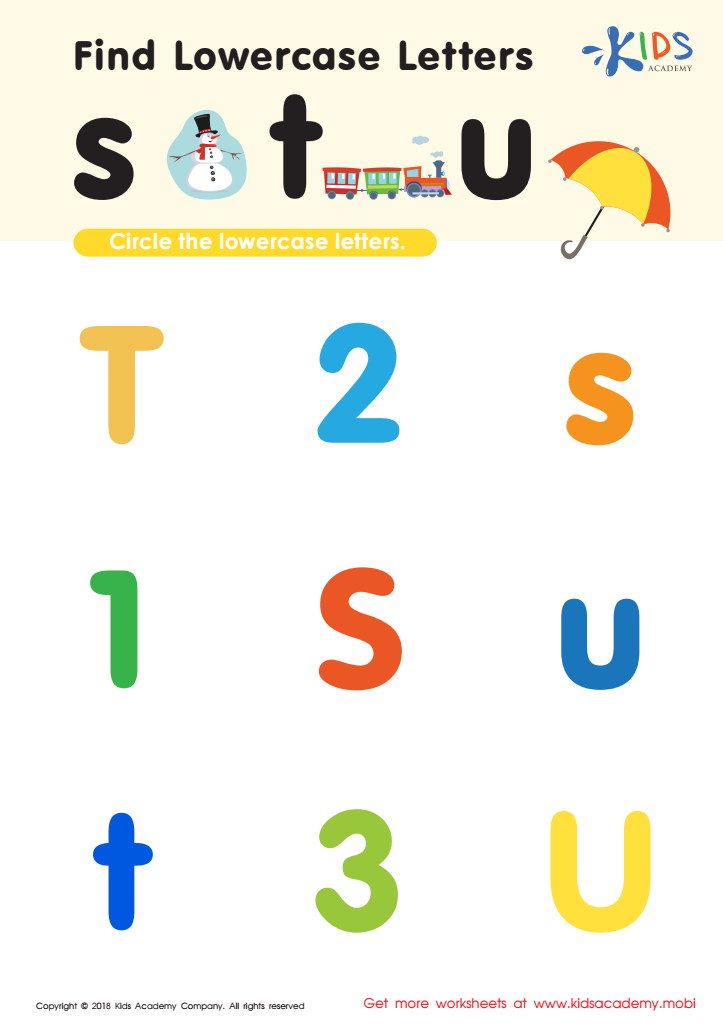
Find lowercase Letters s t u Worksheet
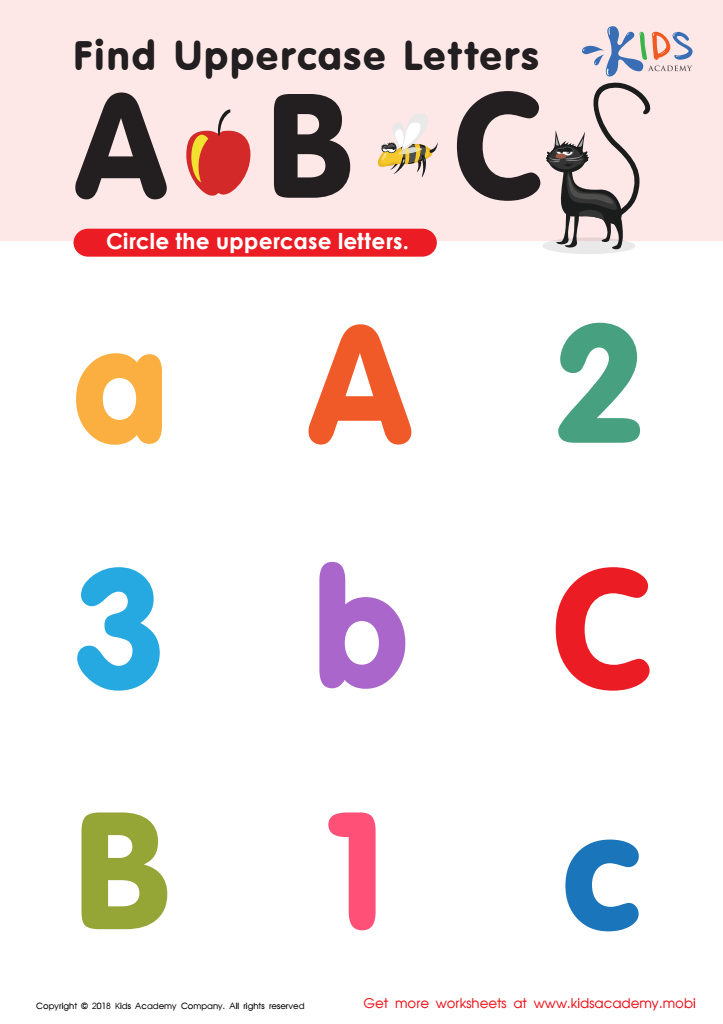
Find Uppercase Letters A, B, and C Worksheet
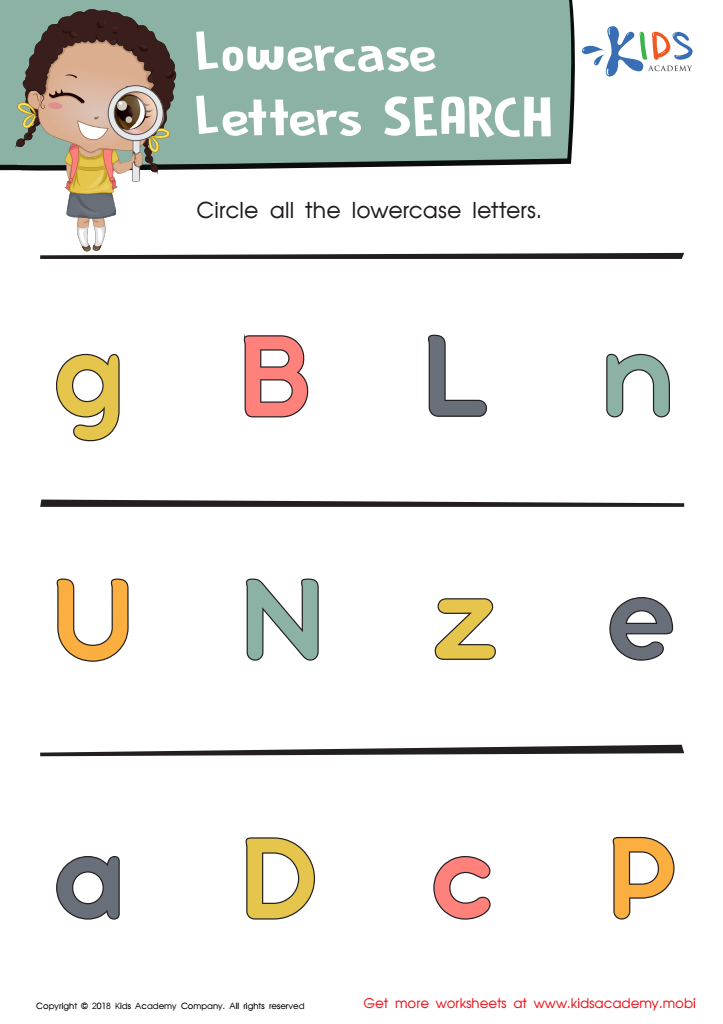
Lowercase Letters Search: Assessment Worksheet
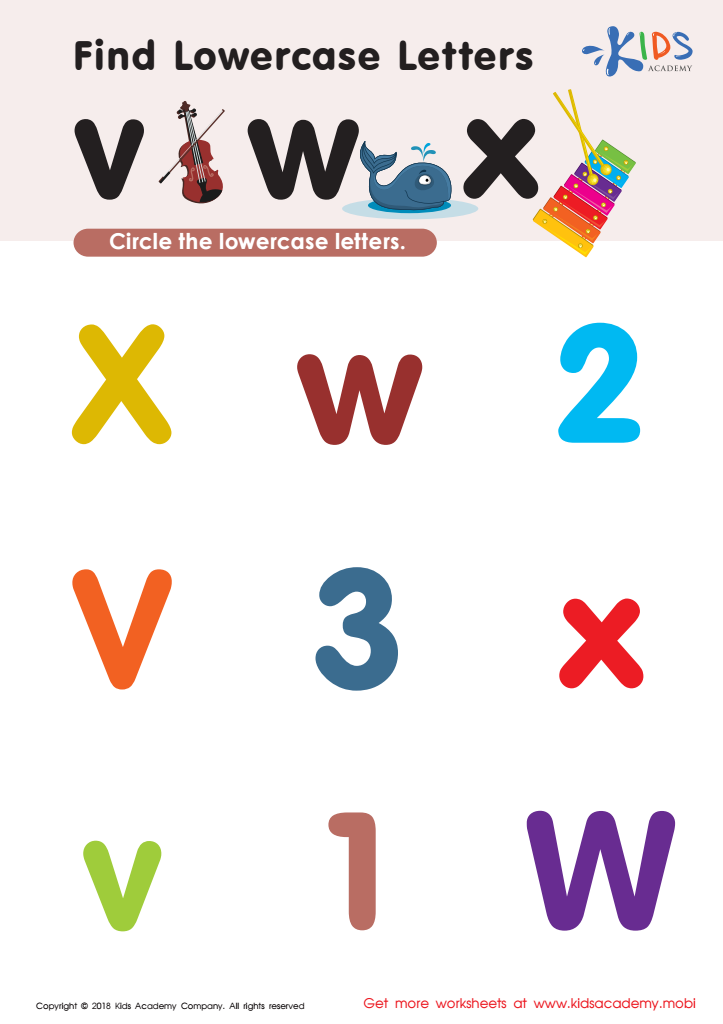
Find Lowercase Letters v w x Worksheet








Alphabet familiarity and letter recognition are foundational skills that play a crucial role in a child’s early literacy development. For children aged 4-9, mastering these skills is instrumental in paving the way for successful reading and writing. When parents and teachers prioritize alphabet familiarity, they facilitate cognitive development that transcends mere memorization of letters into an understanding of the corresponding sounds, paving the way for the phonemic awareness crucial in reading.
Proficiency in letter recognition supports the development of decoding skills, enabling children to break down words into individual sounds and construct meaning. Research indicates that early literacy skills, such as recognizing letters, are strong predictors of later reading success, emphasizing the long-term benefits. Children who struggle early to grasp these basics tend to lag in reading, which can impact their overall academic confidence and performance.
Furthermore, letter recognition aids in the enhancement of visual discrimination skills, crucial for distinguishing between similar shapes and patterns—a skill vital not just in reading but also in general cognitive tasks. Encouraging alphabet familiarity through engaging activities like singing the alphabet song, playing letter-matching games, and reading alphabet books makes learning fun and fosters a love for reading. Thus, parents and teachers nurturing these skills are investing in a child’s educational journey and future academic achievements.







