Letter formation Letter Recognition Worksheets for Ages 4-9
5 filtered results
-
From - To
Discover engaging and educational Letter Formation and Letter Recognition Worksheets designed for children aged 4-9! Our carefully crafted resources help young learners master the alphabet by improving their handwriting and letter recognition skills. Each worksheet features fun activities that encourage creativity and make learning enjoyable. With a variety of exercises including tracing, coloring, and identifying letters, children will develop essential fine motor skills while building their confidence in reading and writing. Ideal for home or classroom use, these worksheets are a valuable tool for fostering a love of learning in early education. Start your child’s literacy journey now!
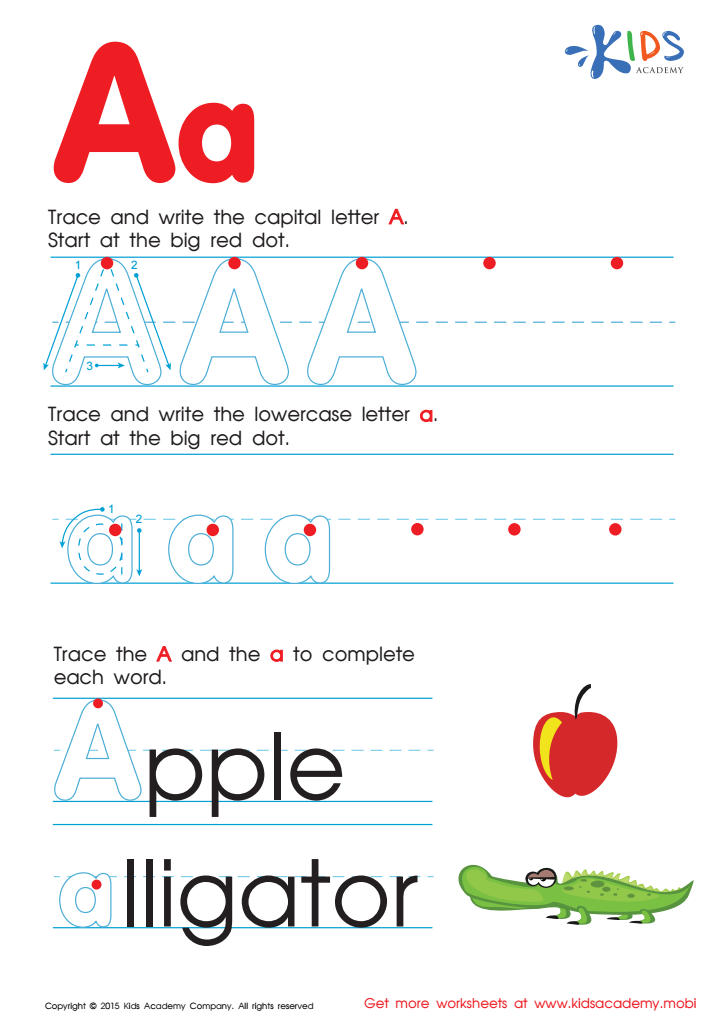
Letter A Tracing Page
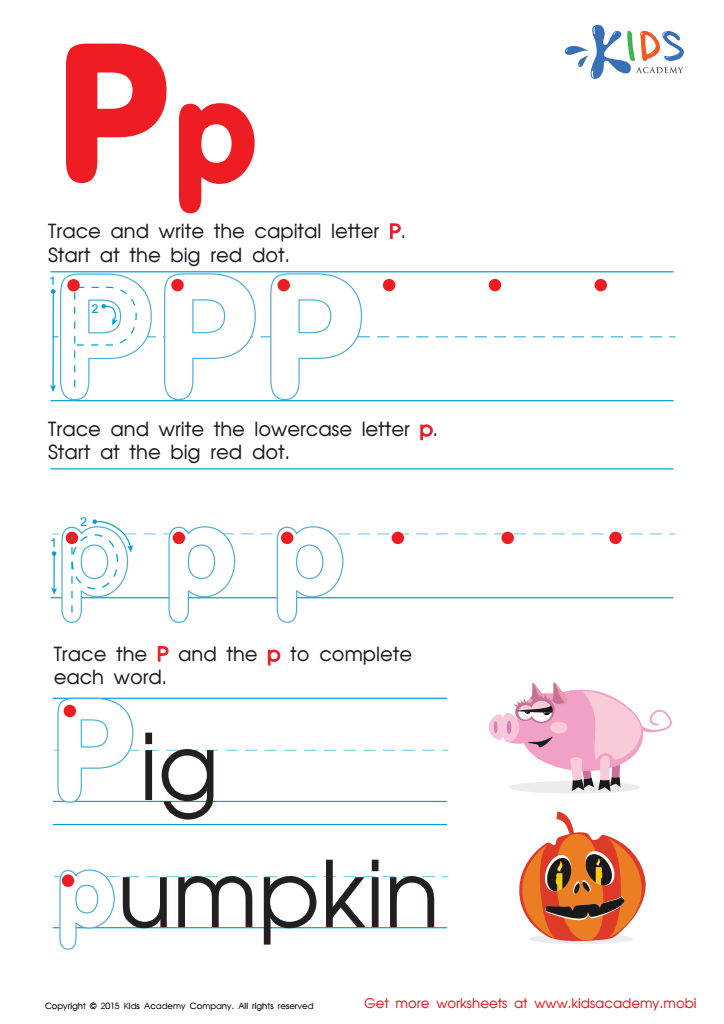
Letter P Tracing Page

Letter G Tracing Page
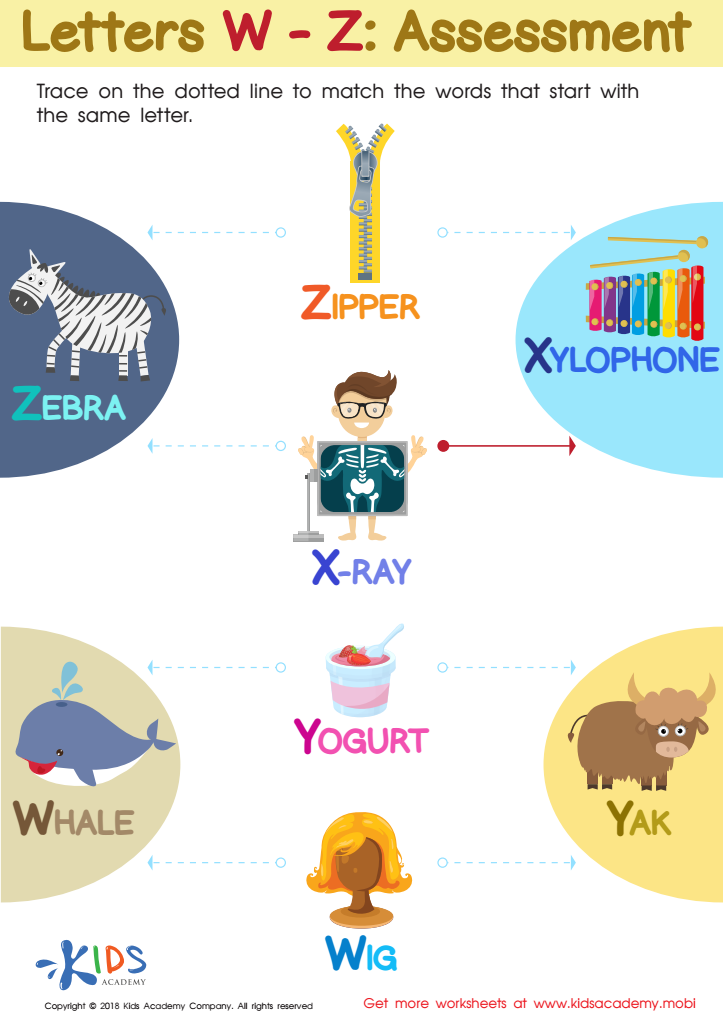
Letters W–Z Tracing Worksheet
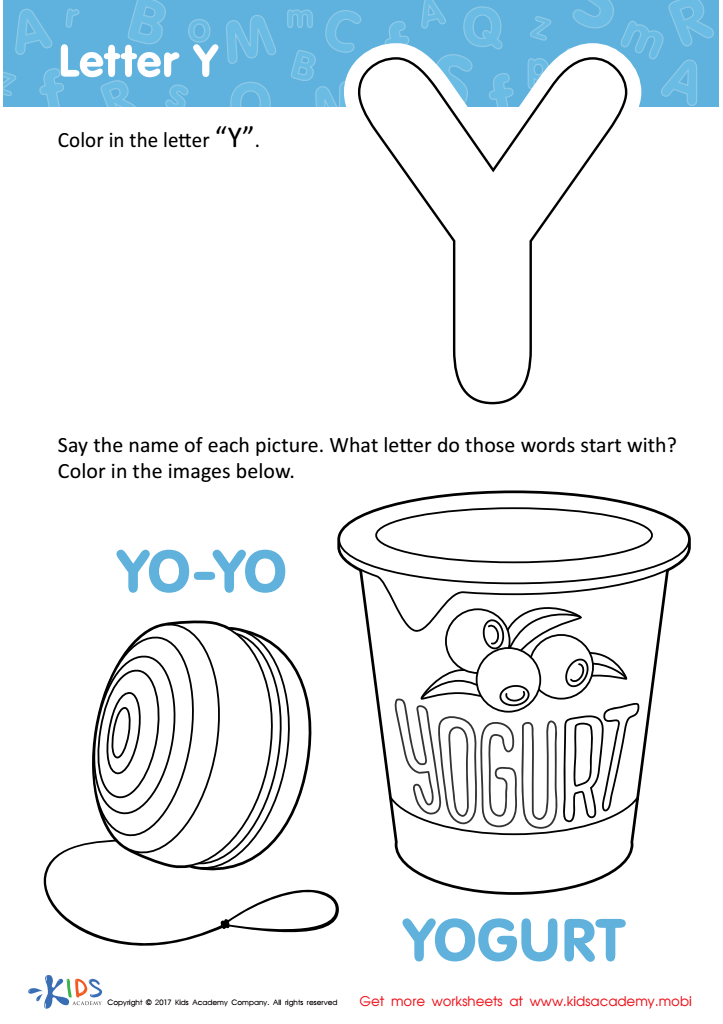
Letter Y Coloring Sheet
 Assign to My Students








Letter formation and letter recognition are crucial components of early literacy for children aged 4 to 9. Parents and teachers should prioritize these skills as they serve as the foundation for reading and writing.
Firstly, letter recognition is essential for developing phonemic awareness, which helps children understand the relationship between letters and sounds. Recognizing letters allows children to decode words, enabling them to read independently. This skill also aids in building vocabulary and comprehension, fostering a lifelong love for reading.
Secondly, proper letter formation strengthens fine motor skills essential for good handwriting. When children practice forming letters correctly, they enhance their dexterity, hand-eye coordination, and overall writing fluency. Good handwriting promotes confidence in written communication and helps prevent frustration later as children progress through grades.
Additionally, understanding letter formation and recognition supports academic success across subjects. It aids in organizing thoughts and ideas effectively when writing essays or answering questions. Moreover, a strong foundation in literacy can positively impact a child’s self-esteem, social skills, and cognitive development, all of which are vital during these formative years.
Ultimately, by prioritizing letter formation and recognition, parents and teachers empower children with the essential tools they need for effective learning and communication.







