Lowercase identification Lowercase/Small Letters Worksheets for Ages 4-9
5 filtered results
-
From - To
Discover our engaging "Lowercase Identification Lowercase/Small Letters Worksheets for Ages 4-9" designed to enhance early literacy skills. Ideal for preschool to grade 3, these worksheets help young learners master the recognition and writing of lowercase letters through fun and interactive activities. With varied exercises like tracing, matching, and coloring, children can build confidence in their alphabet knowledge while enjoying their learning journey. Our printable resources provide a solid foundation for reading and writing, fostering a love for learning in a playful but educational way. Bring alphabet mastery to life with Kids Academy’s expert-crafted lowercase identification worksheets!
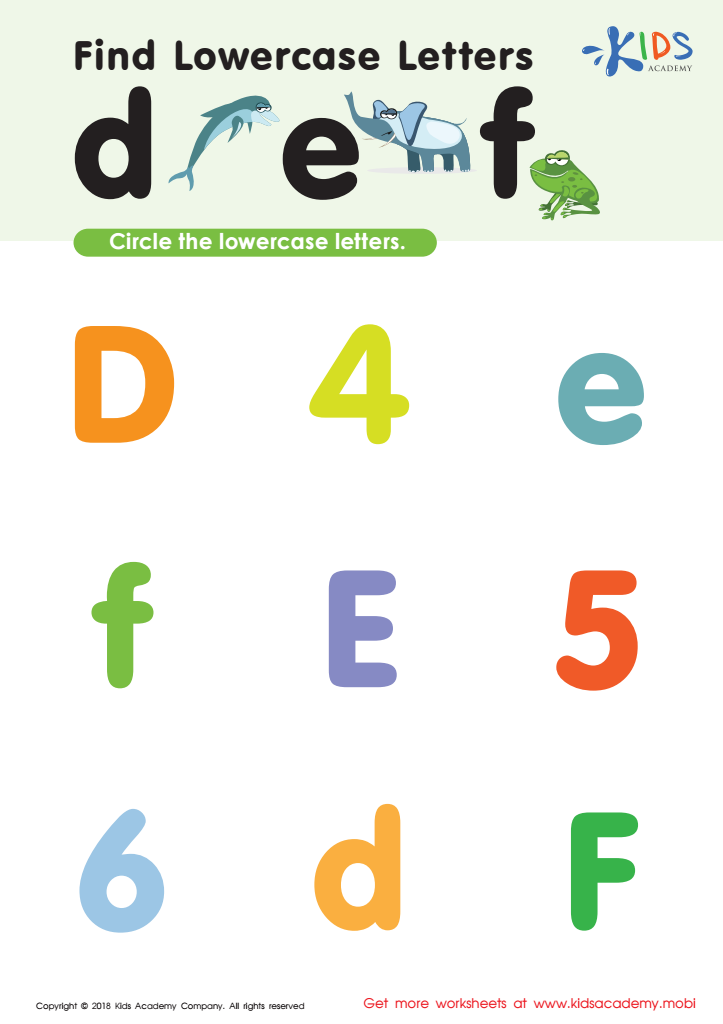
Find Lowercase Letters d e f Worksheet
 Assign to My Students
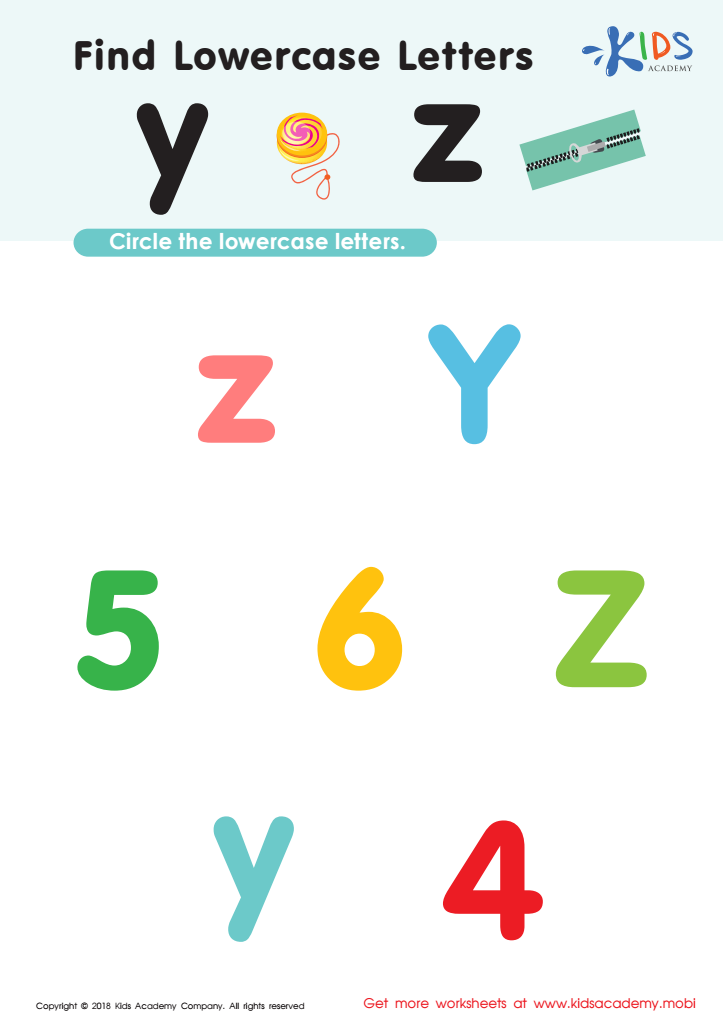
Find Lowercase Letters y z Worksheet

Find lowercase letters a b c Worksheet
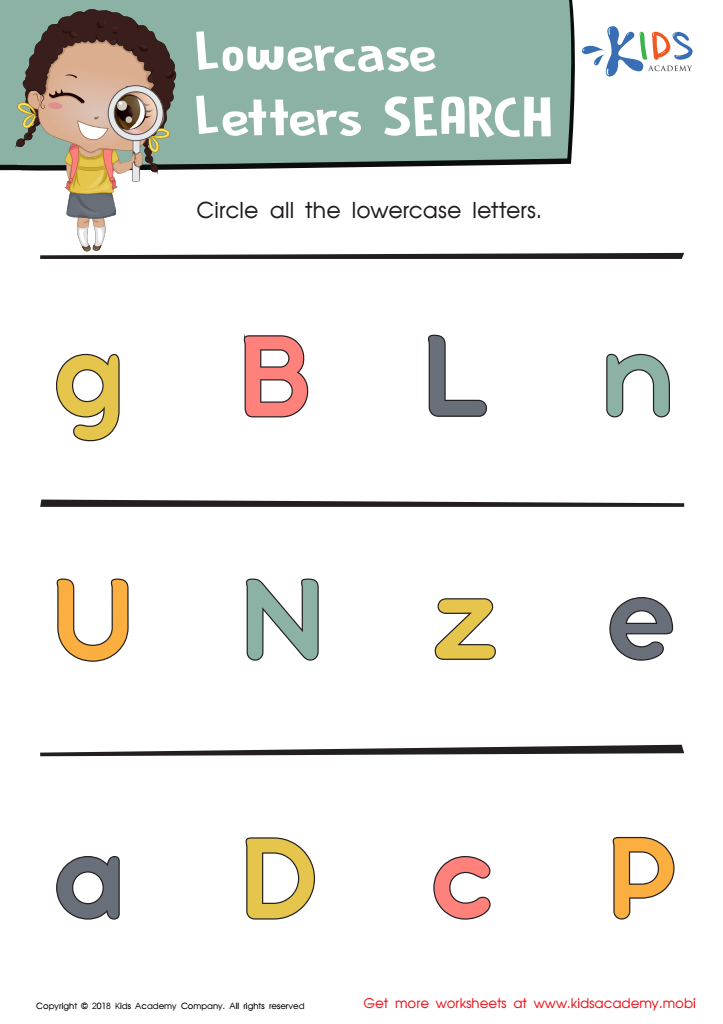
Lowercase Letters Search: Assessment Worksheet

Find Lowercase Letters v w x Worksheet


Parents and teachers should care deeply about lowercase letter identification for children aged 4-9 because it's fundamental to early literacy development. Recognizing and understanding lowercase letters lays the groundwork for reading fluency, writing proficiency, and overall academic success.
Lowercase letters are the most common in print, commonly seen in books, signage, and educational materials. When children only recognize uppercase letters, they might struggle to read and understand sentences since text is primarily in lowercase. By learning lowercase letters, children enhance their ability to decode (read) words accurately and efficiently, fostering better comprehension skills.
Moreover, writing often begins with lowercase letters. Proficiency in lowercase identification helps children when they start practicing handwriting, ensuring they can replicate what they frequently see in print. This includes forming proper letter cases, improving neatness, and promoting fine motor skills.
Finally, early competence in recognizing lowercase letters boosts confidence. When children can read and write fluently, they feel successful and are more motivated to deeply engage with learning. This foundational skill supports larger educational goals, paving the way for lifelong literacy and a love for reading. Therefore, emphasizing lowercase letter identification from an early age is critical, yielding benefits that will aid children's development in numerous ways.