Alphabet Recognition Missing Letters Worksheets for Ages 4-9
3 filtered results
-
From - To
Boost your child’s alphabet recognition with our engaging Missing Letters Worksheets designed for ages 4-9. These printable worksheets provide a fun and interactive way for children to learn about letters by identifying and filling in the missing ones. Perfect for early learners, each worksheet reinforces letter recognition, phonics, and vocabulary skills while encouraging independent thinking. Aligned with educational standards, our resources support children in developing essential literacy skills through playful practice. Whether for home or classroom use, our missing letters worksheets will make learning the alphabet an exciting adventure for your little ones! Enhance their reading confidence and spark a love for learning today!
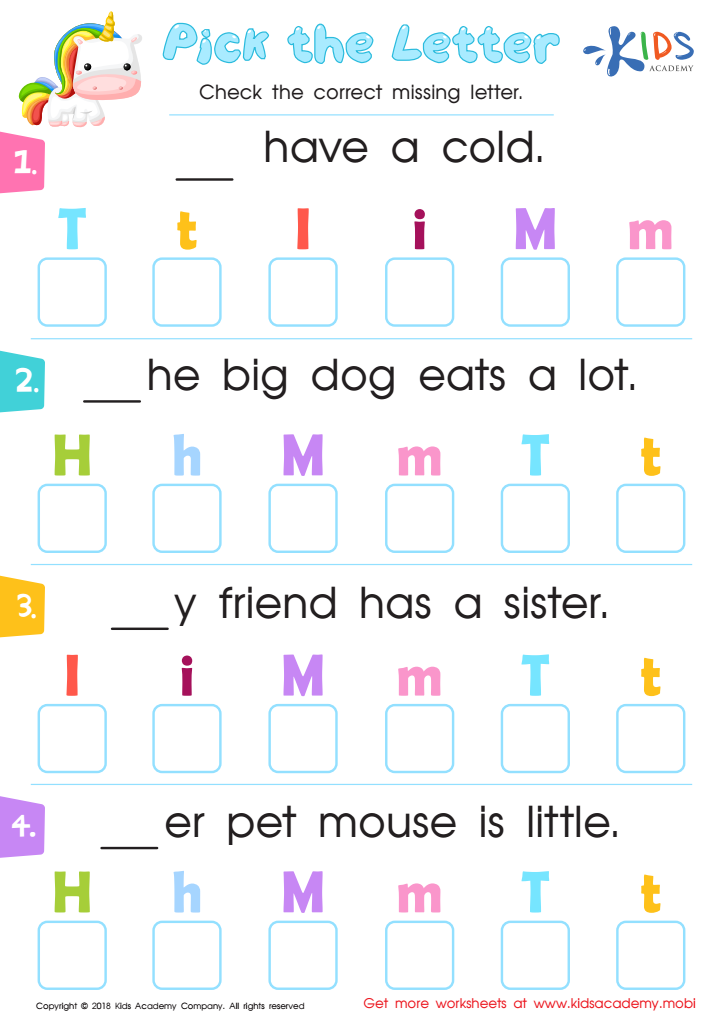
Pick the Letter Worksheet
 Assign to My Students
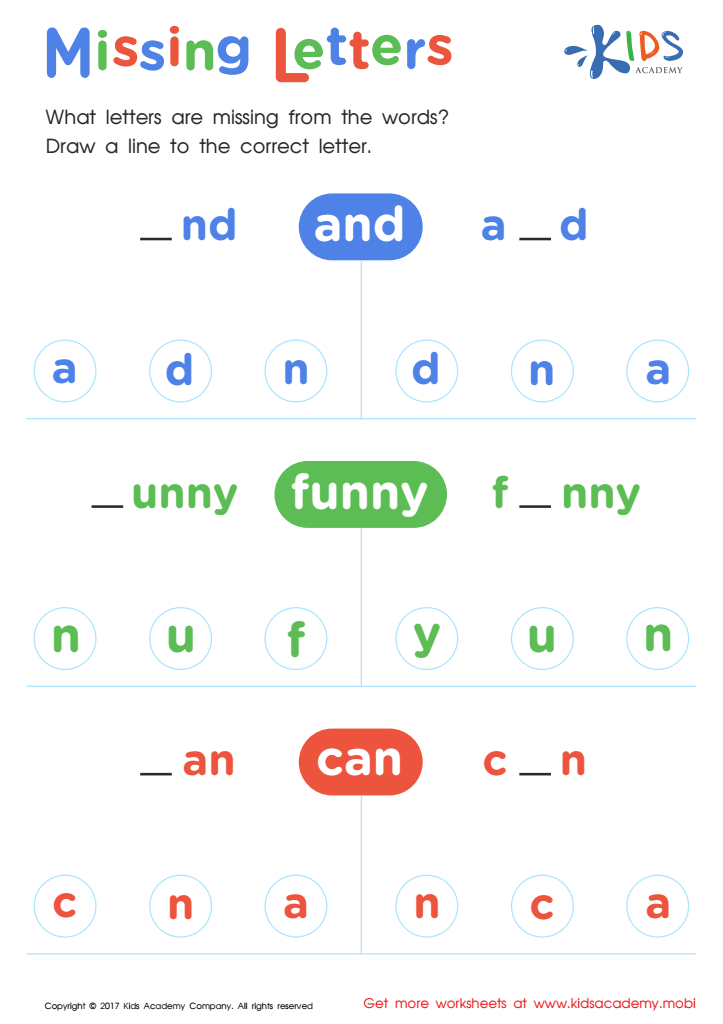
Missing Letters Worksheet
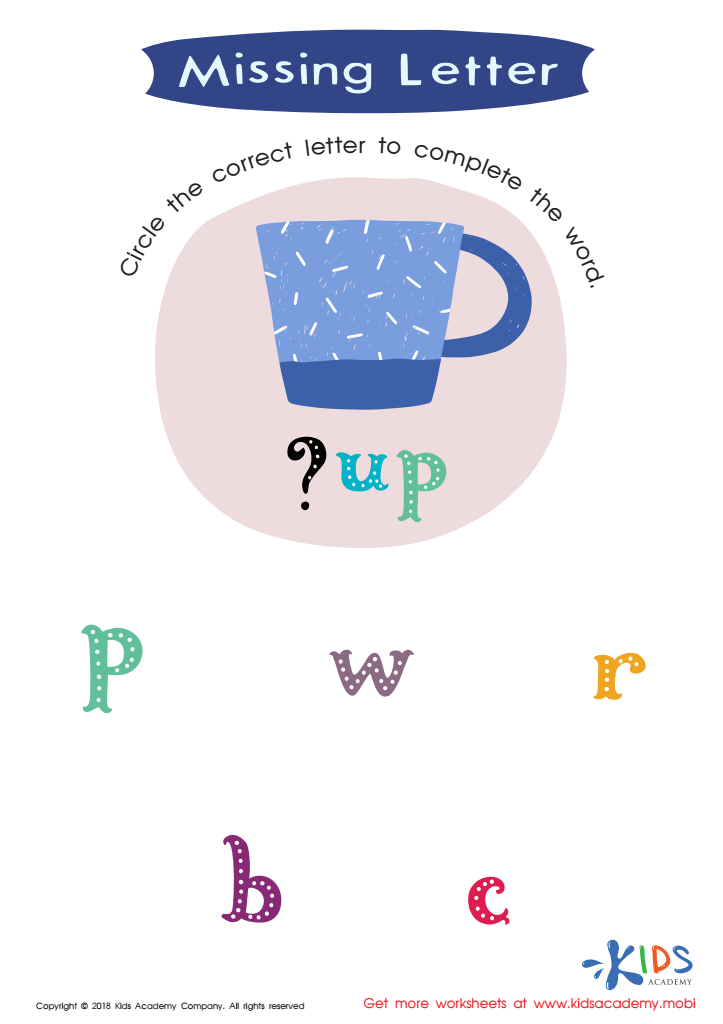
Missing Letter Worksheet



Alphabet recognition, including the ability to identify and complete missing letters, is crucial for children ages 4-9 as it serves as a foundational skill for literacy. Effective reading and writing begin with recognizing the alphabet. When children struggle with identifying letters or completing them, it can hinder their ability to decode words, ultimately impacting their reading comprehension and overall academic performance.
Parents and teachers should care because early literacy skills are closely linked to academic success. Engaging children in activities that promote letter recognition can enhance their confidence and enthusiasm for learning. Missing letters activities not only encourage recognition but also improve phonemic awareness—essential for understanding how sounds and letters correspond.
Moreover, working on alphabet recognition helps in developing fine motor skills, as children often engage in writing and interactive play that reinforces their learning. Early intervention can prevent future reading difficulties, making it vital for parents and educators to recognize any challenges. By focusing on such tasks, they can provide targeted support, fostering a love for reading and learning that can last a lifetime. Therefore, investing time in alphabet recognition sets a strong foundation for lifelong literacy and academic achievement.







