
Counting skills Phonics Worksheets for Ages 4-9
4 filtered results
Difficulty Level
Grade
Age
-
From - To
Subject
Activity
Standards
Discover our engaging Counting Skills Phonics Worksheets designed specifically for children aged 4-9. These worksheets combine essential counting techniques with phonics practice, enriching your child's early learning experience. Each activity fosters number recognition, basic arithmetic, and phonetic awareness, making learning both fun and effective. Whether at home or in the classroom, educators and parents can utilize these resources to create interactive lessons that enhance literacy and math skills simultaneously. Our user-friendly formats can easily be printed, ensuring that your child can enjoy practicing at their own pace. Equip your learner with critical counting and phonics skills today!
Favorites
With answer key
Interactive
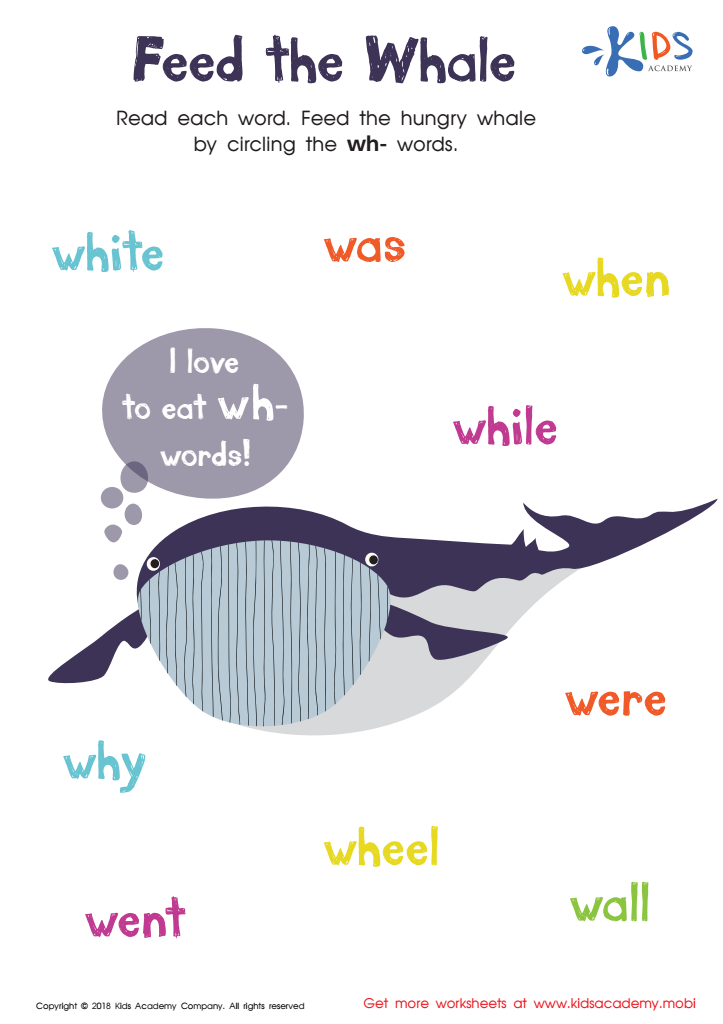
Feed the Whale Worksheet
Help your early reader build beginning consonant and blend recognition with this fun whale worksheet! They'll feed the whale wh- words, circle sight words, and build fine motor skills—all while discriminating between differently colored words.
 Assign to My Students
Feed the Whale Worksheet
Worksheet
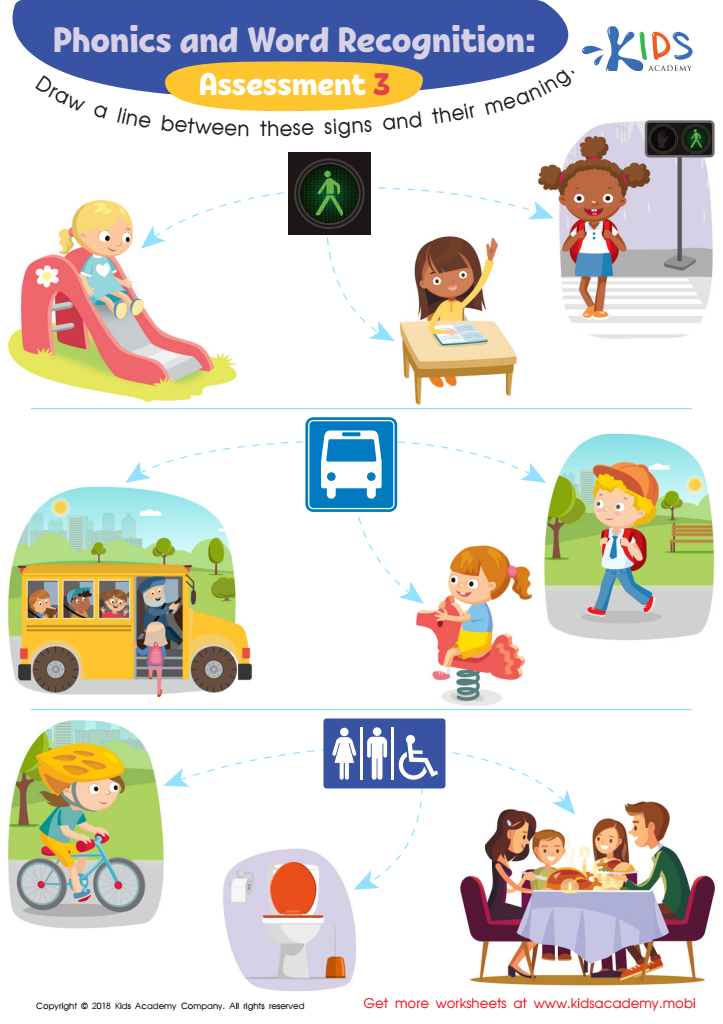
Phonological Awareness: Assessment 3 ELA Worksheet
Want to test your preschooler's language skills, phonetic decoding and word recognition? This worksheet uses their knowledge of community helpers to match signs with depictions. It also works on fine motor skills, a key pre-reading skill.
Phonological Awareness: Assessment 3 ELA Worksheet
Worksheet
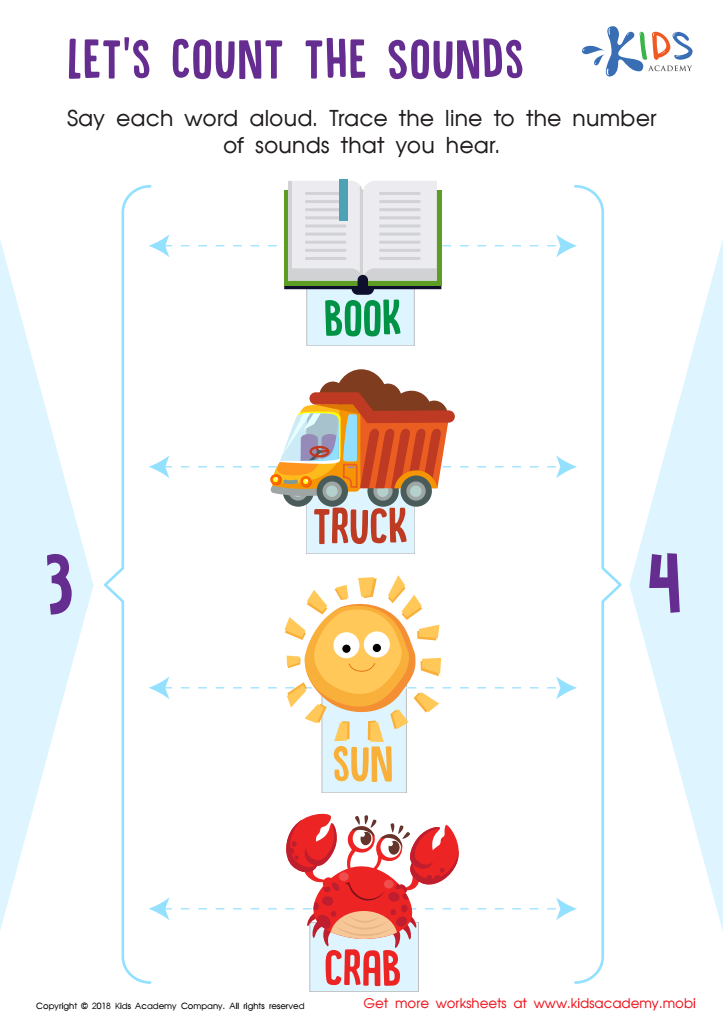
Let's Count the Sounds Worksheet
This bright and cheery traceable worksheet encourages children to practice auditory discrimination and phonological awareness. Using picture clues, they read each word and trace the line that represents the number of sounds heard. This builds decoding skills and helps them become successful readers.
Let's Count the Sounds Worksheet
Worksheet
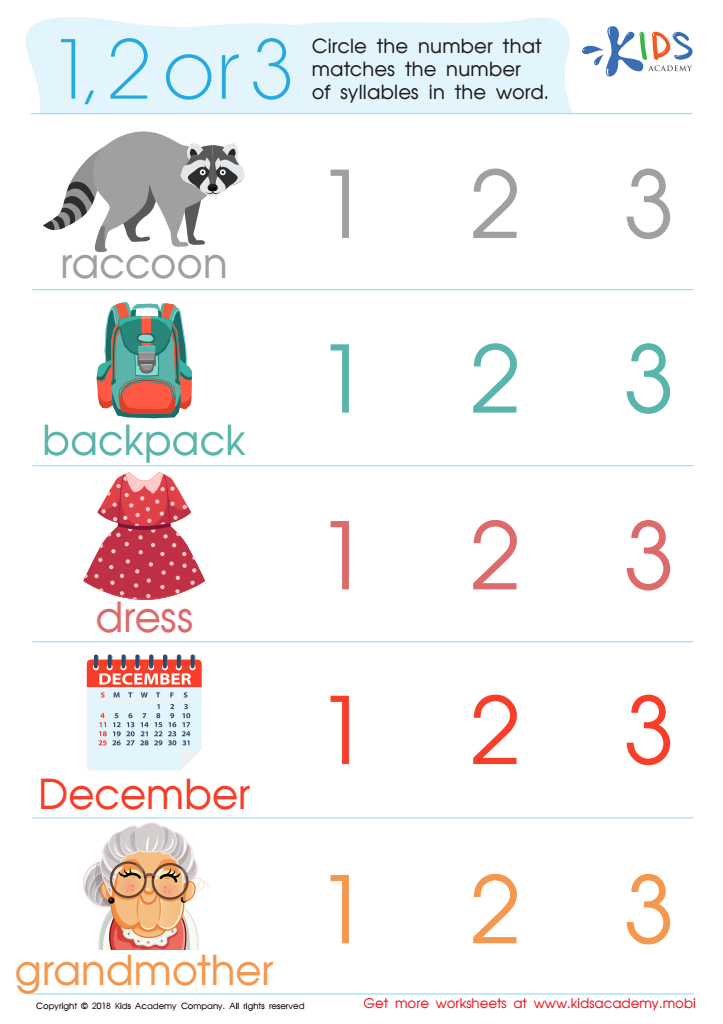
1, 2 or 3? Worksheet
Do your kids know about syllables? Test their understanding with this worksheet. Read the words aloud and ask them to say them with you. Help them circle the number that matches the number of syllables in each word. Perfect for expanding knowledge or testing how much they've already learned.
1, 2 or 3? Worksheet
Worksheet
Join Kids Academy for Free
Who is primarily going to use this learning content?








Counting skills and phonics are foundational components of early childhood education that significantly impact a child's academic and social development. For parents and teachers of children ages 4-9, nurturing these skills is essential for several reasons.
Firstly, counting skills form the basis of mathematical understanding. Early numeracy helps children recognize patterns, understand quantities, and develop problem-solving abilities. Proficiency in counting lays the groundwork for more advanced mathematical concepts, fostering confidence in math as they progress in their education.
Secondly, phonics plays a critical role in literacy development. Knowing the relationship between letters and sounds allows children to read and write independently. Developing phonics skills promotes reading fluency, comprehension, and a love for literature, essential for lifelong learning.
Additionally, both counting and phonics contribute to cognitive development, enhancing concentration, memory, and logical reasoning. As children engage in counting and phonics activities, they develop fine motor skills and critical thinking aptitudes.
Ultimately, investing time and resources into nurturing counting and phonics skills helps parents and teachers equip children with essential tools for success in school and beyond. By making learning enjoyable and engaging, we can foster a strong foundation that supports their continuous growth and development.







