Letter identification Phonics Worksheets for Ages 4-9
3 filtered results
-
From - To
Discover our engaging Letter Identification Phonics Worksheets, designed specifically for children ages 4-9! These interactive worksheets focus on helping young learners recognize and name letters, laying a strong foundation for reading and writing skills. Ideal for home or classroom use, our resources feature a variety of fun activities that include tracing, matching, and identifying letters. Each worksheet complements phonics instruction, making learning enjoyable and effective. With vibrant illustrations and age-appropriate challenges, your child will develop confidence in their alphabet knowledge. Explore our collection today and watch your child enhance their literacy skills while having fun with letters!
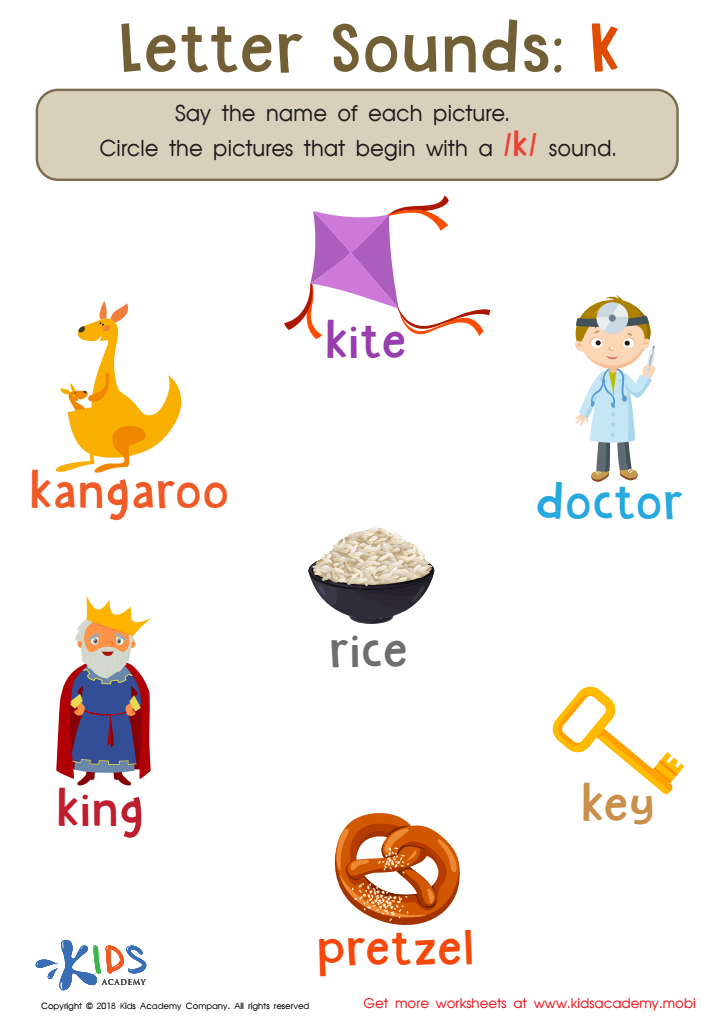
Letter K Sounds Worksheet
 Assign to My Students
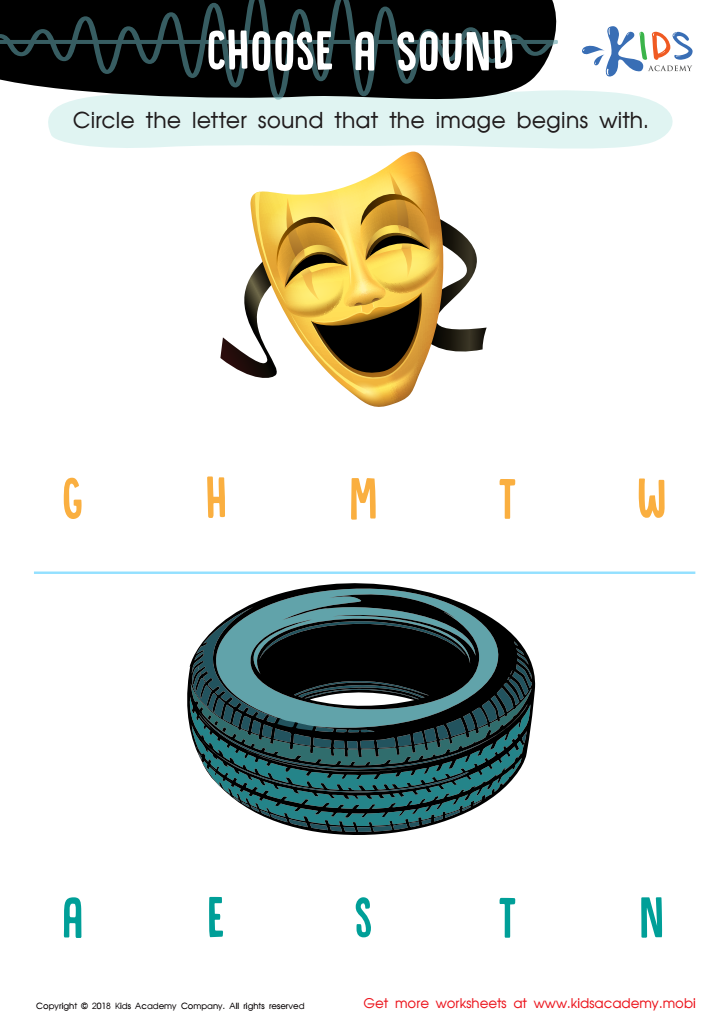
Choose a Sound Worksheet
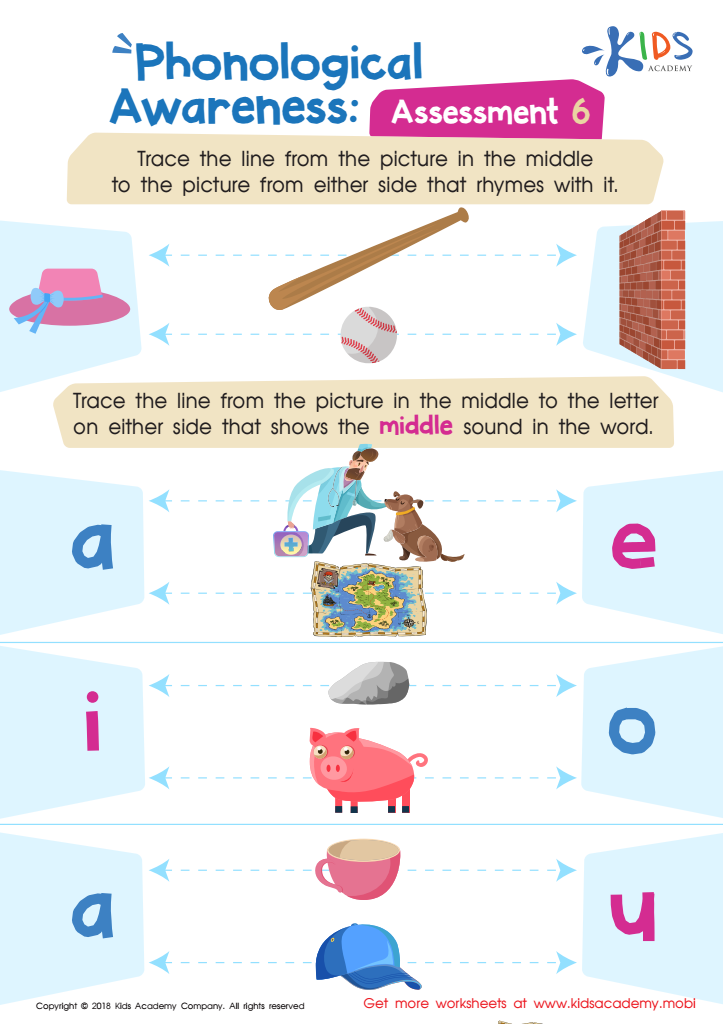
Phonological Awareness: Assessment 6 Worksheet








Parents and teachers should prioritize letter identification and phonics for children aged 4-9 because these foundational skills play a crucial role in literacy development. Letter identification helps children recognize letters and understand their names and shapes, providing a basis for reading and writing. Phonics, which involves connecting letters with their corresponding sounds, enables children to decode words and build vocabulary.
As children learn to identify letters and apply phonics, they develop essential reading skills. These skills not only enhance literacy but also boost confidence and foster a love for reading. Early mastery of letter recognition and phonics can lead to improved academic performance and reduced frustration as children progress through school.
By emphasizing these skills, parents and teachers equip children with tools to engage in meaningful literacy experiences. This early intervention builds a strong language and literacy foundation, setting the stage for future learning. Additionally, supportive learning environments with activities focused on letter identification and phonics help to create a sense of achievement and motivation.
In summary, caring about letter identification and phonics ensures that children are well-prepared for their educational journey, ultimately empowering them to become effective readers and lifelong learners.







