
Letter-sound association Phonics Worksheets for Ages 4-9
3 filtered results
Difficulty Level
Grade
Age
-
From - To
Subject
Activity
Standards
Discover engaging Letter-Sound Association Phonics Worksheets designed for children ages 4 to 9! These educational resources help young learners connect letters with their corresponding sounds, a crucial skill for developing reading and writing abilities. Our worksheets are filled with vibrant imagery and stimulating exercises that cater to various learning styles, making phonics both fun and effective. Parents and teachers can easily incorporate these worksheets into their lesson plans to support literacy growth. Encourage your child's love for reading while they practice essential phonics skills with our user-friendly and professionally crafted materials. Start your child's phonics journey today!
Favorites
With answer key
Interactive
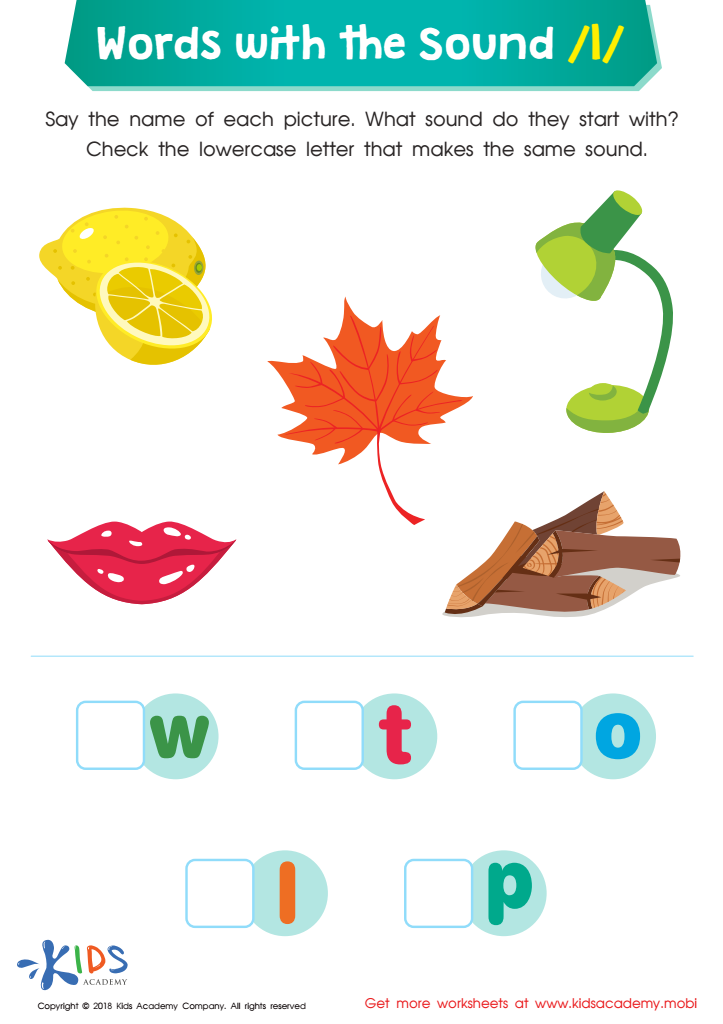
Words with Sound L Reading Worksheet
This PDF worksheet is great for helping emerging readers isolate initial sounds. Kids name familiar pictures, then identify the correct letter for the "l" sound. This worksheet strengthens fine motor skills, plus builds visual discernment. It's fun and colorful too!
 Assign to My Students
Words with Sound L Reading Worksheet
Worksheet
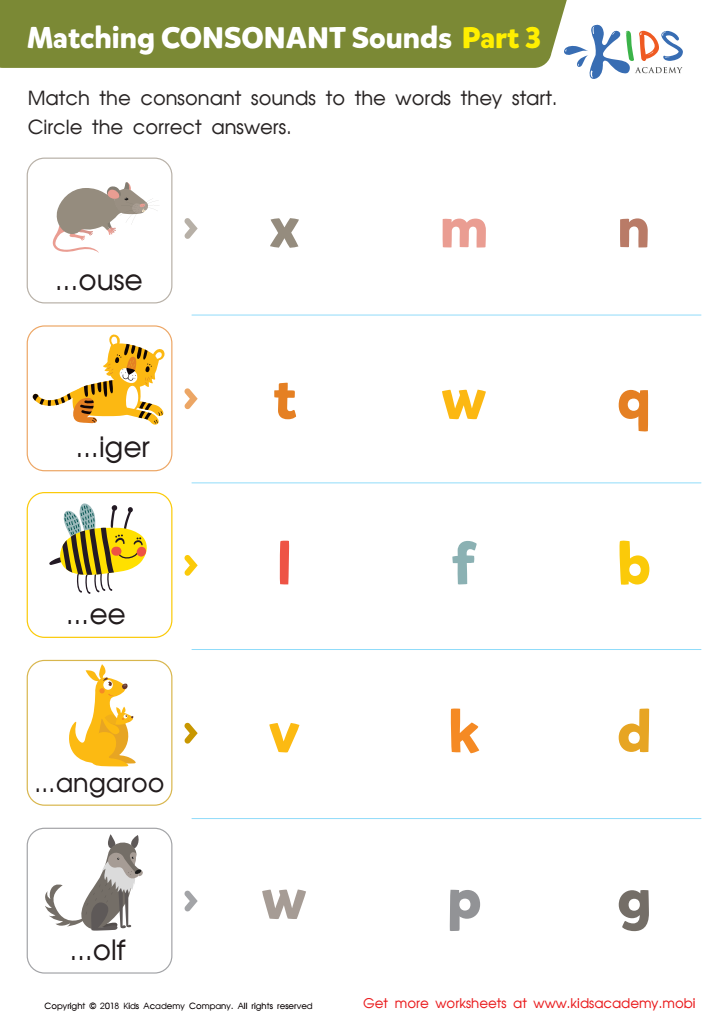
Matching Consonant Sounds: Part 3 Worksheet
Help your early learner match consonant sounds to words with this fun worksheet! Have them name the pictures and try out each letter in the corresponding column. When they hear the sound that matches, circle it. Have them write the letter in the box to complete the word. Work their way down the page until the critters' names all match with consonants!
Matching Consonant Sounds: Part 3 Worksheet
Worksheet
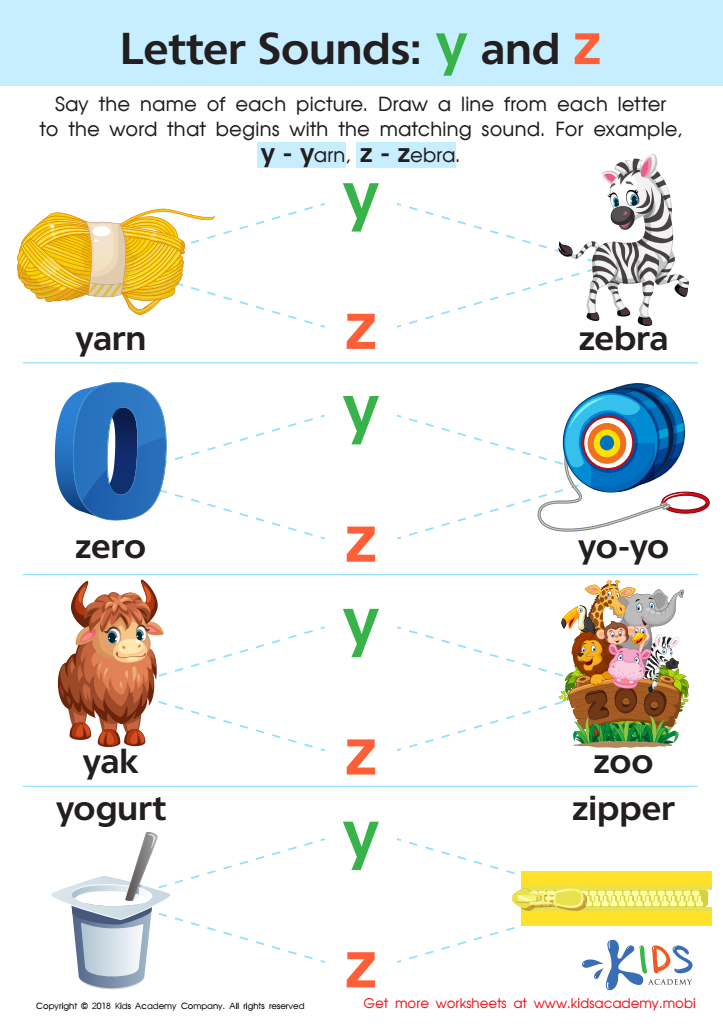
Letter Y and Z Sounds Worksheet
Y and Z can be tricky for kids to learn. Kids Academy has the answer with a great worksheet. "Yo-yo", "yak" and "zebra" help kids recognize, say and trace each letter. Plus, they can read the words and match them to images! Let your child try and help them master phonics at the end of the alphabet.
Letter Y and Z Sounds Worksheet
Worksheet
Join Kids Academy for Free
Who is primarily going to use this learning content?








Parents and teachers play a crucial role in the early literacy development of children aged 4-9, making letter-sound association and phonics essential. Phonics is the method of teaching reading by correlating sounds with their corresponding letters and combinations. Understanding phonics empowers children to decode words, fostering reading fluency and comprehension.
First, a solid foundation in phonics enhances a child's ability to read independently. It equips them with the skills to sound out unfamiliar words, boosting their confidence and enthusiasm for reading. This independence fosters a lifelong love for literature, essential for academic success.
Additionally, known research indicates that phonics instruction significantly improves children's overall literacy skills. It supports vocabulary growth, spelling abilities, and writing proficiency, which are all critical components of communication and learning across subject areas.
Moreover, engaging with phonics encourages a child’s analytical thinking, as it requires them to recognize patterns and segment sounds. Parents and teachers who prioritize phonics provide children with equitable access to education, ensuring that they can catch up and thrive. Ultimately, a focus on letter-sound association equips children with foundational skills that support not only reading but also their overall cognitive development, setting them up for success in an increasingly literate world.







