
Long vowel recognition Phonics Worksheets for Ages 4-9
3 filtered results
Difficulty Level
Grade
Age
-
From - To
Subject
Activity
Standards
Discover our engaging Long Vowel Recognition Phonics Worksheets, designed specifically for children aged 4-9! These worksheets make learning fun, helping young learners identify and practice long vowel sounds through a variety of interactive activities. Perfect for preschoolers and early grade students, our resources bolster phonics skills, critical for reading development. Each worksheet features colorful illustrations and repetitive practice to enhance retention while catering to various skill levels. Suitable for both classroom and home use, these phonics worksheets foster a solid foundation in literacy and inspire a love for reading. Start your child’s phonics journey today with our impactful worksheets!
Favorites
With answer key
Interactive
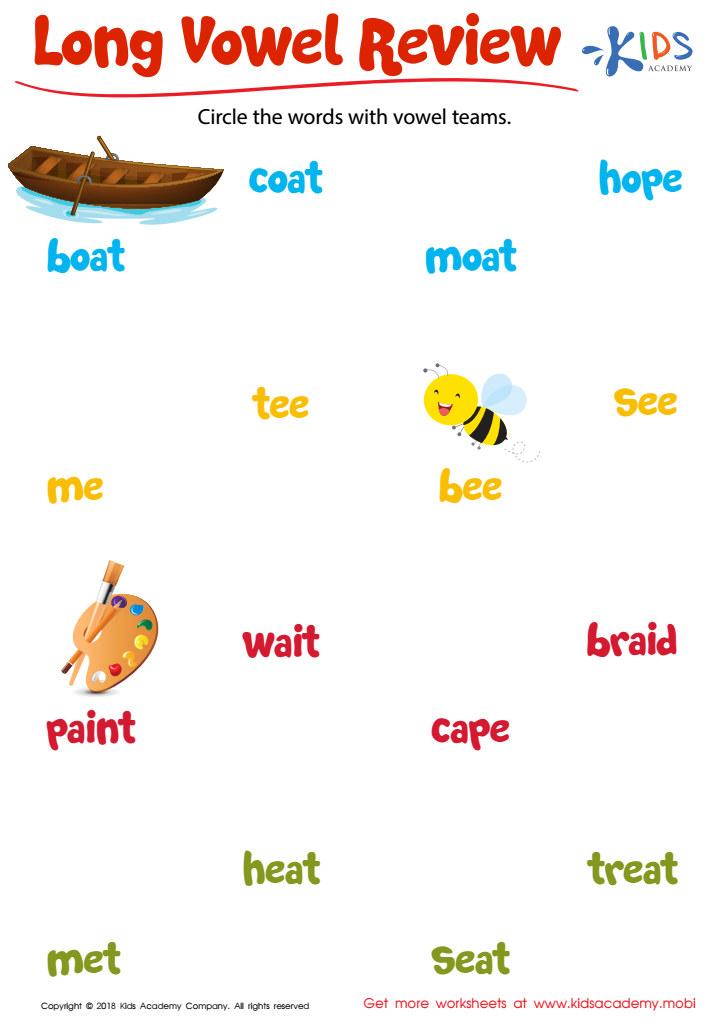
Long Vowel Review Worksheet
Vowel teams like "ea" and "ai" help us make words, and understanding these patterns aids emerging readers in becoming more fluent. This review worksheet has students finding words with vowel teams that make the long vowel sound, and helps them recognize high-frequency words.
 Assign to My Students
Long Vowel Review Worksheet
Worksheet
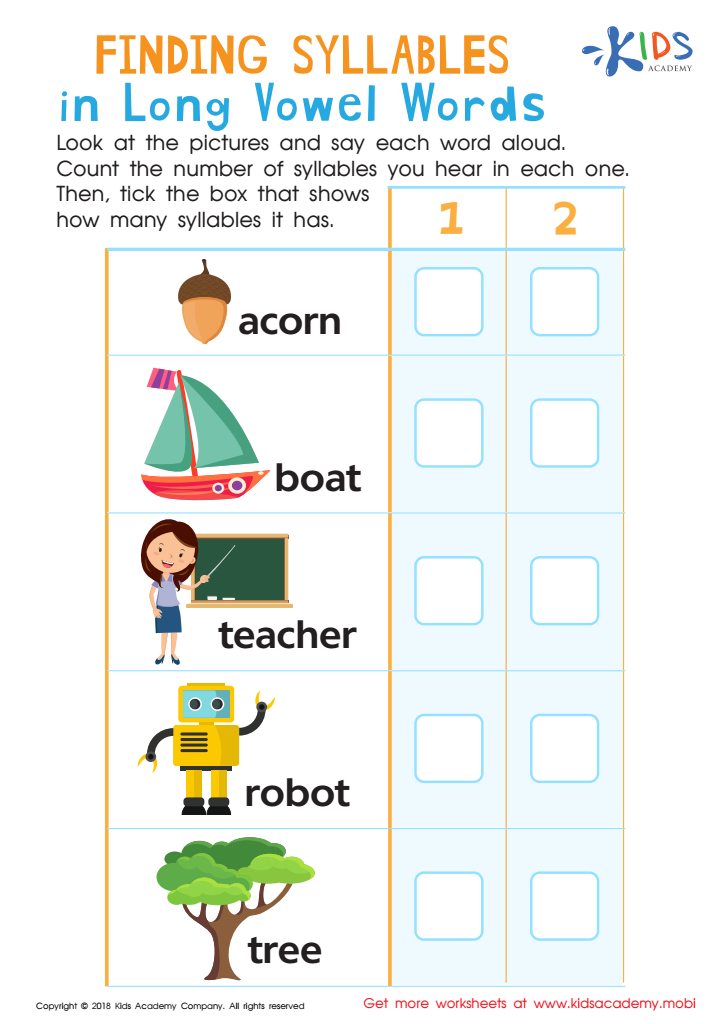
Finding Syllables in Long Vowel Words Worksheet
Help your kids identify objects and better count syllables in words. Look at the printout images with them and have them say each word out loud. Ask them to count syllables and tick the box with the correct number. With this worksheet, your kids will become more skilled.
Finding Syllables in Long Vowel Words Worksheet
Worksheet
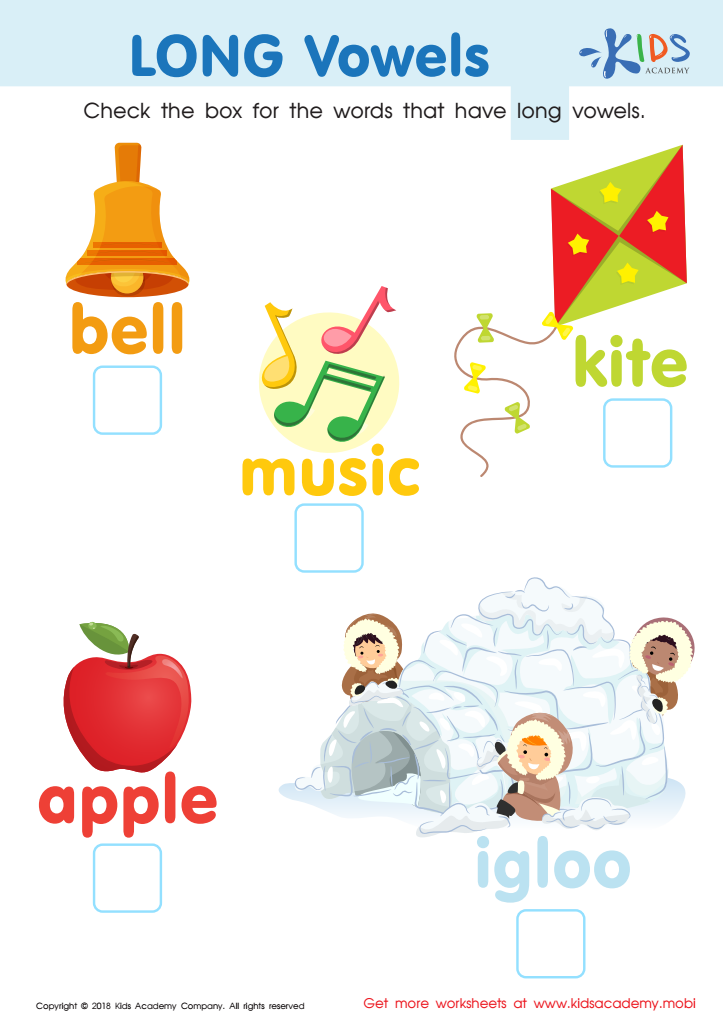
long vowels Worksheet
Have your early learner identify long vowels with this quick review. Ask them to name each picture aloud and listen out for the long vowel sounds to separate them from the shorter ones. Circle the ones that are long! Watch out for words with two vowels - they can be tricky!
long vowels Worksheet
Worksheet
Join Kids Academy for Free
Who is primarily going to use this learning content?








Long vowel recognition is a crucial component of phonics for children ages 4-9, as it significantly enhances their reading abilities. Understanding long vowels helps children decode words more easily, leading to improved reading fluency and comprehension. When children recognize that vowels can produce different sounds, they unlock a fundamental skill necessary for reading both familiar and new words.
For parents and teachers, fostering long vowel recognition is vital because it forms the foundation for more advanced literacy skills. Children who master long vowels are better equipped to tackle more complex texts, which supports overall academic success. This skill also aids in spelling, allowing children to understand how words are constructed and how to break them into phonetic components.
Moreover, engaging with long vowels early on promotes the confidence and enthusiasm that are essential for a lifelong love of reading. By dedicating time to phonics instruction that emphasizes long vowel sounds, parents and teachers can create a positive, supportive learning environment that sets the stage for future educational achievements. Ultimately, prioritizing long vowel recognition lays the groundwork for proficient communication skills and a deeper understanding of language, essential for success in both academic and real-world settings.







