
Rhyming skills Phonics Worksheets for Ages 4-9
5 filtered results
Difficulty Level
Grade
Age
-
From - To
Subject
Activity
Standards
Enhance your child's reading foundation with our Rhyming Skills Phonics Worksheets designed for ages 4-9. Tailored to make learning fun and engaging, these worksheets help young learners recognize rhymes, improve pronunciation, and develop their phonemic awareness. Children will explore a variety of activities, including matching, sorting, and fill-in-the-blank exercises featuring vibrant illustrations and beloved characters. By practicing these essential skills, kids will become more confident in their reading abilities and vocabulary. Inspire a love for reading and create a strong literacy base with our easy-to-use, printable resources. Perfect for both classroom settings and home learning!
Favorites
With answer key
Interactive
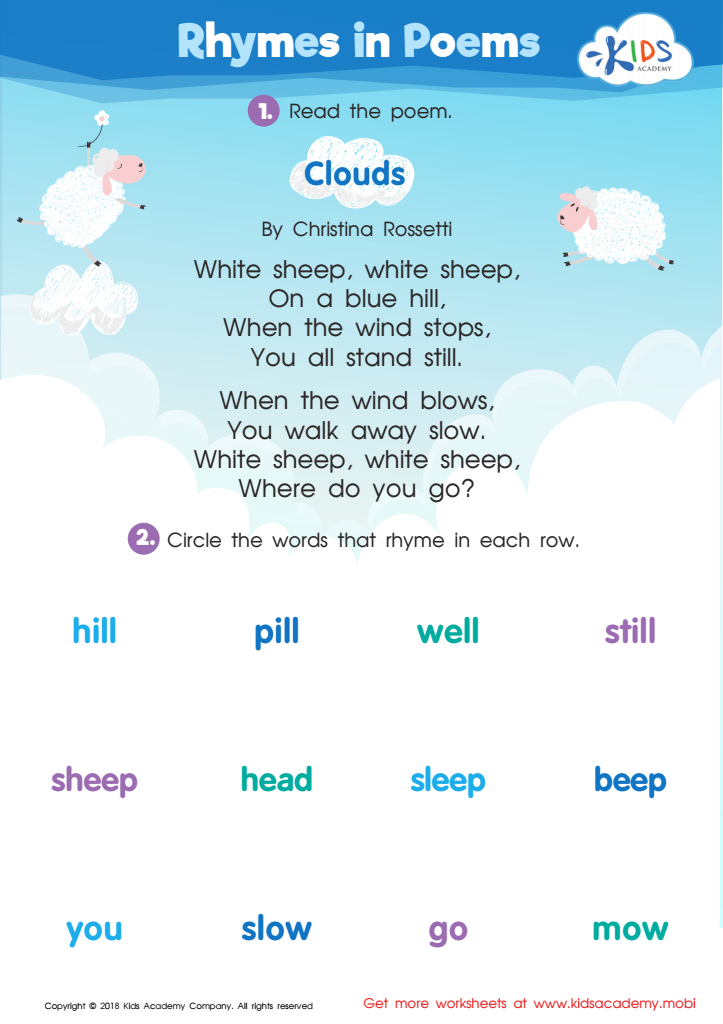
Rhymes in Poems Worksheet
Poems are lovely works of literature; some with rhymes, and some without. This poem for kids is full of rhymes and tells the tale of a sheep. Read it aloud to your kids, then help them circle the rhyming words.
 Assign to My Students
Rhymes in Poems Worksheet
Worksheet
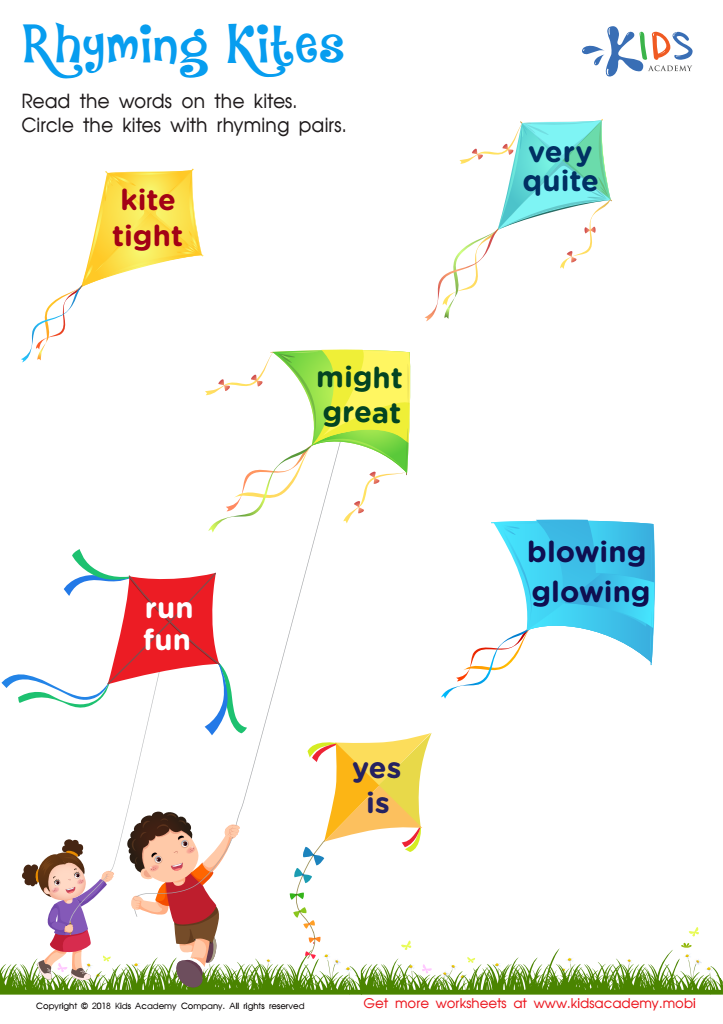
Rhyming Kites Worksheet
On a spring day, fly a kite! Kids Academy has a rhyming worksheet to boost your child's skills. Read the pairs of words aloud. Circle the kites if they rhyme, leave them blank if they don't. Listen carefully and find all the rhyming word pairs to complete this sheet!
Rhyming Kites Worksheet
Worksheet
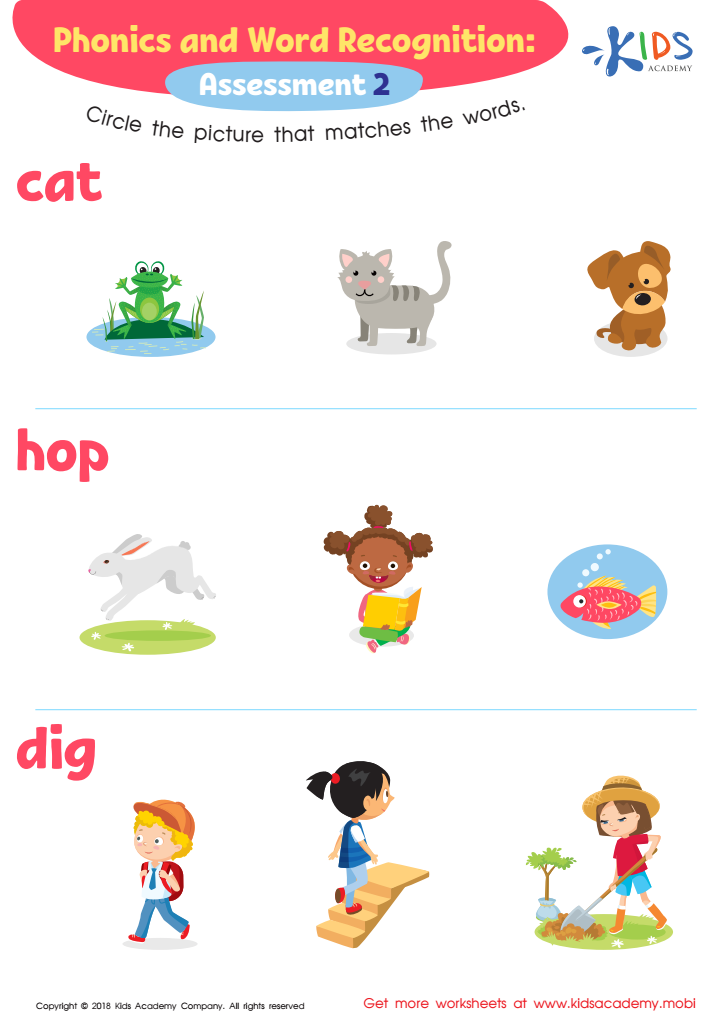
Phonological Awareness: Assessment 2 ELA Worksheet
This free worksheet assesses your emerging reader's ability to decode and match closed-syllable high-frequency words to the appropriate picture. The pictures are cheery and easy to identify, so your child will have fun and find success with decoding and matching.
Phonological Awareness: Assessment 2 ELA Worksheet
Worksheet
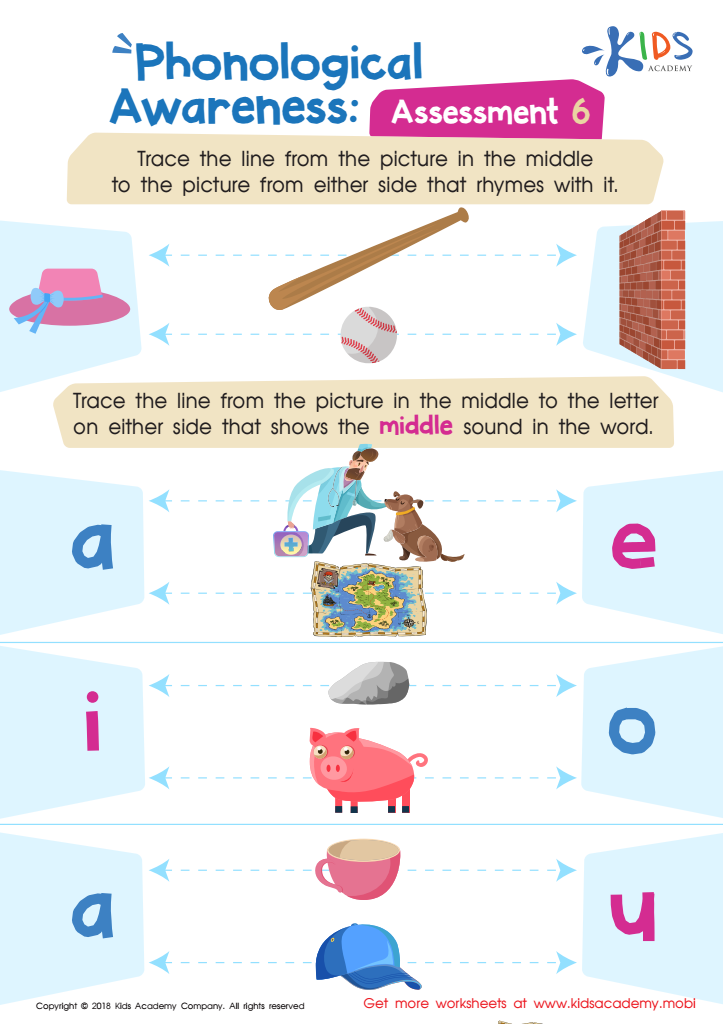
Phonological Awareness: Assessment 6 Worksheet
Check your child's ability to recognize middle word sounds using this free worksheet. Help them learn phonics by practicing with rhyming. Trace the line from the image to its rhyming match then encourage them to name each image aloud to identify which letter matches the sound. It's a great way to assess letter and sound recognition.
Phonological Awareness: Assessment 6 Worksheet
Worksheet
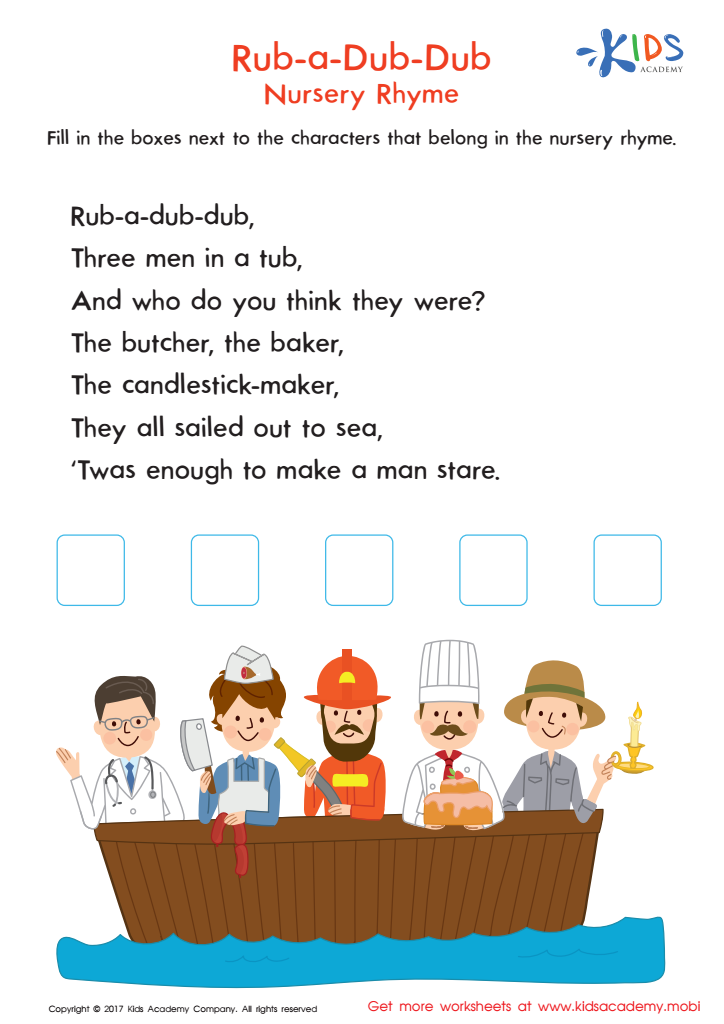
Rub a Dub Dub Printable
Delight your child and foster early reading skills with this printable nursery rhyme, Rub a Dub Dub! Let your little reader select the three men in the tub and practice important reading comprehension skills.
Rub a Dub Dub Printable
Worksheet
Join Kids Academy for Free
Who is primarily going to use this learning content?








Rhyming skills and phonics are crucial components of early literacy development for children aged 4-9. Firstly, mastering rhymes enhances phonemic awareness, which is the ability to hear and manipulate sounds in words. This skill is foundational for reading as it helps children recognize sounds that form the basis of language. When children learn to identify and produce rhyming words, they develop important auditory skills that enable them to decode new words as they progress in reading.
Additionally, phonics instruction teaches children the relationship between letters and sounds, equipping them with strategies to decode unfamiliar words. This skill not only boosts their confidence as readers but also aids comprehension. Understanding phonics and rhyming can improve vocabulary through exposure to word patterns and related meanings.
For parents and teachers, fostering these skills can also create engaging learning environments. Rhyming games and phonetic activities can make reading enjoyable and interactive, encouraging a love for literature from an early age. By prioritizing rhyming and phonics, caregivers can support children’s overall literacy, paving the way for academic success and lifelong learning.







