Letter recognition Tracing Letters Worksheets for Ages 4-9 - Page 2
26 filtered results
-
From - To
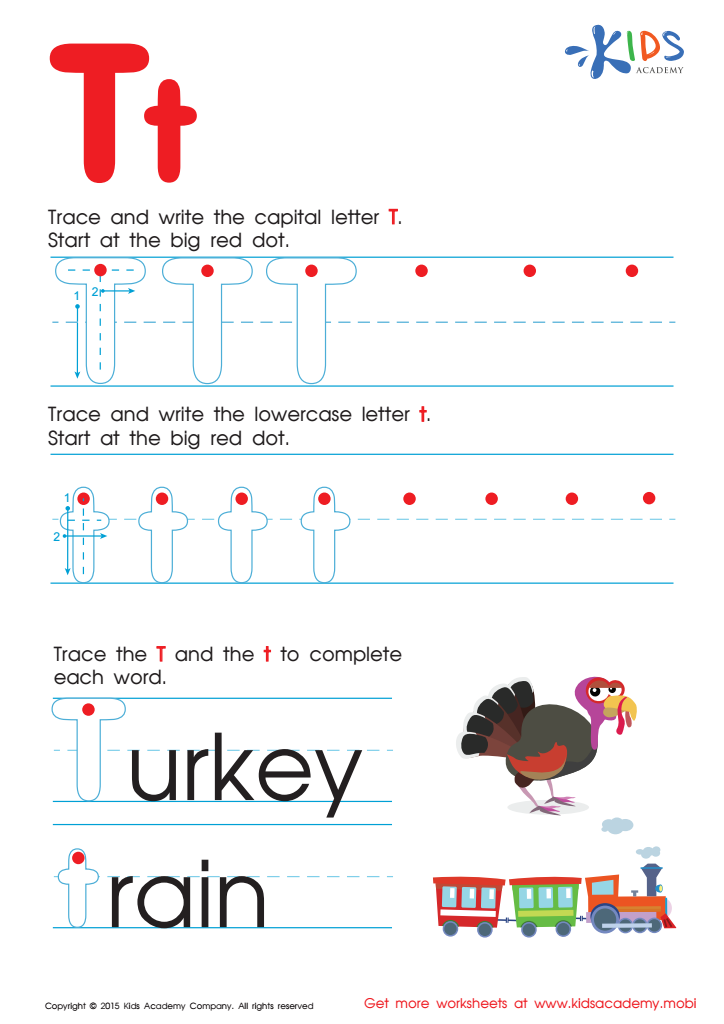
Letter T Tracing Page
 Assign to My Students

Letter D Tracing Page







Letter recognition and tracing are vital components of early literacy development for children aged 4-9. First, they lay a solid foundation for reading and writing skills. When children can identify and accurately form each letter, they become more confident as they begin to decode words and sentences. This recognition is critical for integrating phonics and handwriting, making the process of learning to read more seamless.
Moreover, tracing letters helps to develop fine motor skills essential for writing. The motor repetition not only aids in the physical act of writing but also fosters cognitive connections as children engage with the shapes and sounds of letters. This multisensory approach enhances memory retention and recall, fostering a more robust understanding of language.
Additionally, fostering a love for letters through playful tracing activities can instill a passion for reading in young learners. Incorporating fun and engaging exercises makes learning enjoyable, encouraging children to explore language beyond the classroom. As nurturing figures, teachers and parents play a pivotal role in promoting this essential skill, ensuring that children are equipped for future academic success and lifelong literacy. Ultimately, letter recognition and tracing cultivate essential skills that contribute to children's overall educational development.








