
Letter-sound association Tracing Letters Worksheets for Ages 4-9
5 filtered results
Difficulty Level
Grade
Age
-
From - To
Subject
Activity
Standards
Discover our engaging Letter-Sound Association Tracing Letter Worksheets, designed specifically for children ages 4-9! These interactive resources help young learners build essential literacy skills by linking letters to their corresponding sounds. With a variety of fun and colorful worksheets, children can practice tracing both upper and lower-case letters while enhancing their phonemic awareness. Each worksheet encourages independent learning and fosters fine motor skills, making it an enjoyable experience for kids. Whether used at home or in the classroom, our tracing worksheets serve as a valuable tool to prepare your child for reading success. Start the journey to literacy today!
Favorites
With answer key
Interactive
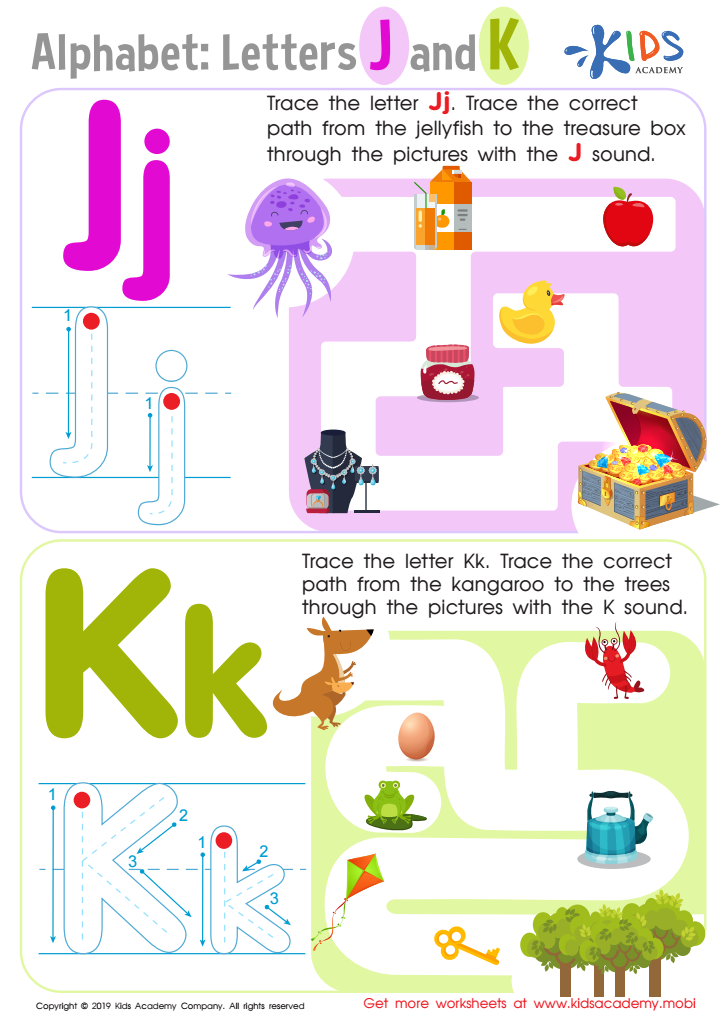
Letters J and K Tracing Worksheet
Tracing the letters «J» and «K» is the first step. Help the jellyfish find a path to the treasure chest with pictures of the «J» sound, and assist the kangaroo in finding a path to the trees with pics of «K». Fun, educational and enjoyable for children!
 Assign to My Students
Letters J and K Tracing Worksheet
Worksheet
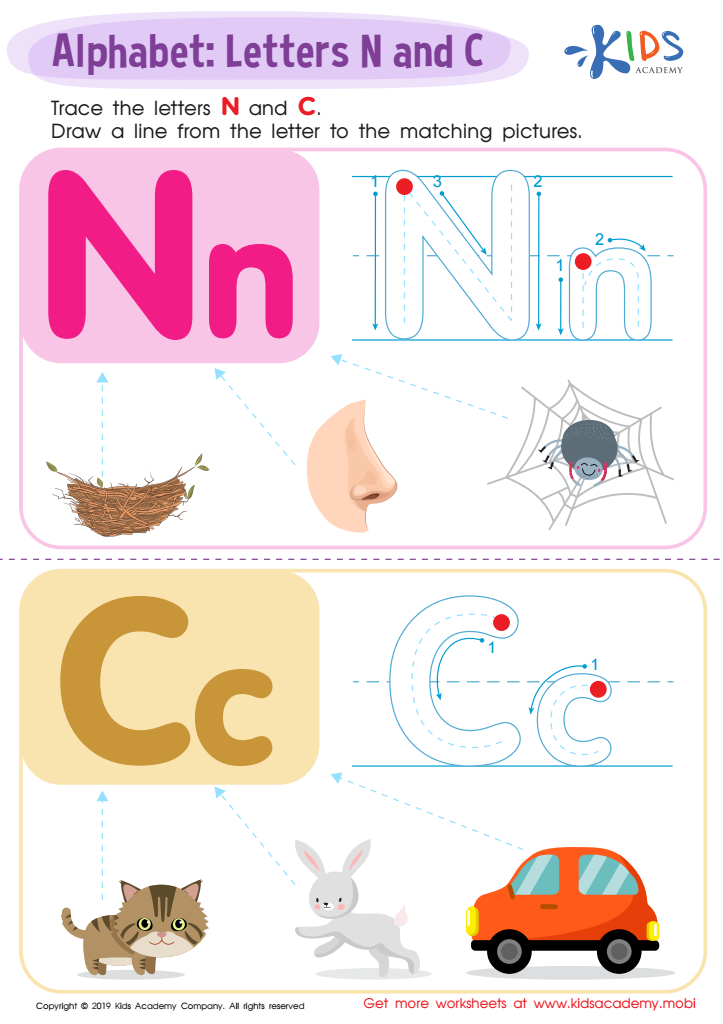
Letter N and C Tracing Worksheet
Kids can trace the letters N and C, then draw a line to the words starting with each letter. This worksheet helps them practice letter writing, distinguish capital and lowercase letters, and match pictures with the right letter. It also teaches essential skills for learning letters efficiently.
Letter N and C Tracing Worksheet
Worksheet
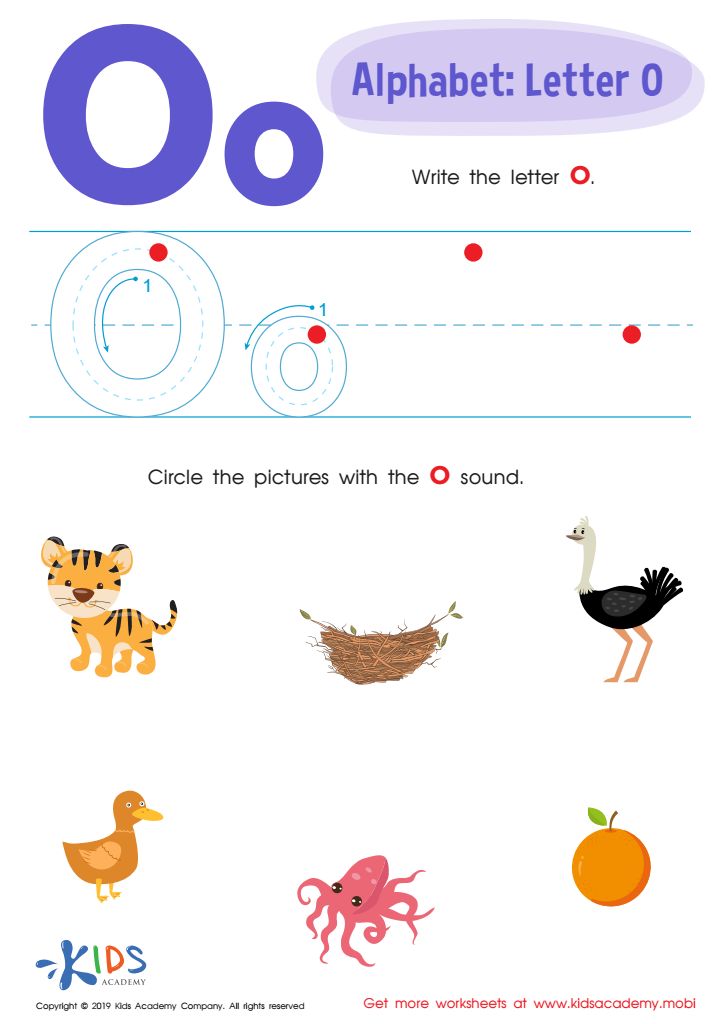
Letter O Tracing Worksheet
This worksheet gives kids the chance to trace the letter "O" while also circling pictures that have the "O" sound. Visual and hands-on learners will benefit from the visuals and tracing, helping them learn the letter "O" with ease. It's the perfect way to learn what "octopus" and "ostrich" start with!
Letter O Tracing Worksheet
Worksheet
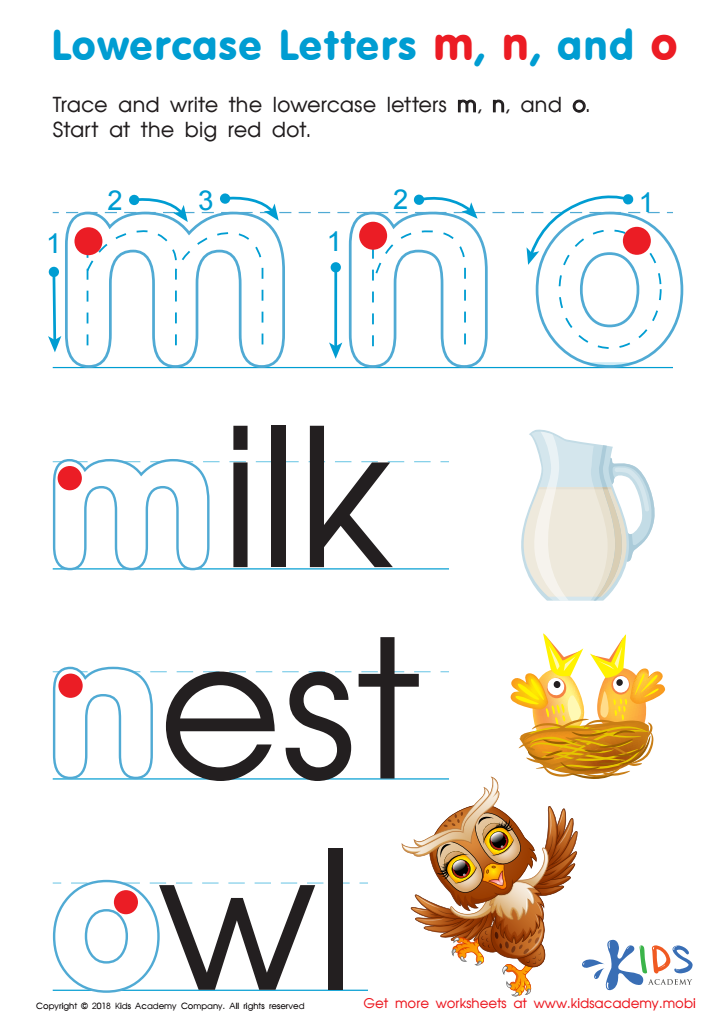
Lowercase Letters m n o Worksheet
Help your child learn the alphabet with letter tracing. Show them the difference between uppercase and lowercase letters by working through this free worksheet, tracing and writing lowercase m, n and o.
Lowercase Letters m n o Worksheet
Worksheet
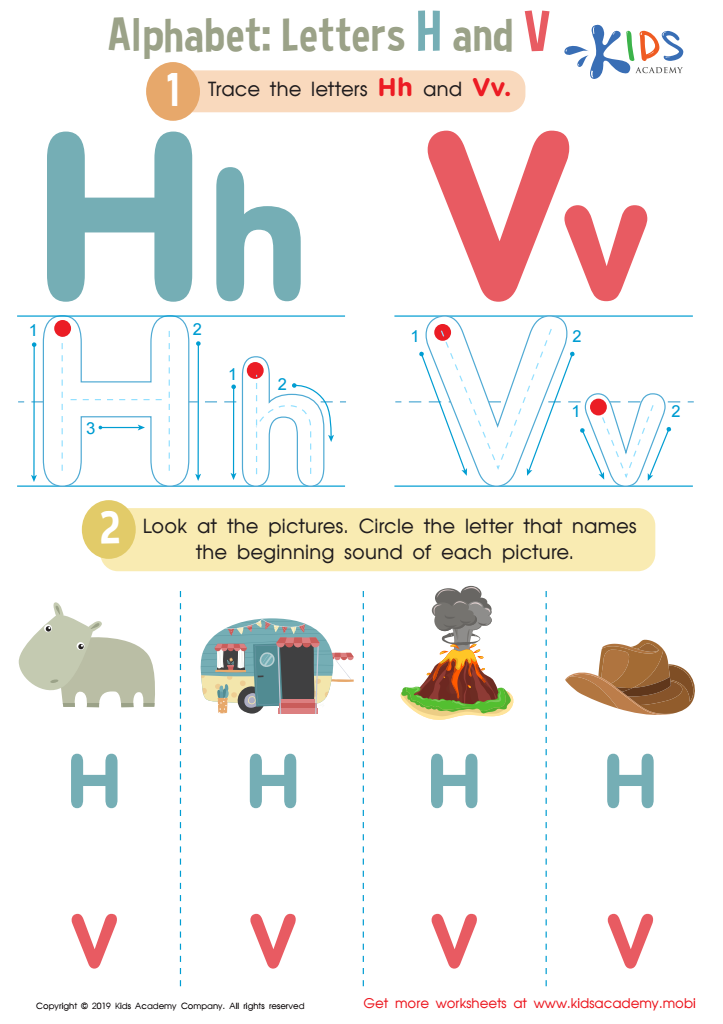
Letters H and V Tracing Worksheet
Kids will trace the letters H and V and circle the letter of the beginning sound of each picture. This helps strengthen writing and identify objects with their beginning sound, with two letter options to choose from.
Letters H and V Tracing Worksheet
Worksheet
Join Kids Academy for Free
Who is primarily going to use this learning content?







Parents and teachers should prioritize letter-sound association and tracing letters for children aged 4-9 because these foundational skills are crucial for early literacy development. Understanding the relationship between letters and their corresponding sounds equips children with the tools they need to read and decode words effectively. By mastering this association, young learners develop phonemic awareness, a key predictor of later reading success.
Tracing letters also enhances fine motor skills, which are essential for writing. As children learn to form letters correctly, they build hand-eye coordination and control, contributing to their overall motor development. This tactile practice reinforces memory, helping learners remember both the shapes of letters and the sounds they represent.
Engagement in letter tracing can make learning enjoyable, fostering a positive attitude towards literacy. Incorporating playful activities such as tracing letters in sand or using playdough can help maintain their interest and motivation.
Furthermore, establishing solid literacy foundations during these formative years can significantly affect a child's academic trajectory. Early mastery of these skills leads to greater reading fluency, comprehension, and confidence as students progress in their education. Thus, focusing on letter-sound association and tracing is essential for nurturing lifelong learners.








