Lowercase letter writing Tracing Letters Worksheets for Ages 4-9
3 filtered results
-
From - To
Discover our "Lowercase Letter Writing Tracing Worksheets," designed specifically for kids aged 4-9 to enhance their handwriting skills! These engaging worksheets provide a fun and interactive way for young learners to practice writing lowercase letters with varied tracing activities. Each worksheet is colorful and creatively designed to capture the interest of children, fostering a love for learning. Perfect for classroom or home use, these resources build essential reading and writing foundations, improving letter recognition and fine motor skills. Help your child become a confident writer with our easy-to-use, printable worksheets tailored for early learners on their educational journey!
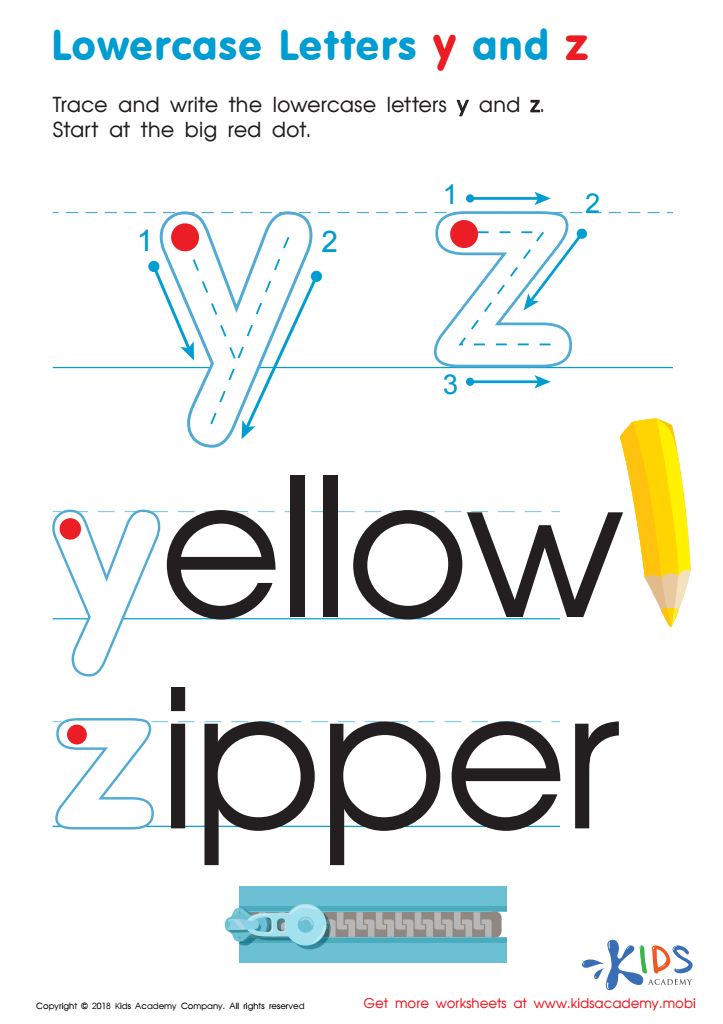
Lowercase Letters y z Worksheet
 Assign to My Students
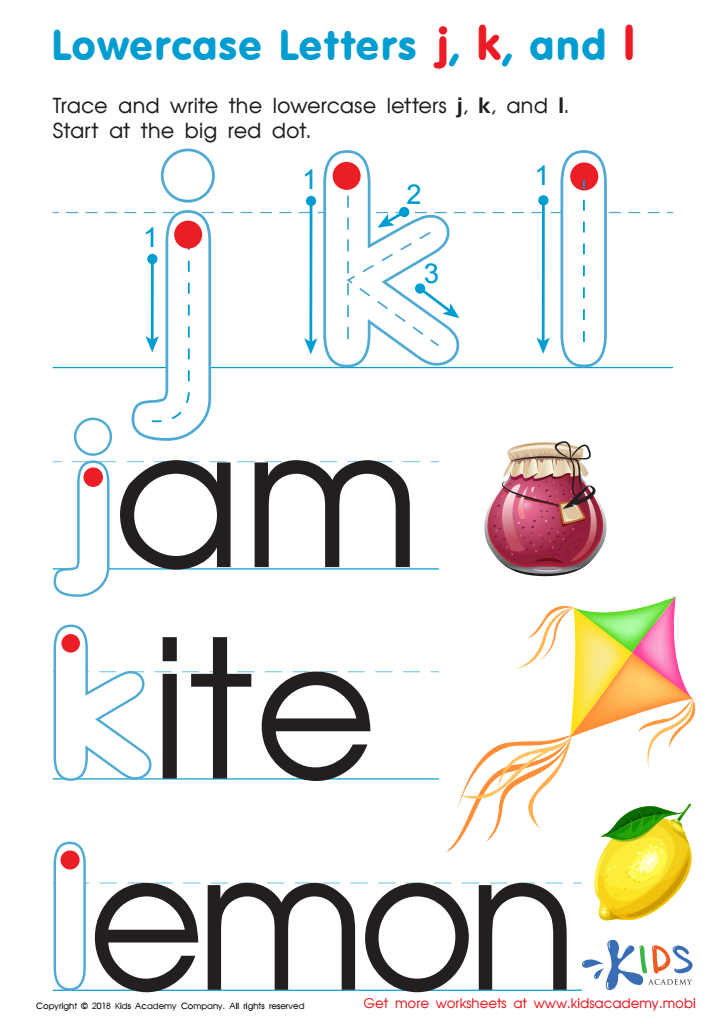
Lowercase Letters j k l Worksheet
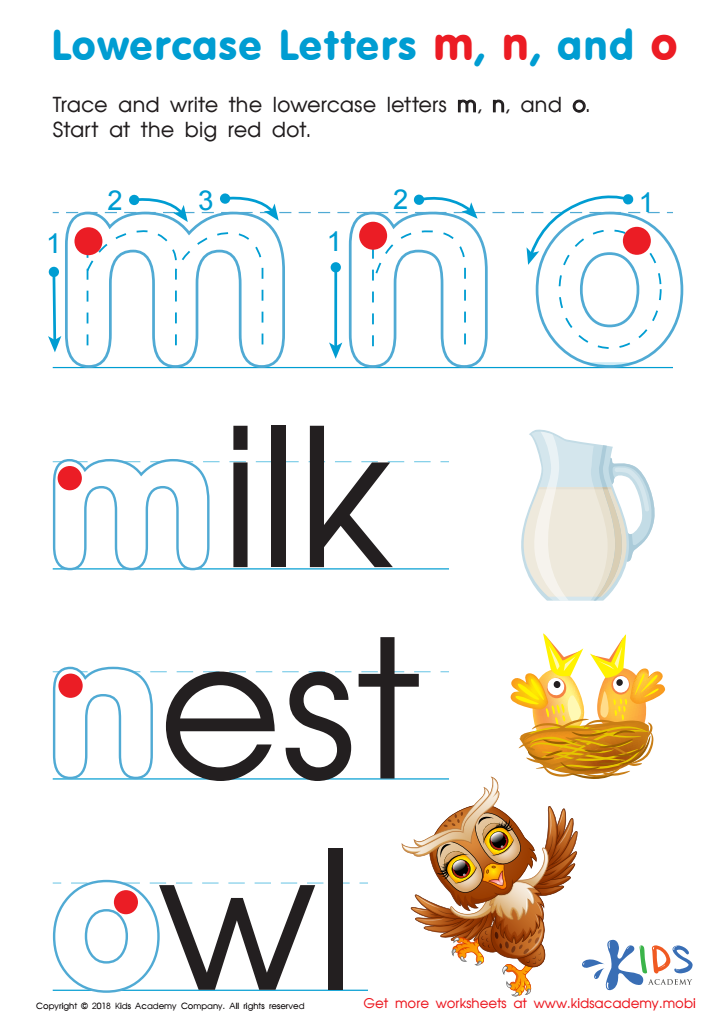
Lowercase Letters m n o Worksheet








Parents and teachers should prioritize lowercase letter tracing for children aged 4-9 because it plays a crucial role in early literacy development and fine motor skills. Tracing lowercase letters helps young learners understand the shapes and structures of letters, which is foundational for proper handwriting and reading. Mastering lowercase letters is particularly important, as they comprise the majority of text in early reading materials and everyday writing.
Additionally, tracing supports fine motor development by strengthening the small muscles in the hands and fingers, essential for tasks like holding a pencil effectively. This skill not only aids handwriting but also benefits activities such as buttoning clothing and using scissors, contributing to overall childhood development.
Furthermore, tracing letters can be incorporated into fun and engaging activities, making it an enjoyable learning experience. Parents and teachers can create a positive learning environment by emphasizing the importance of practice and celebrating progress.
In today's tech-driven world, enabling children to develop strong handwriting skills ensures they are best prepared for all forms of communication, enabling them to express their thoughts clearly. Therefore, lowercase letter tracing is a vital component of early education that fosters confidence, creativity, and effective communication skills.








