
Cognitive Development Vowels Worksheets for Ages 4-9
3 filtered results
Difficulty Level
Grade
Age
-
From - To
Subject
Activity
Standards
Elevate your child's learning experience with our "Cognitive Development Vowels Worksheets," specially designed for ages 4-9. These engaging, colorful worksheets help young learners identify, understand, and practice vowels while boosting essential cognitive skills. From letter recognition to word formation, each activity aims to improve memory, attention, and problem-solving capabilities. Our expertly crafted worksheets blend fun with education, ensuring children are captivated and motivated to learn. Ideal for both classroom settings and home practice, these worksheets provide a comprehensive approach to mastering vowels, setting the foundation for future literacy success. Make learning vowels an exciting adventure today!
Favorites
With answer key
Interactive
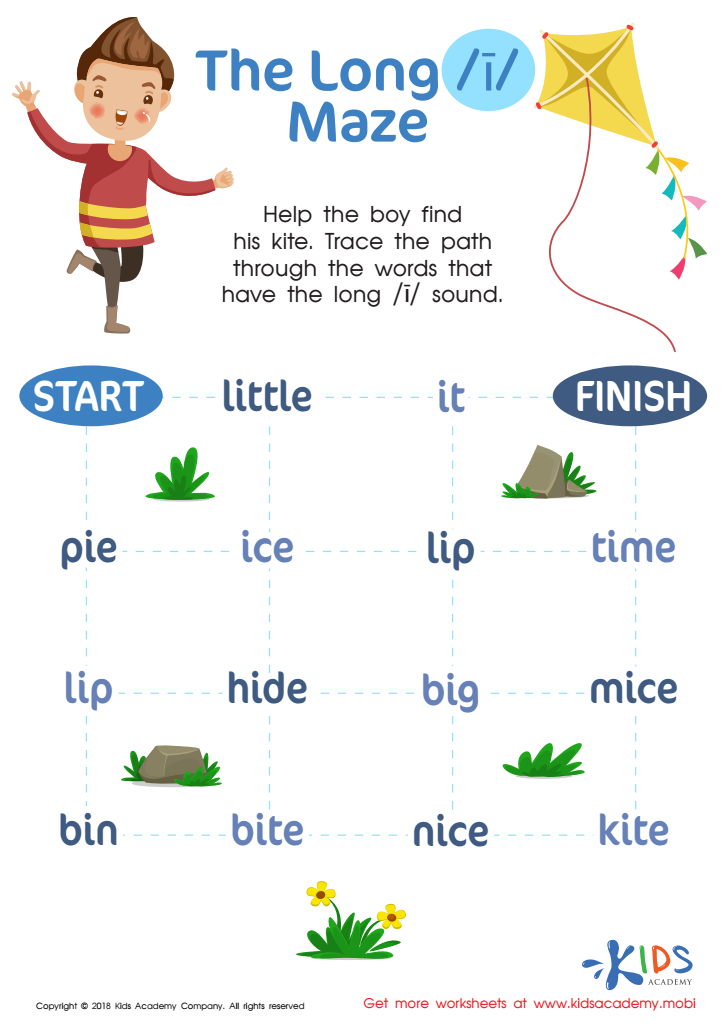
The Long I Maze Reading Worksheet
Help your child learn phonics to help them read. Show them the difference between long and short "i" sounds. Guide them as they use a pencil to trace words with the long "i:" sound in the "Help the Boy in the Picture" worksheet exercise. This will help them find the kite in the picture.
 Assign to My Students
The Long I Maze Reading Worksheet
Worksheet
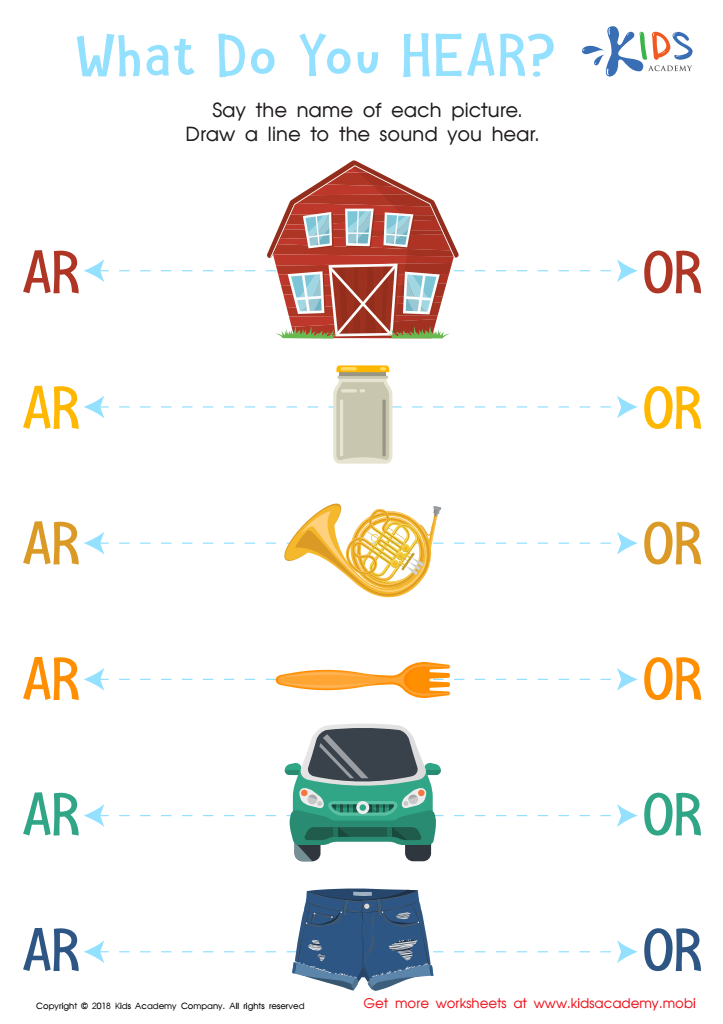
What do you hear Worksheet
Kids can practice distinguishing between r-controlled vowel teams /ar/ and /or/ with this worksheet. The pictures help identify the words and the sounds heard. Tracing a line to the correct sound supports fine motor skills development.
What do you hear Worksheet
Worksheet
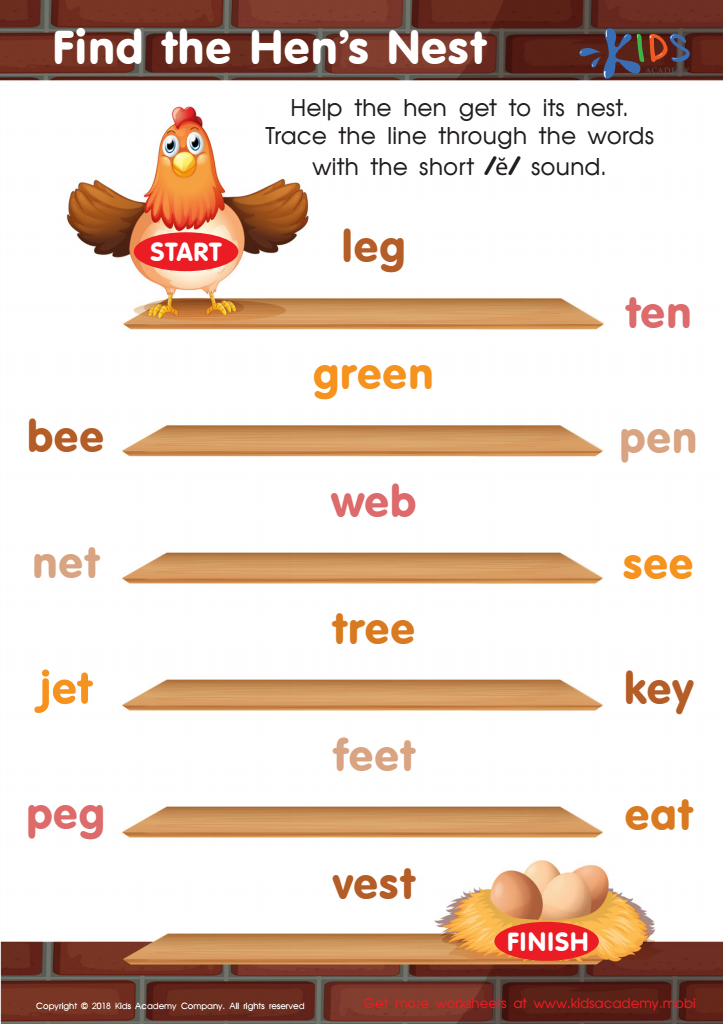
Find Hens Nest Reading Worksheet
Learning the short and long «e» sound can be tricky for kids just starting to learn the alphabet. Make it fun with this worksheet: it leads your kindergarten child to a hen's nest by following words with the short «e» sound. They'll be able to identify words with the sound by the end of the exercise.
Find Hens Nest Reading Worksheet
Worksheet
Join Kids Academy for Free
Who is primarily going to use this learning content?





Cognitive development is crucial in children aged 4-9 as it lays the foundation for future learning and intellectual growth. Vowels, often the first sounds children learn and recognize, play a pivotal role in this development. Caring about how children understand and use vowels is essential for a myriad of reasons.
Firstly, vowels form the backbone of phonological awareness, a key component of reading skills. Without a solid grasp of vowel sounds, children may struggle to decode words accurately, which hampers reading fluency and comprehension. By emphasizing vowel sounds, parents and teachers help children master essential language skills early on.
Secondly, cognitive development is linked to various aspects of communication. Vowel knowledge significantly contributes to clear articulation of words, making it easier for children to express themselves effectively. When children can speak clearly and be understood, they are more likely to engage in social interactions and develop strong communication skills.
Furthermore, vowel mastery supports spelling proficiency. Many spelling patterns hinge on the correct use of vowels, meaning that early attention to these sounds can promote accuracy in written language.
Lastly, focusing on vowels nurtures listening skills, as children learn to distinguish subtle differences in sounds, thereby enhancing their auditory processing abilities. Overall, due diligence towards vowel cognition enriches the child’s reading, writing, speaking, and listening skills, serving them well in all future educational endeavors.







