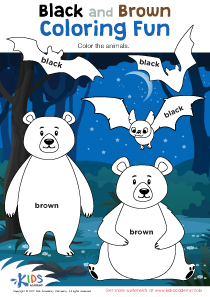
Alphabetical order understanding English for Beginners Worksheets for Ages 4-9
4 filtered results
-
From - To
Discover our engaging Alphabetical Order Understanding English for Beginners Worksheets, designed for children aged 4-9. These worksheets are the perfect resource to help young learners grasp the concept of alphabetical order, developing essential language and literacy skills. Colorful and interactive activities keep kids motivated while enhancing their understanding of letter sequences and their ability to sort words. Ideal for both classroom and home learning, our worksheets support your child's journey to mastering the alphabet in a fun, educational way. Foster a love for learning English early on with our carefully crafted resources.
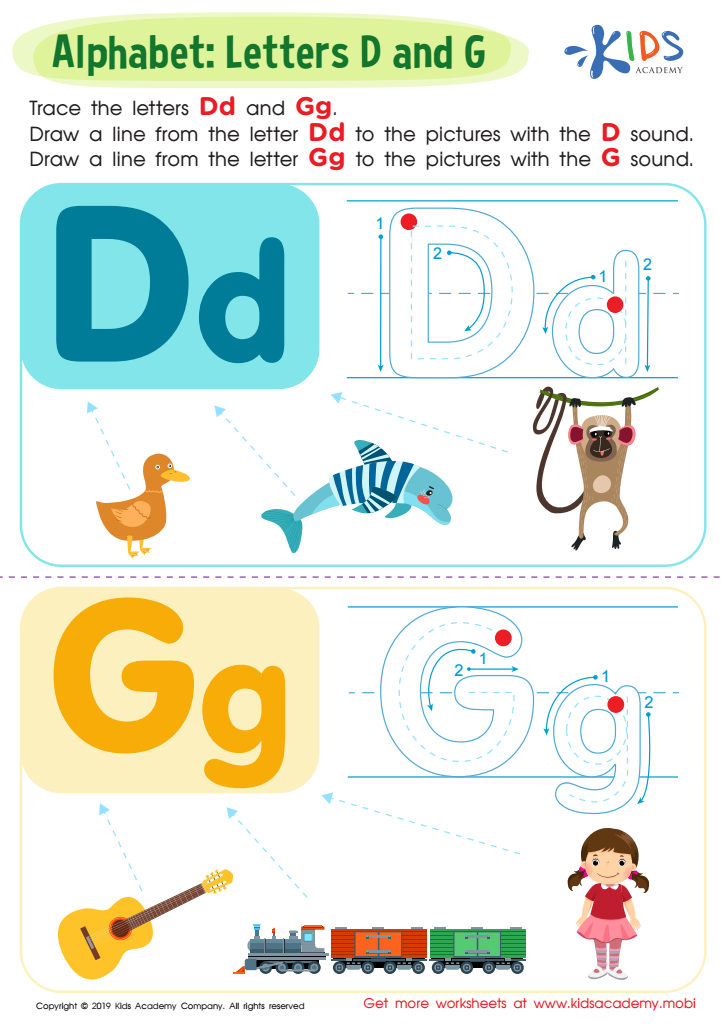
Letter D and G Tracing Worksheet

Letter G Tracing Page
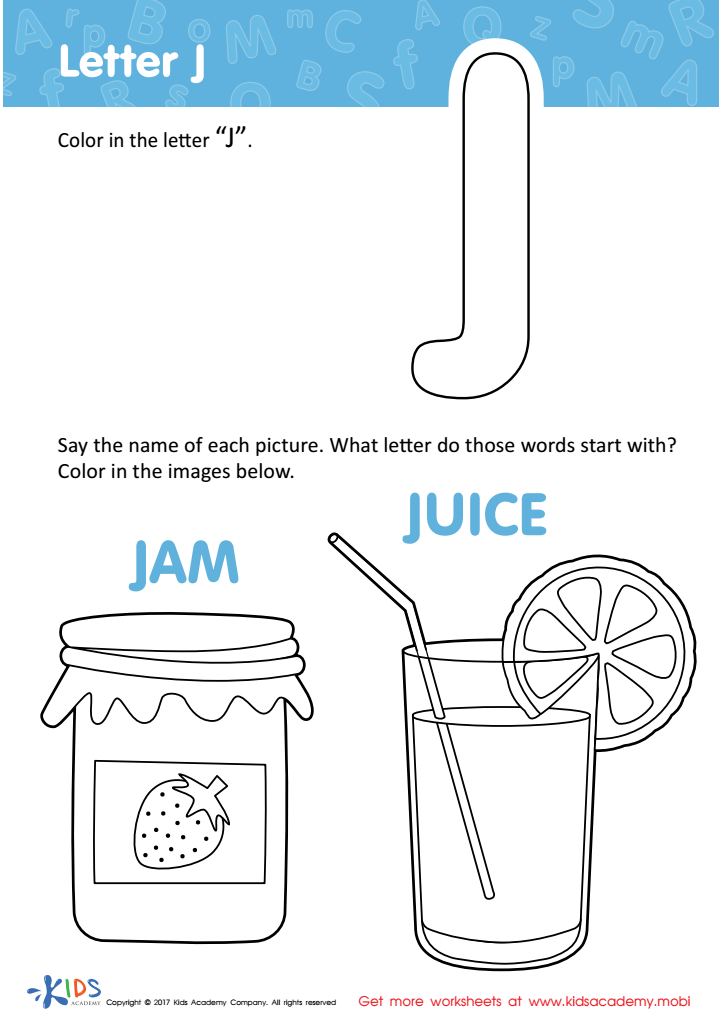
Letter J Coloring Sheet
 Assign to My Students
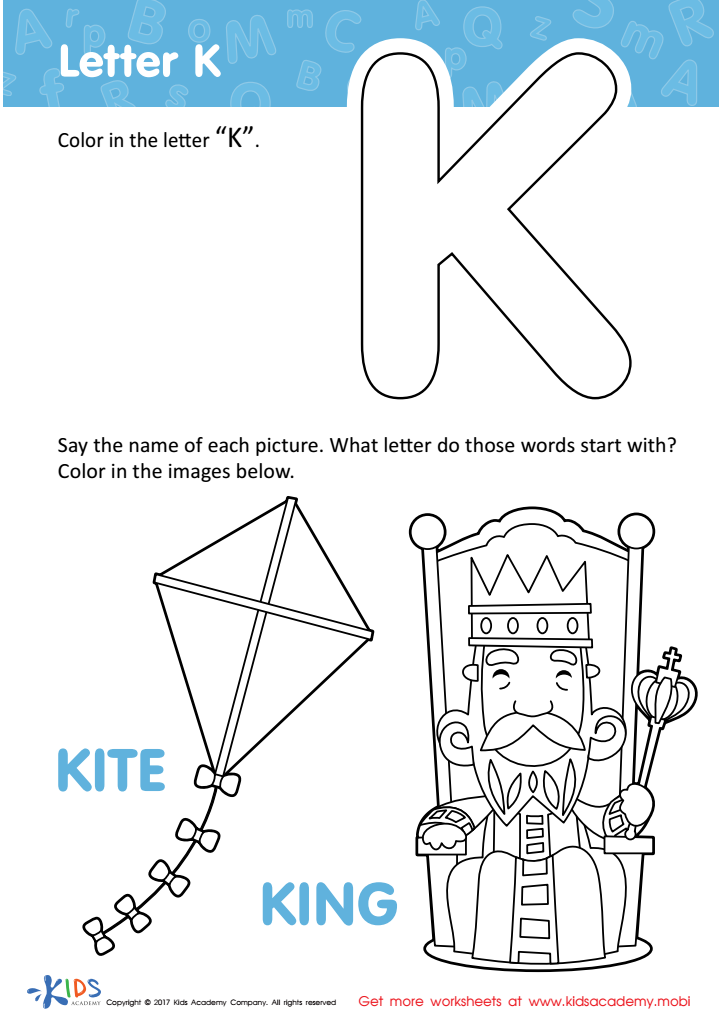
Letter K Coloring Sheet
Assign to My Students





Understanding alphabetical order is a crucial skill for young children aged 4-9, as it lays the foundation for several essential academic and life skills. First and foremost, it significantly enhances literacy development. By learning the alphabetical order, children can more easily navigate through dictionaries, libraries, and digital databases, allowing them to find information quickly and efficiently.
Alphabetical order also aids in the development of organizational skills. Children learn how to categorize and arrange information systematically, which can make studying and managing schoolwork less overwhelming. This foundational skill will benefit children throughout their academic careers and into adulthood, where they will frequently encounter the need to organize information alphabetically.
Moreover, mastering alphabetical order enhances cognitive skills such as memory and sequencing. As children practice reciting and recognizing letter sequences, they strengthen neural connections in their brains, which can improve overall cognitive function and problem-solving abilities.
Furthermore, understanding the alphabet and its order is a stepping stone to mastering phonics, spelling, and vocabulary. It serves as an essential building block in developing reading and writing proficiency, which are critical for academic success across all subjects. Hence, parents and teachers should prioritize this foundational skill to support the all-around educational growth and development of young learners.