
Alphabetical order practice Worksheets for Ages 4-9
3 filtered results
Difficulty Level
Grade
Age
-
From - To
Subject
Activity
Standards
Discover engaging Alphabetical Order Practice Worksheets designed specifically for children aged 4-9! These worksheets are perfect for enhancing literacy skills and introducing young learners to the concept of alphabetical order. With a variety of fun and interactive activities, students can practice organizing words, improving their vocabulary, and boosting their spelling confidence. Our resources support classroom instruction and offer parents the tools to facilitate learning at home. Each worksheet is crafted to cater to different skill levels, ensuring that every child can participate and benefit. Get started today and help your child master alphabetical order through enjoyable and educational practice!
Favorites
With answer key
Interactive
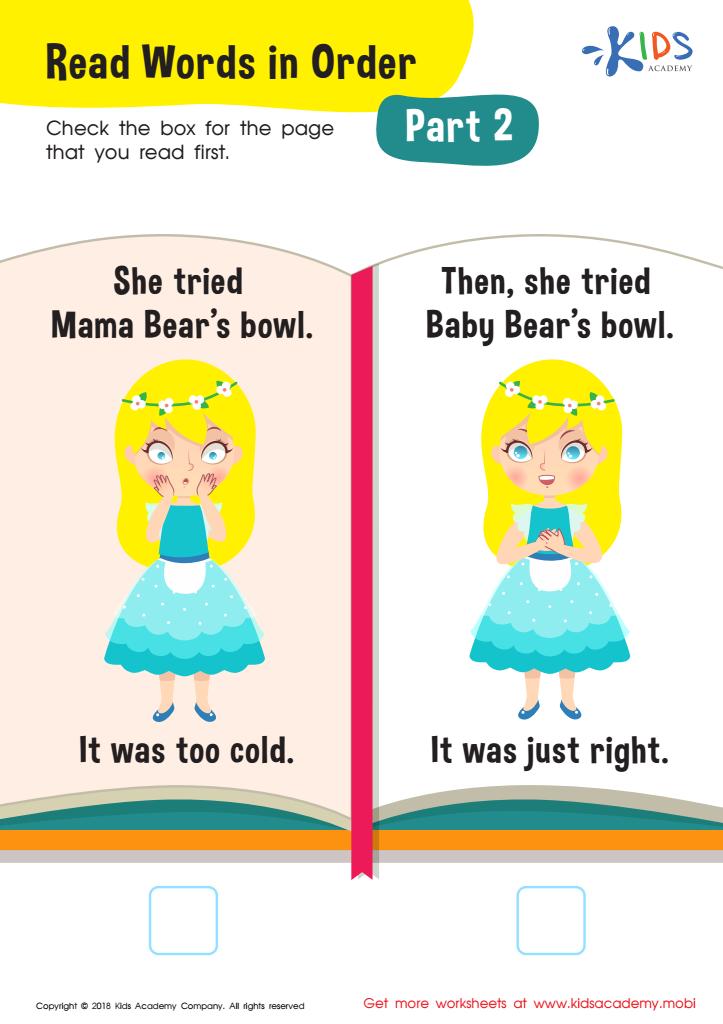
Read Words Order Part 2 Worksheet
Help your students make progress with reading by using this easy worksheet. It includes two pictures with short sentences your child should be able to read. Ask them to read these out loud, and if they're struggling, help them. Then, they should check the box that shows the page they'd read first.
 Assign to My Students
Read Words Order Part 2 Worksheet
Worksheet
Join Kids Academy for Free
Who is primarily going to use this learning content?


.jpg)





Alphabetical order practice is essential for children aged 4 to 9, as it forms the foundation for several key literacy and organizational skills. First, understanding the alphabetic sequence aids in reading proficiency. As children learn to recognize letters and their corresponding sounds, they develop phonemic awareness, which is crucial for decoding new words. This skill fosters confidence in reading, ensuring children can tackle materials in and out of the classroom.
Second, mastering alphabetical order enhances organizational capabilities. Children who grasp this concept learn how to locate and sort information quickly, whether it’s finding a book in the library or managing school supplies. This organizational skill is integral as they progress in their education, where thoughtful categorization of knowledge becomes increasingly important.
Moreover, alphabetical order practice nurtures cognitive development, as children engage in sorting and categorizing tasks that promote critical thinking. By participating in fun activities like alphabet games and sorting exercises, parents and teachers can turn learning into an enjoyable experience, motivating children along the way.
Ultimately, by prioritizing alphabetical order practice, adults invest in children’s overall literacy, organization, and cognitive skills, setting a solid groundwork for their future academic success.








