
Analyzing patterns Worksheets for Ages 4-9
3 filtered results
Difficulty Level
Grade
Age
-
From - To
Subject
Activity
Standards
Welcome to our engaging collection of Analyzing Patterns Worksheets designed specifically for children aged 4-9! These colorful and interactive resources help young learners develop critical thinking skills by recognizing, predicting, and creating patterns. Our worksheets feature a variety of fun activities, including shape sequences, color patterns, and more, ensuring that each child finds enjoyment while learning. Perfect for homeschooling or classroom use, these worksheets support early math skills and foster cognitive development. Empower your child’s creativity and problem-solving abilities with our thoughtfully crafted worksheets that make learning about patterns an exciting adventure. Start exploring and nurturing their pattern recognition skills today!
Favorites
With answer key
Interactive
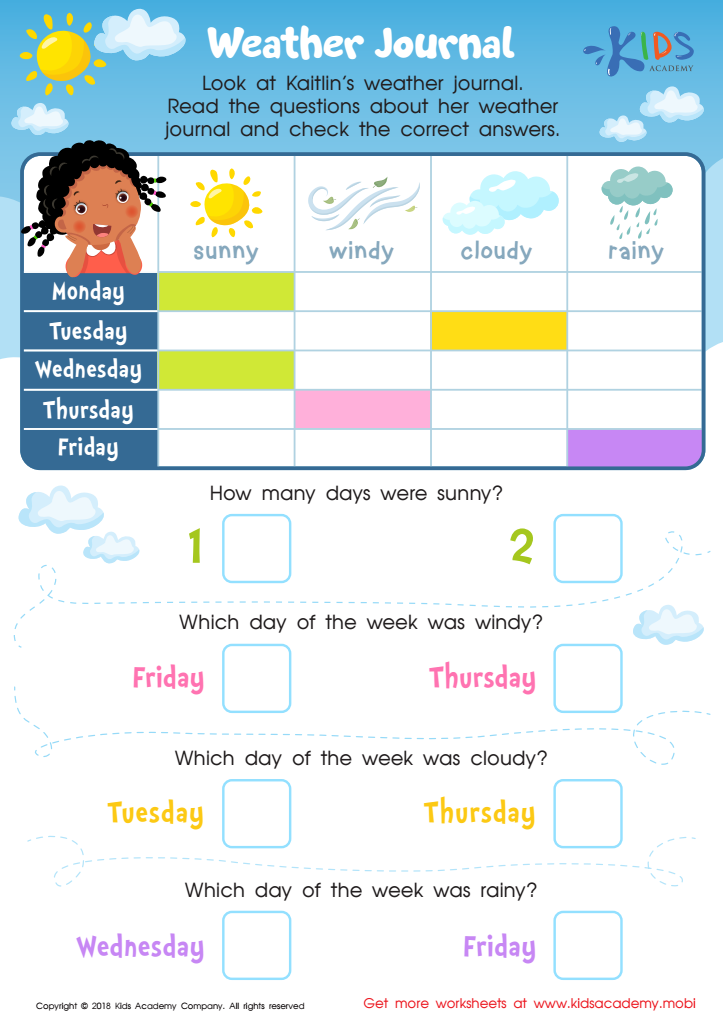
Weather Journal Worksheet
Kaitlin keeps a weather journal. Encourage your child to do the same! Look at Kaitlin's journal with them, and have them note the weather for each day. Read aloud the questions and check the correct answers.
 Assign to My Students
Weather Journal Worksheet
Worksheet
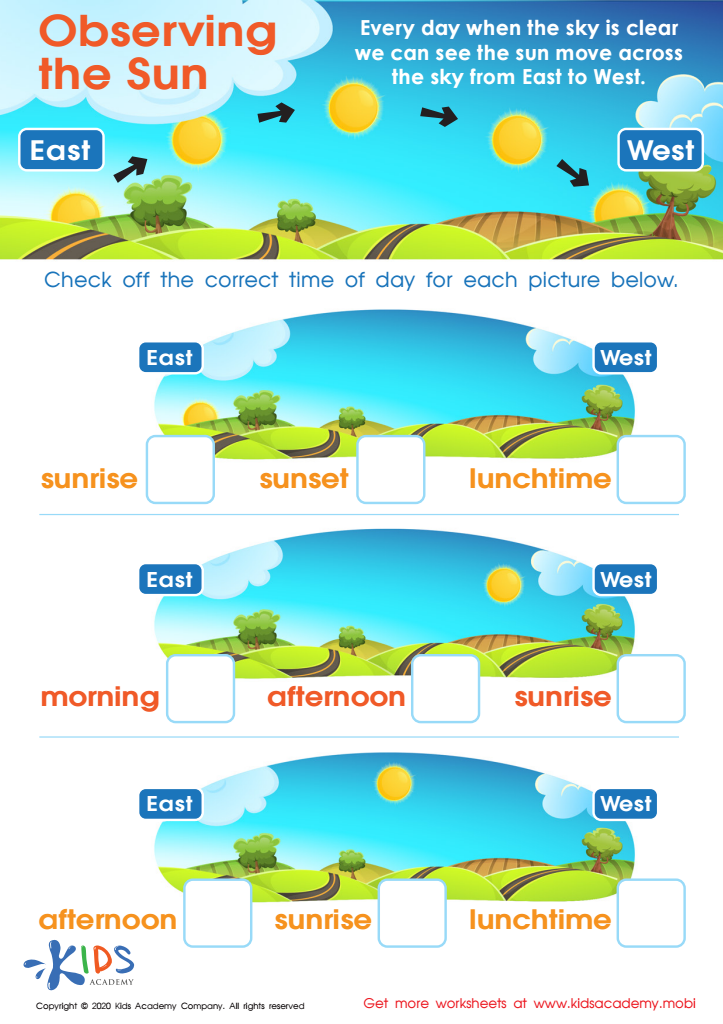
Observing the Sun Worksheet
Observe the image of the sun's progression with your child and use it to complete this free printable worksheet from Kids Academy. Have your kid look at the pictures on the left and check off the numbers in the correct order from sunrise to sunset! This will expand their science knowledge and help them understand when it's time to rise, reach its highest point during midday and set again in the West.
Observing the Sun Worksheet
Worksheet
Join Kids Academy for Free
Who is primarily going to use this learning content?





Analyzing patterns is a foundational skill that plays a crucial role in the development of critical thinking in children aged 4-9. Parents and teachers should care about fostering this ability because it enhances cognitive skills essential for problem-solving and reasoning. Recognizing patterns helps children make sense of the world around them, enabling them to predict outcomes and establish connections between concepts.
At this developmental stage, children are naturally curious and are adept at noticing similarities and differences. By encouraging them to analyze patterns, we nurture their analytical abilities, which can be beneficial in math, science, and everyday situations. For example, identifying patterns in numbers aids in understanding sequences, while recognizing patterns in behaviors fosters social skills and empathy.
Moreover, pattern analysis enhances creativity. When children engage with patterns in art or music, they explore their imaginative capacities, developing a sense of rhythm and harmony. In an educational context, integrating pattern analysis into lessons can facilitate collaborative learning as children share their observations and insights.
Ultimately, by prioritizing pattern analysis, parents and teachers not only equip children with essential skills for academic success but also lay the groundwork for lifelong learning and adaptability in an ever-changing world.








