Animal knowledge Worksheets for Ages 4-9
6 filtered results
-
From - To
Discover the joy of learning about animals with our "Animal Knowledge Worksheets" designed for children aged 4-9. These engaging, educational worksheets from Kid's Academy help young learners explore the fascinating world of animals through a variety of fun activities and exercises. With carefully crafted content that includes colorful illustrations, puzzles, and interactive questions, our worksheets are perfect for enhancing your child's knowledge about different animal species, their habitats, and characteristics. Ideal for both classroom use and at-home learning, these worksheets make science exciting and accessible for early learners. Ignite your child's curiosity and love for animals today!
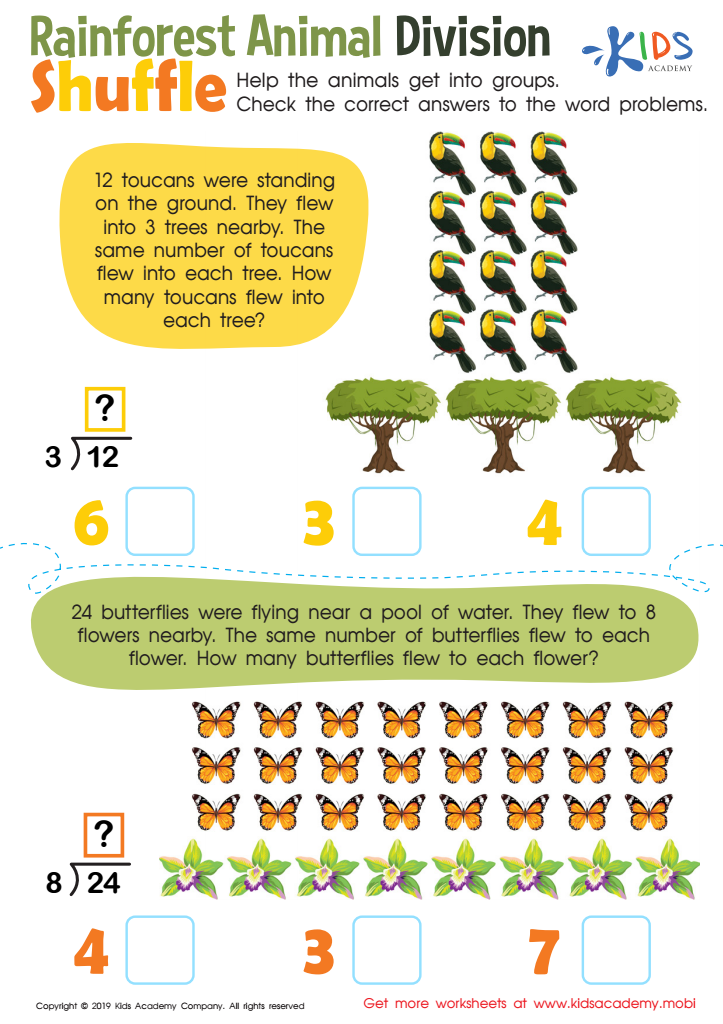
Rainforest Animal Division Worksheet
 Assign to My Students
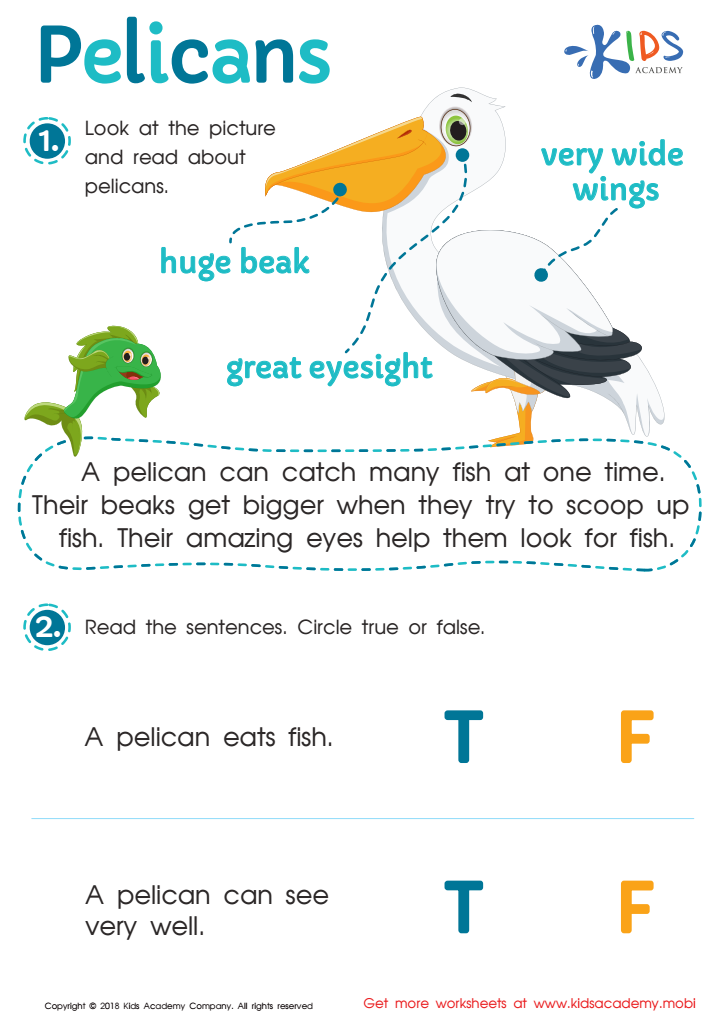
Pelicans Worksheet
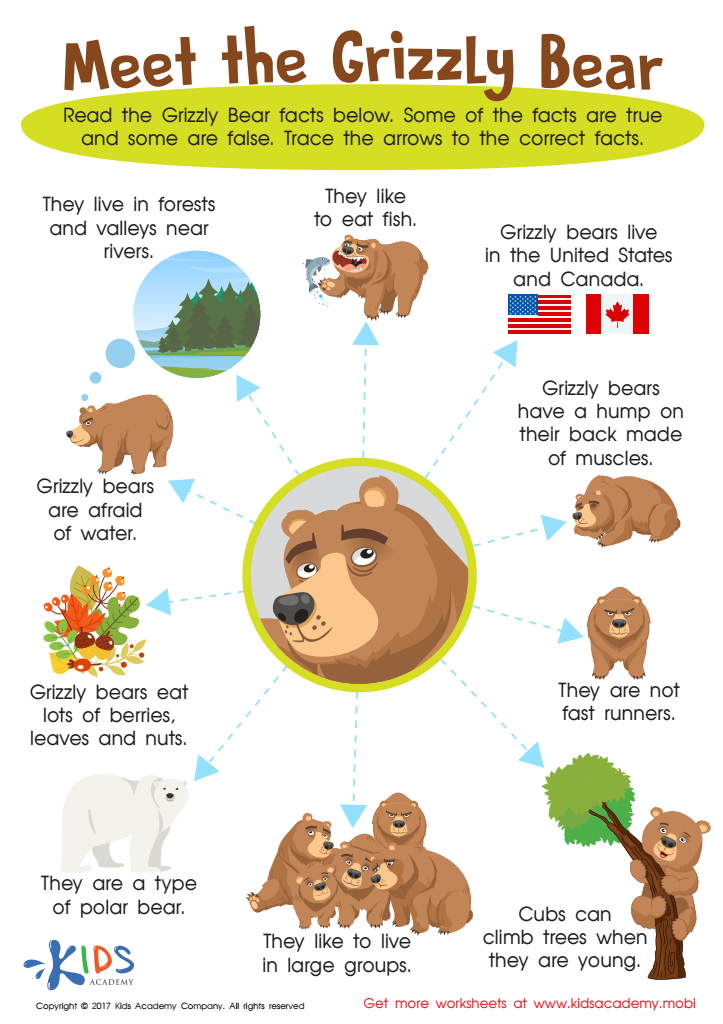
Grizzly Bear Facts Worksheet
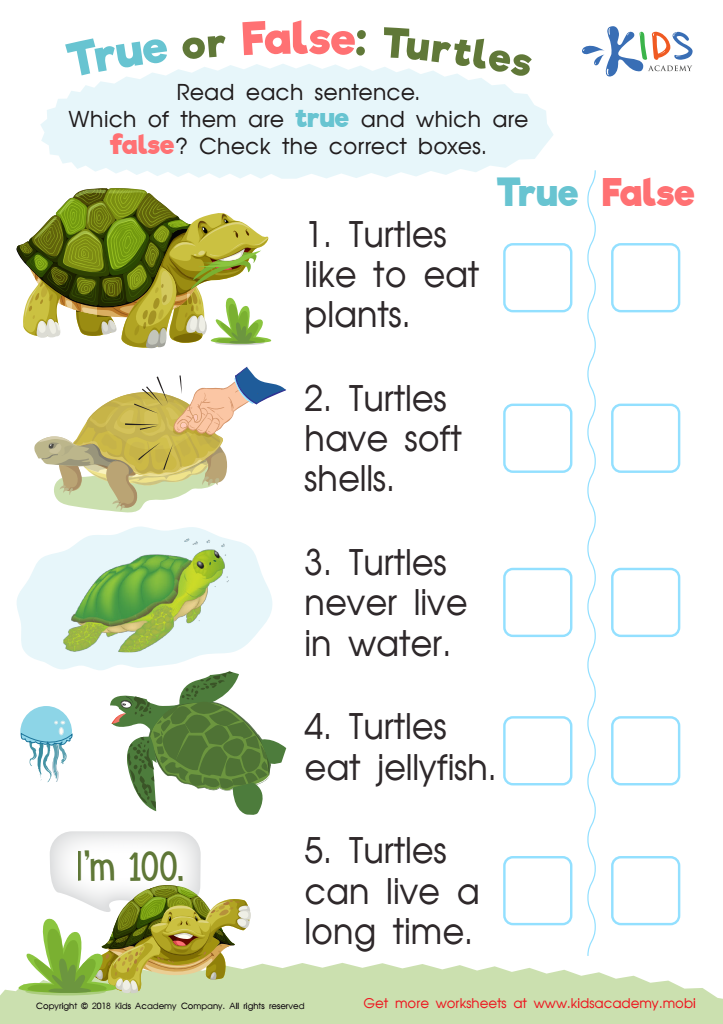
True or False: Turtles Worksheet
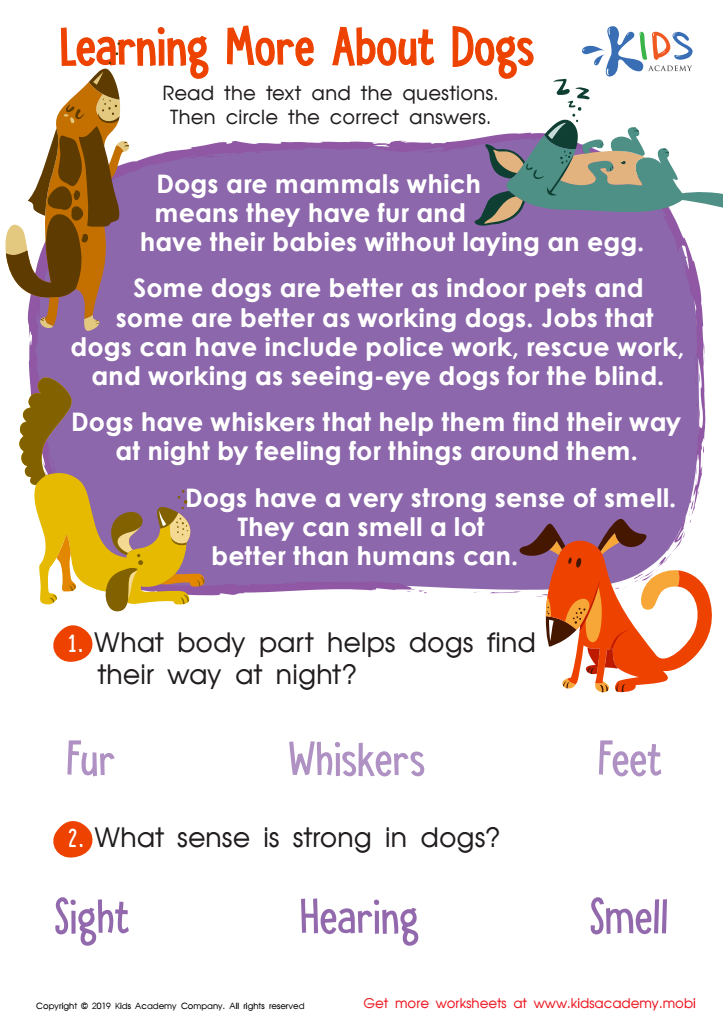
Learning More About Dogs Worksheet
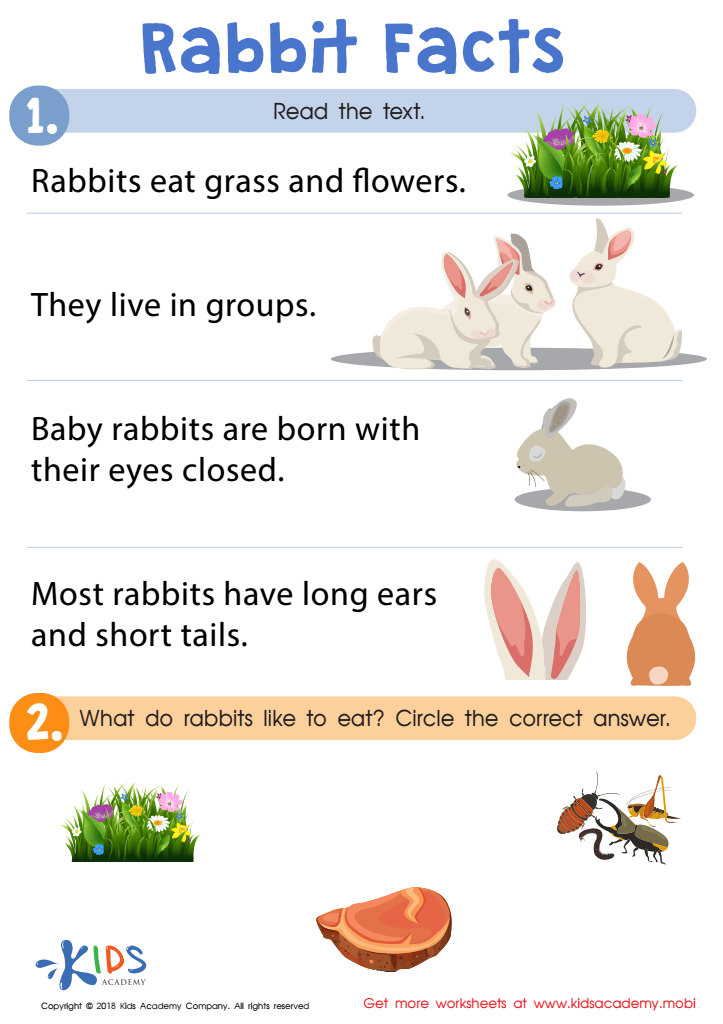
Rabbit Facts Worksheet








Understanding and appreciating animals is particularly important for children aged 4-9, a period when their curiosity is at its peak and they begin forming their views of the world. Exposure to animal knowledge can foster a child's empathy, as they learn to see animals as living beings with needs and feelings. This empathy often translates into compassion towards others, promoting more emotionally intelligent individuals.
Knowledge of animals also enhances cognitive development. Learning about different species, their habitats, diets, and behaviors stimulates curiosity and observational skills. It introduces basic scientific concepts and environmental awareness, helping children understand biodiversity and the importance of ecosystems. Such knowledge lays a foundation for future science education and encourages a lifelong fascination with the natural world.
Engaging with animal knowledge promotes language development and literacy skills as children encounter new vocabulary and articulate what they have learned. Storybooks, documentaries, and interactive activities about animals make learning enjoyable and memorable.
Teachers and parents play a crucial role in nurturing this learning interest, offering opportunities to discover, question, and explore. They can harness this natural curiosity with trips to zoos, nature reserves, and parks, as well as providing resources like books, videos, and hands-on projects. All these experiences collectively contribute to a child’s holistic growth—intellectually, emotionally, and socially.








