Basic problem-solving Worksheets for Ages 4-9
3 filtered results
-
From - To
Discover our Basic Problem-Solving Worksheets for ages 4-9, focused on nurturing young minds and enhancing critical thinking skills. Engaging activities and delightful puzzles help children recognize patterns, apply logic, and develop solutions in fun, imaginative ways. Designed by educational experts, these worksheets cater to different learning paces and styles, making problem-solving approachable and enjoyable. Whether you’re a parent or educator, our resources provide the perfect foundation for lifelong learning. Visit our page on Kids Academy for creative ways to build your child's confidence and proficiency in solving everyday problems!
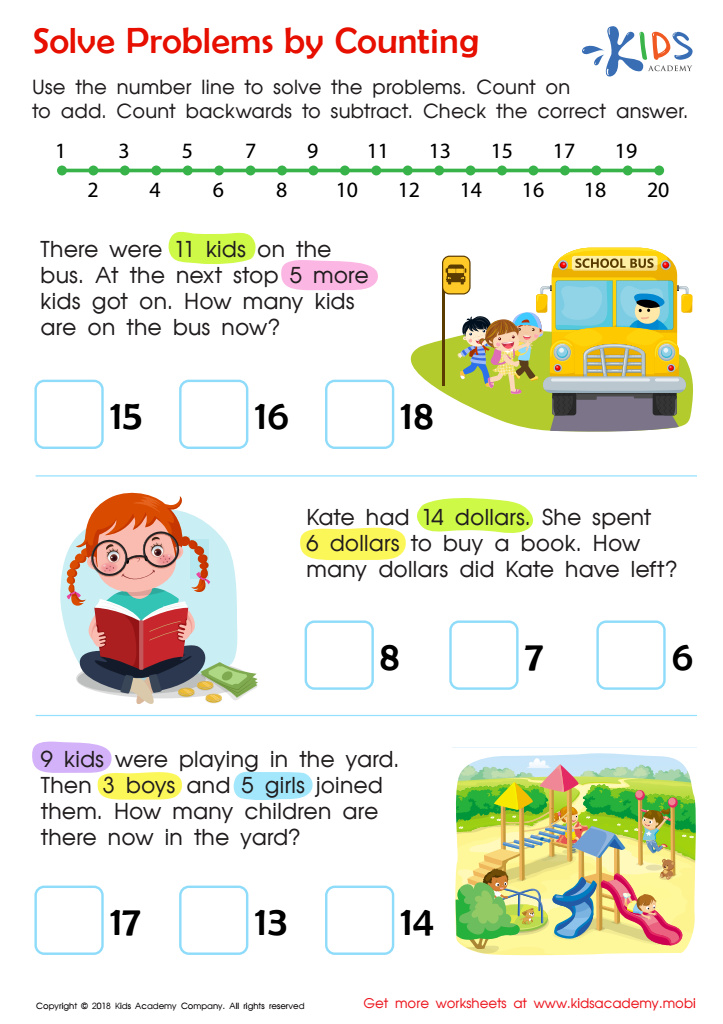
Solve Problems by Counting Worksheet
 Assign to My Students
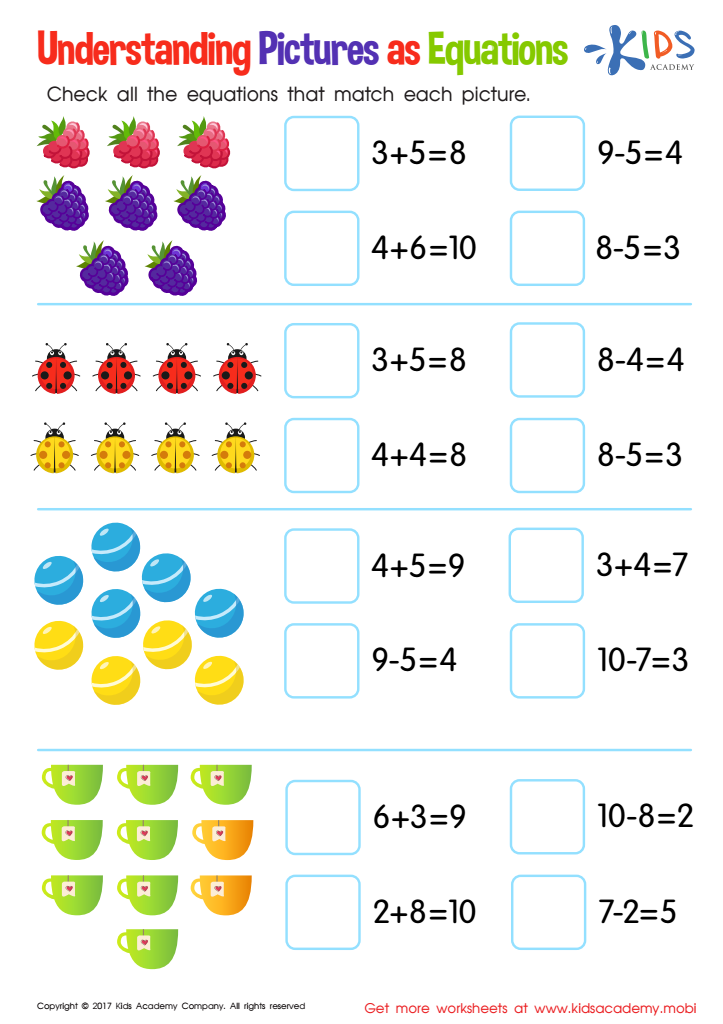
Understanding Pictures as Equations Worksheet
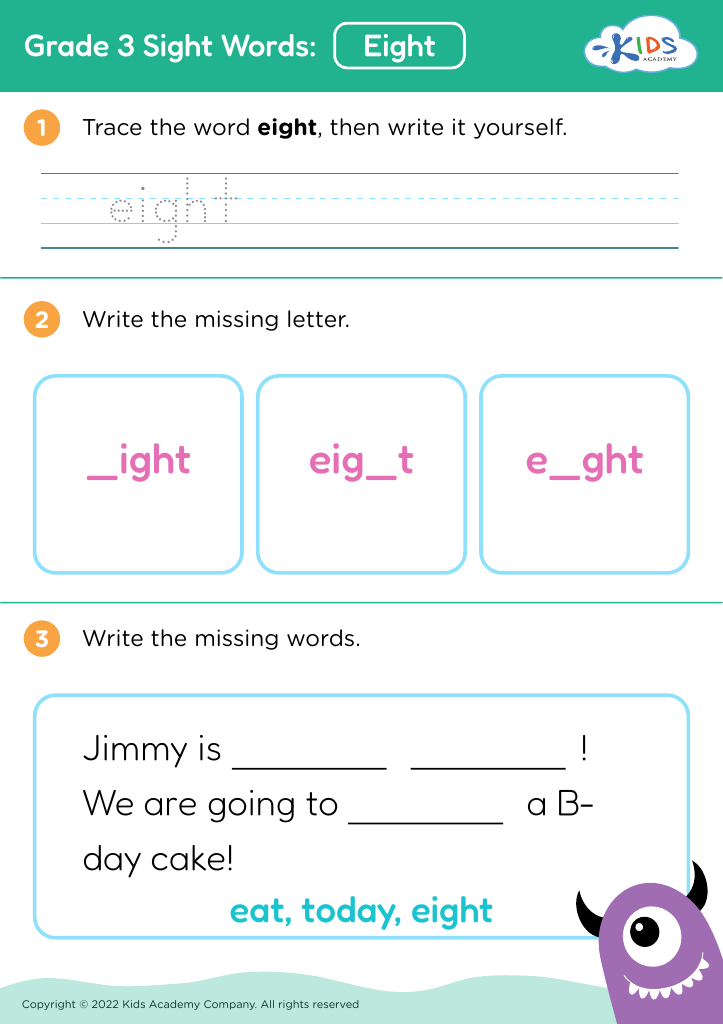







Helping children aged 4-9 develop basic problem-solving skills is tremendously important for their overall growth and success. Problem-solving skills lay the foundation for critical thinking and enable children to handle everyday challenges, both big and small. When they encounter problems and work through solutions, children learn essential life skills such as patience, creativity, and resilience.
For one, problem-solving promotes cognitive development. It helps children to understand cause and effect, enhance their analytical abilities, and improve their decision-making skills. As they experiment with different solutions, they gain confidence and independence, fostering a sense of competence that will serve them well in school and beyond.
Additionally, problem-solving skills are closely tied to social and emotional growth. When kids face social dilemmas, such as sharing or resolving conflicts, those who have honed their problem-solving abilities are better equipped to navigate these situations positively and constructively. These experiences can teach empathy, negotiation skills, and how to build stronger interpersonal relationships.
Furthermore, in today's rapidly changing world, adaptability is a critical skill. Children who grow up practicing problem-solving are more likely to become adaptable adults who can handle change and uncertainty with ease.
By prioritizing these skills early, parents and teachers set children on a path towards lifelong learning, emotional maturity, and success.








