
Character analysis Worksheets for Ages 4-9
7 filtered results
Difficulty Level
Grade
Age
-
From - To
Subject
Activity
Standards
Unlock your child's potential with our engaging Character Analysis Worksheets, designed specifically for ages 4-9! These worksheets foster critical thinking as children learn to identify and explore characters' traits, motivations, and relationships in stories. By analyzing characters, kids develop comprehension skills and enhance their understanding of plots. Our user-friendly and interactive resources include fun activities that will captivate young learners. Perfect for educators and parents alike, these worksheets are a great addition to any literacy program, promoting curiosity and imagination. Explore our collection today to support your child’s reading journey and encourage a lifelong love of literature!
Favorites
With answer key
Interactive
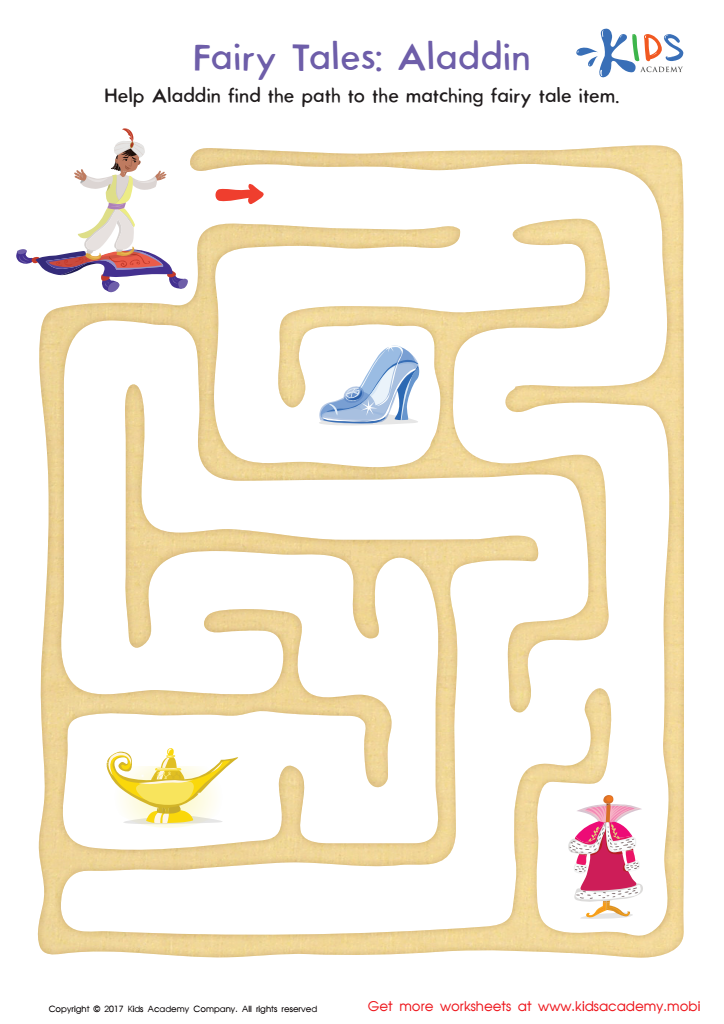
Fairy Tales Aladdin Printable
Test your child's reading recall with this challenge: the Aladdin maze worksheet! Guide your learner to identify objects linked to the story, then ask them to retell it afterwards. Hone those memory skills while having fun!
 Assign to My Students
Fairy Tales Aladdin Printable
Worksheet
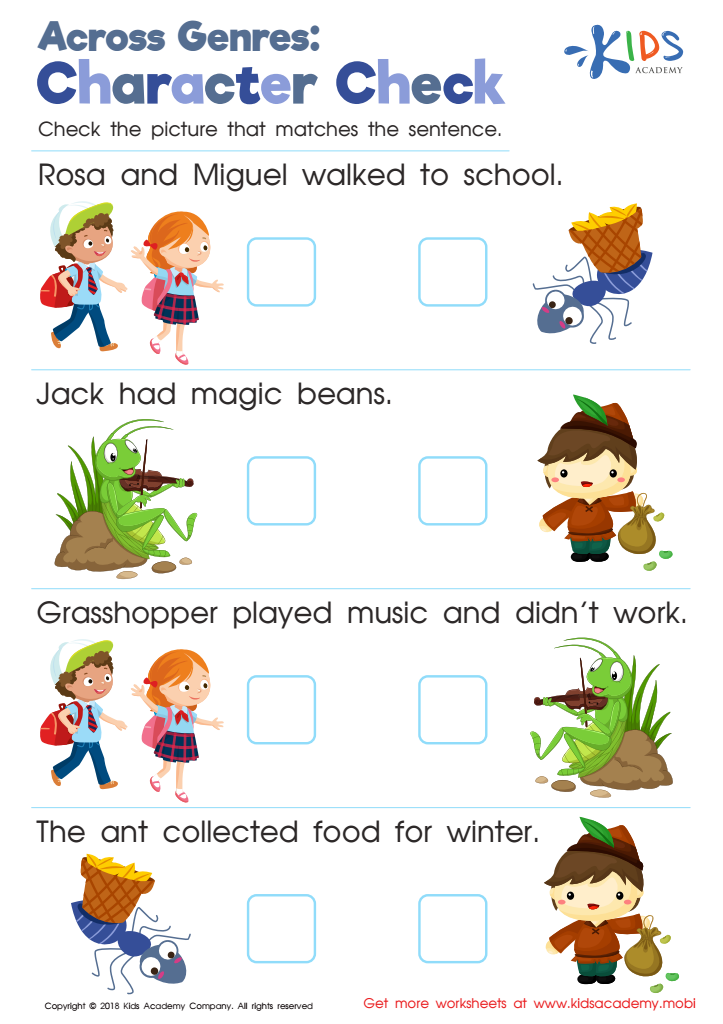
Across Genres: Character Check Worksheet
Read the sentences to your kids, then have them match the pictures to them. Ask them to look at the pictures and help them check which one goes with the sentence. The aim is to see how well they can do this exercise. (80 words)
Across Genres: Character Check Worksheet
Worksheet
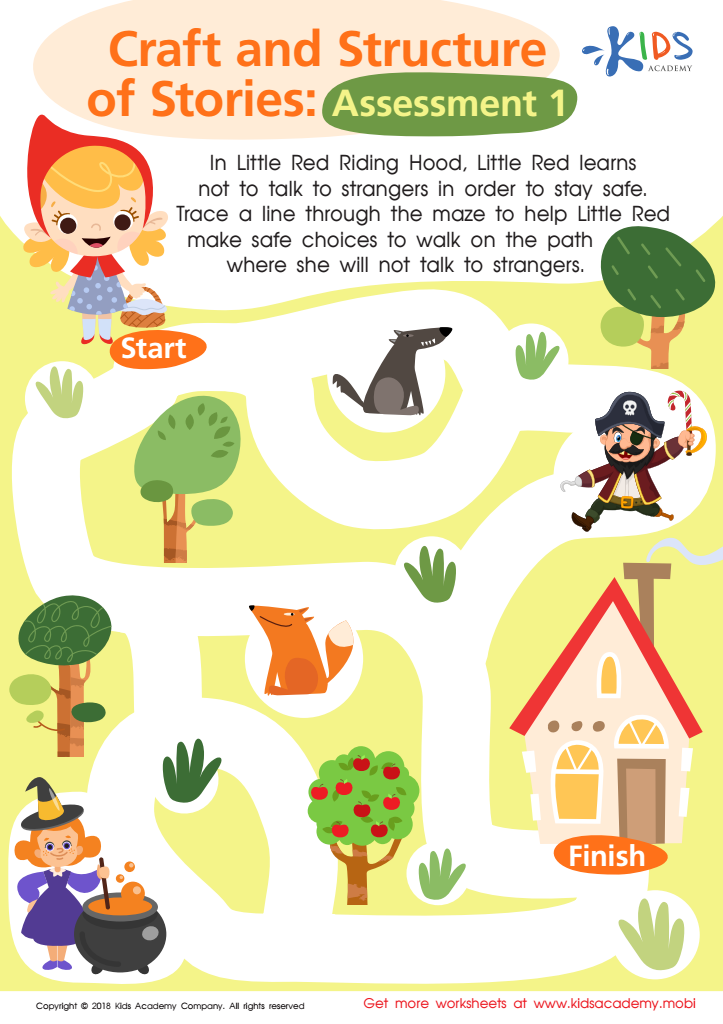
Craft and Structure of Stories: Assessment 1 Worksheet
Turn Little Red Riding Hood into a maze to review author's craft and characterization. Kids must lead her through the woods, avoiding strangers. Give them the main theme of not talking to strangers and watch as they draw a path to her grandmother's house. Fun and educational!
Craft and Structure of Stories: Assessment 1 Worksheet
Worksheet
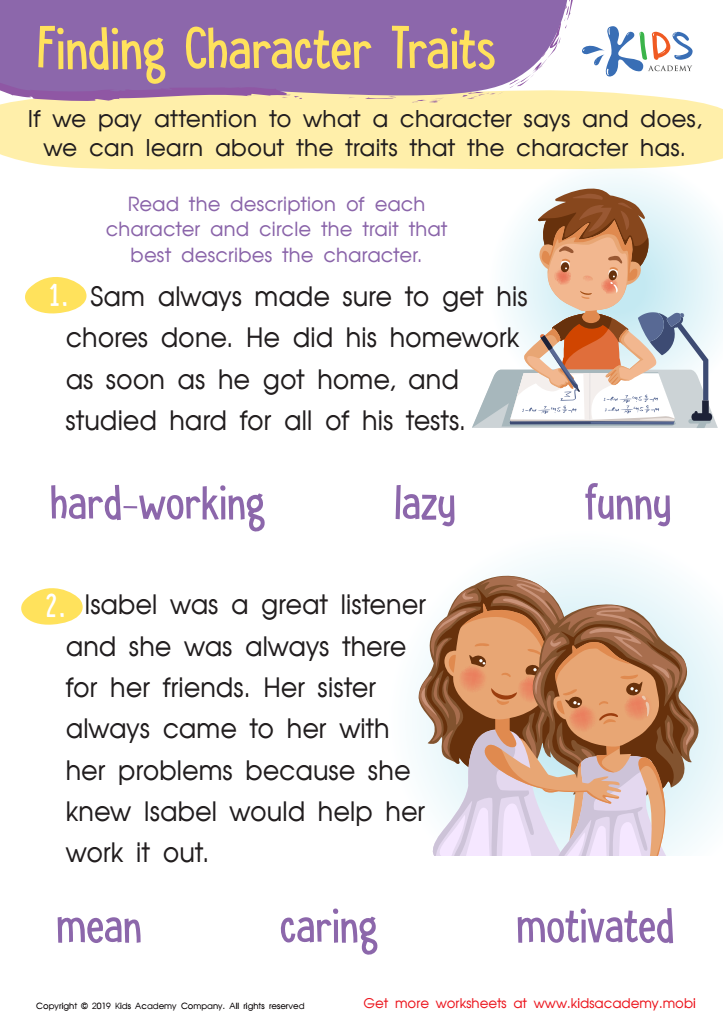
Finding Character Traits Worksheet
Before you start, make sure your kids know the difference between a character trait and a feeling. Traits are part of a character's entire personality and can be inferred from what they say and do in a story. Read the character descriptions on the worksheet and help your kids circle the best trait for each.
Finding Character Traits Worksheet
Worksheet
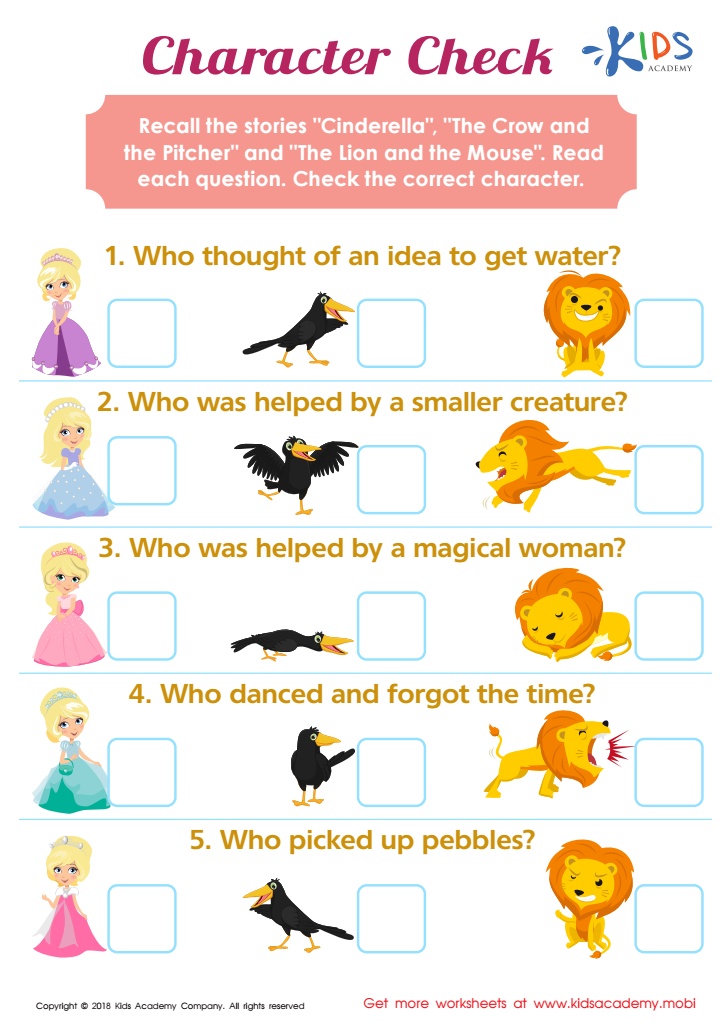
Character Check Worksheet
Ensure your child has read "Cinderella," "The Crow and the Pitcher" and "The Lion and the Mouse" before using this worksheet to assess their reading comprehension and characterization skills. Read each question and have them check the box next to the correct character to complete the task!
Character Check Worksheet
Worksheet
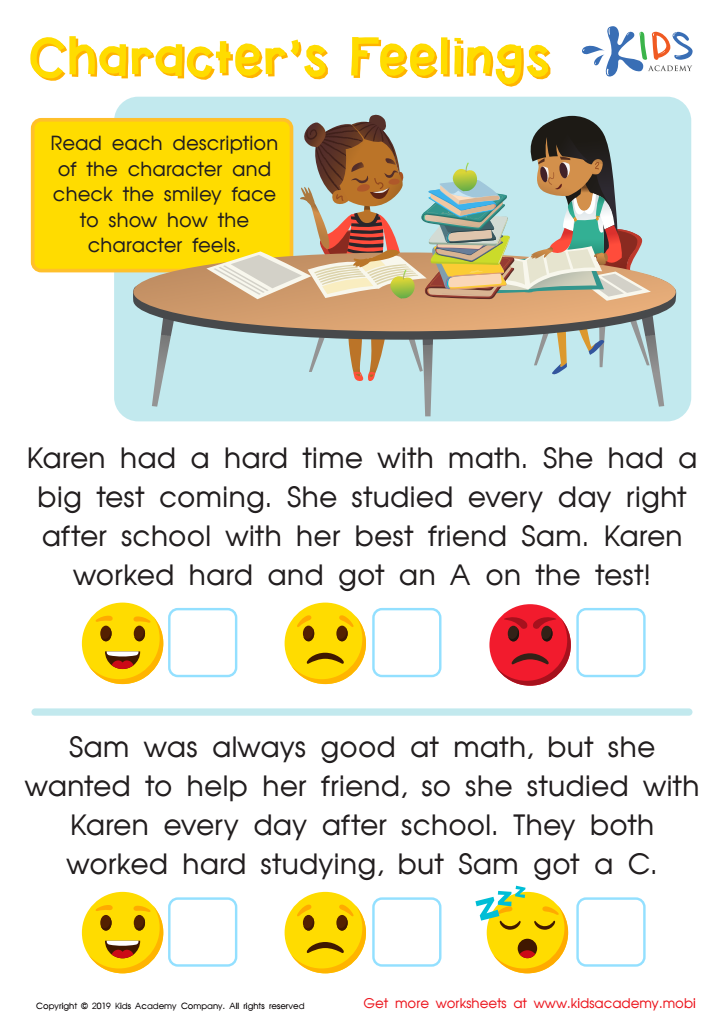
Character’s Feelings Worksheet
To help your child with reading and writing, encourage them to read simple texts and comprehension passages. This will help them learn new words, build their grammar and practice their reading skills. Go through a worksheet together, read the character descriptions then ask your child to pick the smiley face which shows how the character feels.
Character’s Feelings Worksheet
Worksheet
Join Kids Academy for Free
Who is primarily going to use this learning content?








Character analysis is a critical component of literacy development for children aged 4-9. At this stage, students are not only learning to read but also to comprehend, interpret, and engage with stories. Understanding characters helps children connect with the narrative, fostering empathy and emotional intelligence. When they analyze characters, they learn to recognize different traits, motivations, and emotions, which cultivates their ability to understand diverse perspectives in real life.
Moreover, character analysis encourages critical thinking skills. Children learn to make inferences about why characters behave in specific ways, developing their analytical skills and enhancing their ability to interpret stories more deeply. Teachers and parents should prioritize this aspect of literacy as it supports language development, enhances comprehension, and encourages discussion.
By engaging in character analysis, children also learn to express their thoughts and feelings about the stories, bolstering their verbal skills and self-expression. This strengthens their overall communication abilities that will be essential throughout their education and future interactions. Ultimately, supporting character analysis in young learners not only enriches their reading experience but also equips them with valuable life skills such as empathy, critical thinking, and effective communication.








