Comparative skills Worksheets for Ages 4-9
3 filtered results
-
From - To
Boost your child's critical thinking and analytical abilities with our Comparative Skills Worksheets for Ages 4-9. Designed to be both engaging and educational, these worksheets help young learners to distinguish similarities and differences between objects, patterns, and ideas. Perfect for preschool through early elementary grades, our comparative activities foster essential skills in observation, analysis, and logical reasoning. With vibrant visuals and fun exercises, kids will love comparing sizes, shapes, colors, and more, all while developing their cognitive and problem-solving skills. Ideal for classroom use or at-home learning, these worksheets ensure a playful and productive learning experience.
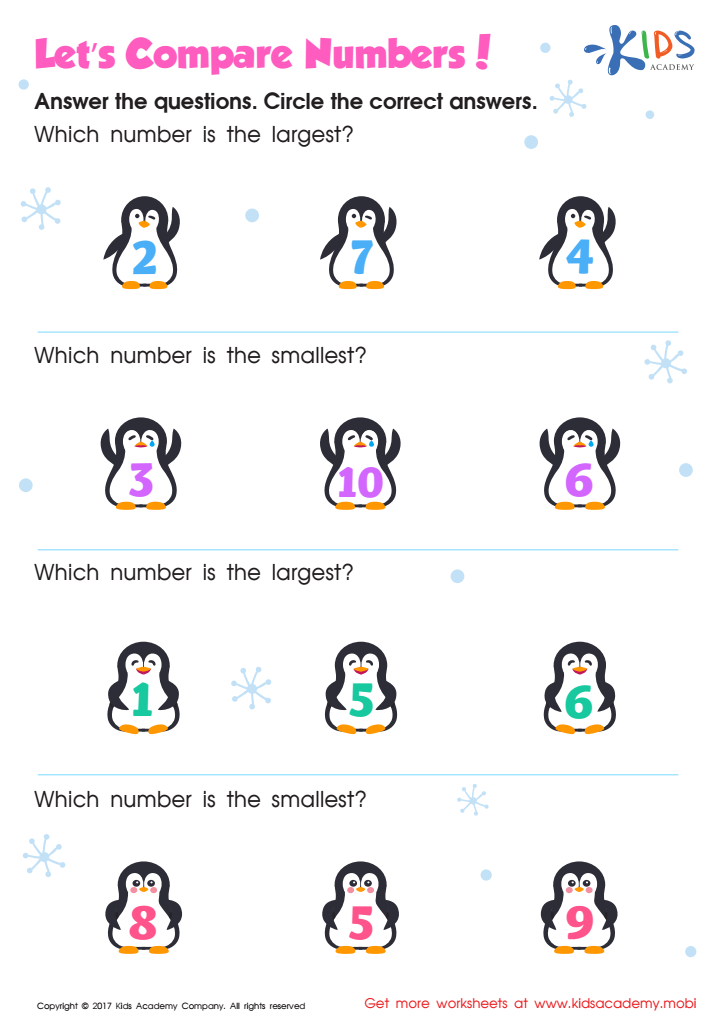
Comparing Numbers 1–10 Worksheet Kindergarten
 Assign to My Students
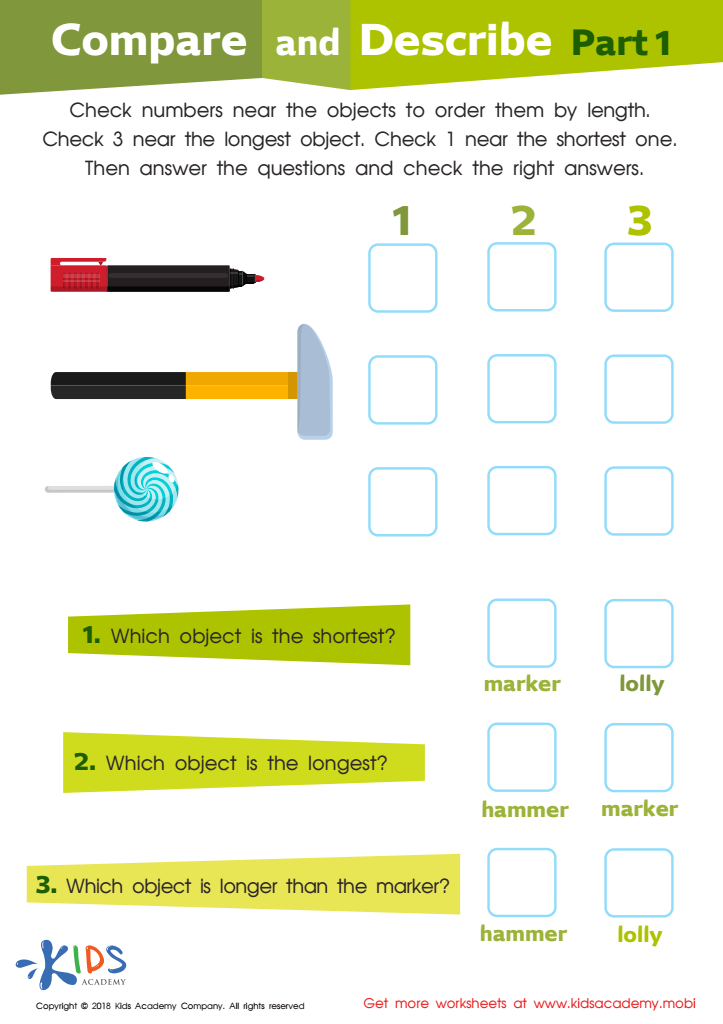
Compare and Describe: Part 1 Worksheet
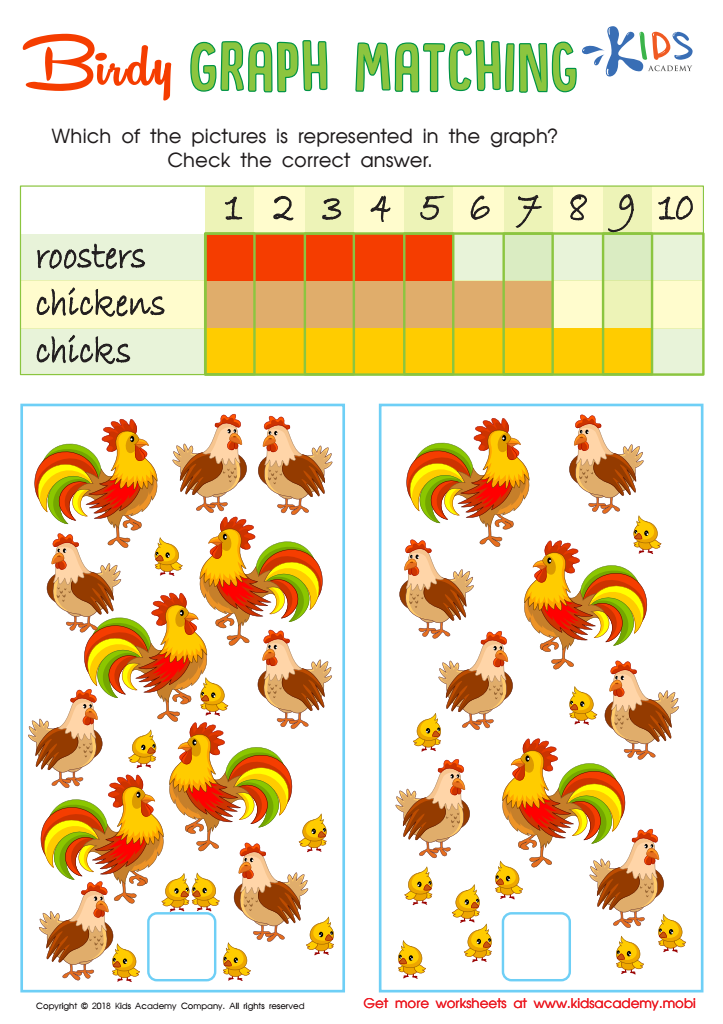
Birdy Graph Matching Worksheet







Comparative skills play a crucial role in the cognitive and socio-emotional development of children aged 4-9. By learning to compare objects, quantities, and experiences, children enhance their critical thinking abilities as they discern similarities and differences in various concepts. This foundational skill is essential for building mathematical and scientific understanding; for instance, comparing sizes, lengths, and weights aids in grasping basic arithmetic and aiding the conceptual leap to more complex subjects.
Moreover, comparative skills can bolster language and communication growth. Children who practice comparing can articulate their observations more clearly, helping them to expand their vocabulary and narrative skills. They learn to use descriptive words such as "bigger," "smaller," "faster," and "slower," which enriches both their spoken and written language.
Socially, these skills encourage empathy and perspective-taking. When comparing their thoughts, feelings, or situations with those of others, children begin to appreciate diversity and develop better peer relationships. They learn that not everyone sees the world as they do, which is fundamental to social interactions and emotional intelligence.
Therefore, nurturing these abilities helps children academically, linguistically, and socially, laying a strong foundation for lifelong learning and understanding. By investing time in developing comparative skills, parents and teachers provide critical tools that equip children for comprehensive growth and success in multiple areas of life.








