Conversion skills Worksheets for Ages 4-9
5 filtered results
-
From - To
Enhance critical thinking and math skills with our Conversion Skills Worksheets designed for ages 4-9! These engaging worksheets introduce young learners to the concept of measurement conversions, making math fun and accessible. Your child will explore activities that demonstrate how to convert between different units, such as inches to feet or centimeters to meters. Our age-appropriate exercises foster a solid understanding of measurement, preparing kids for future math challenges. Whether at home or in the classroom, these worksheets are a fantastic resource for helping children build essential conversion skills they will use throughout their education. Download and start exploring today!
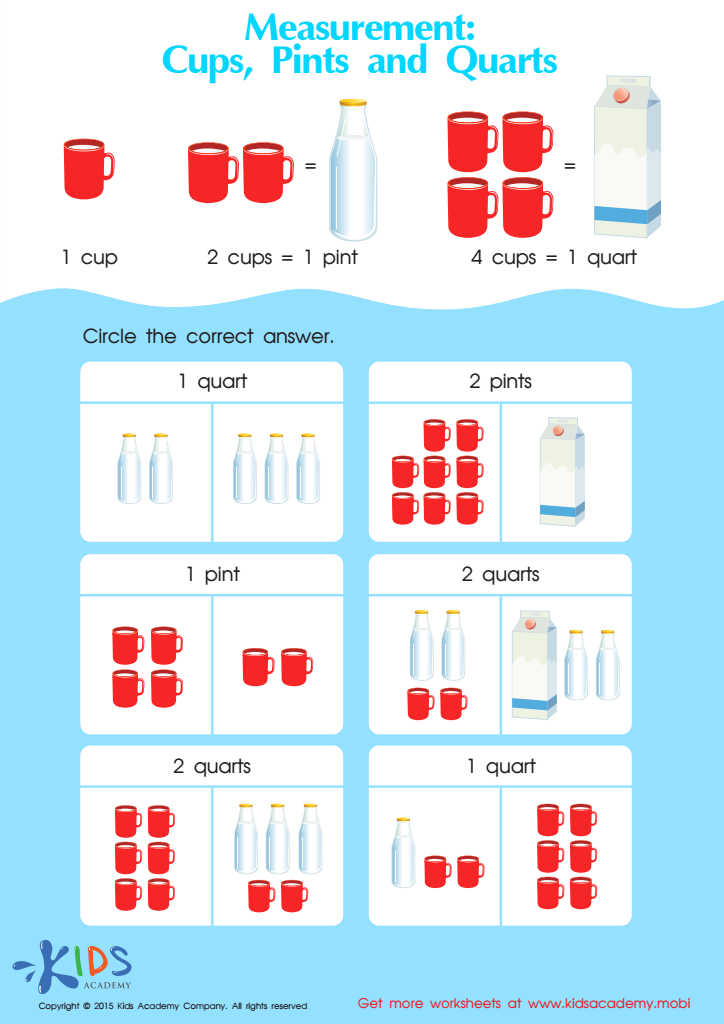
Cups, Pints and Quarts Worksheet
 Assign to My Students
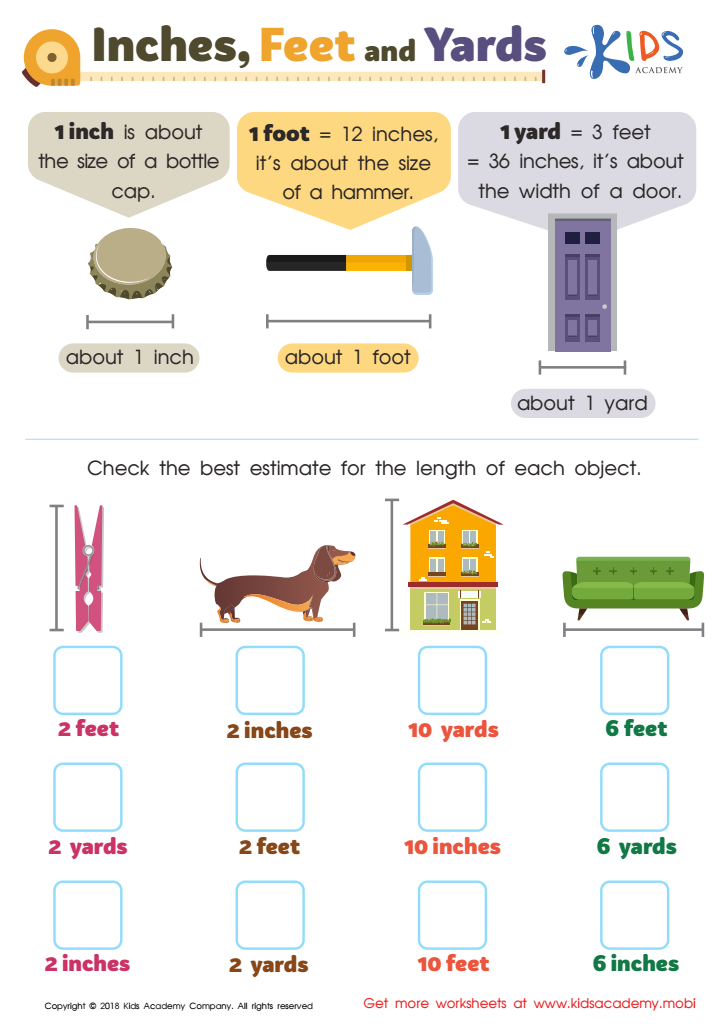
Inches, Feet and Yards Worksheet
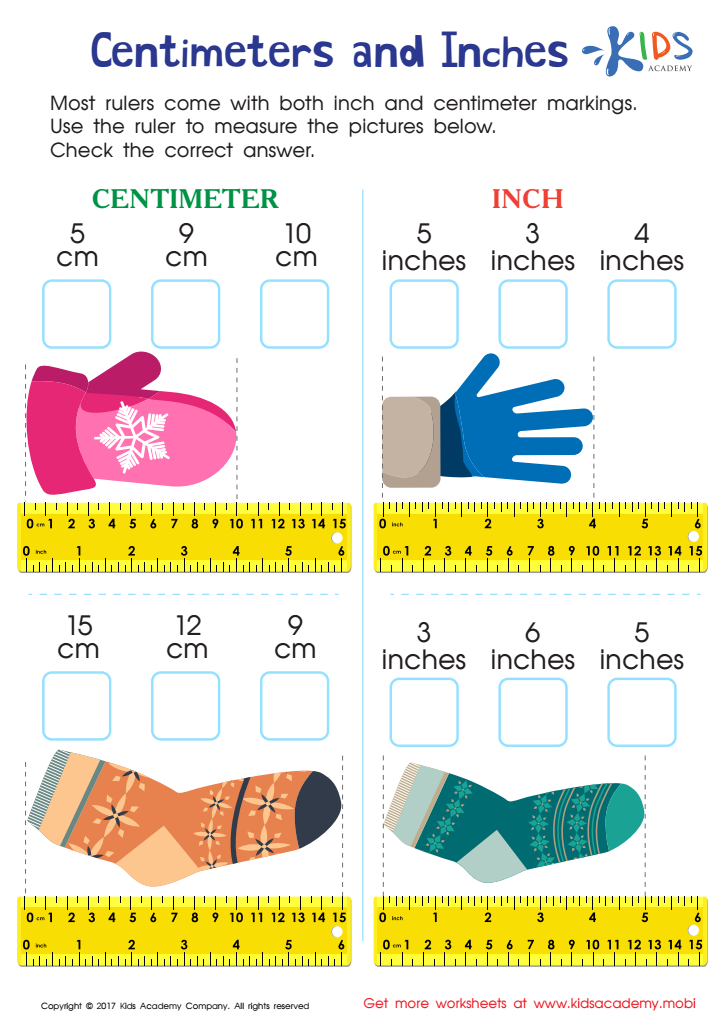
Centimeters and Inches Worksheet
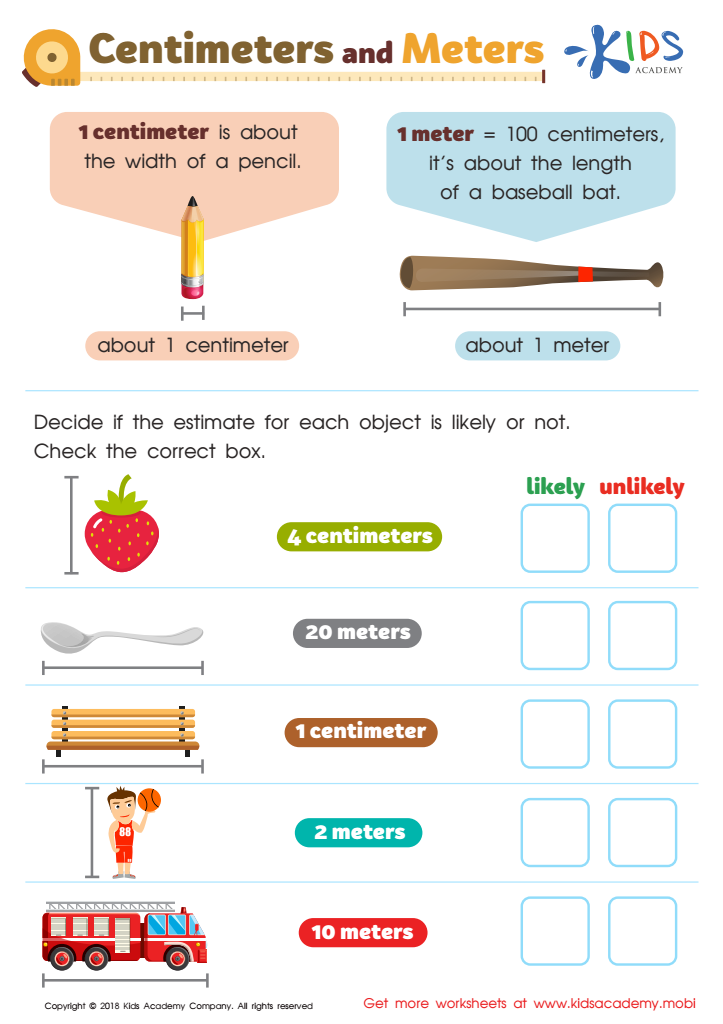
Centimeters and Meters Worksheet
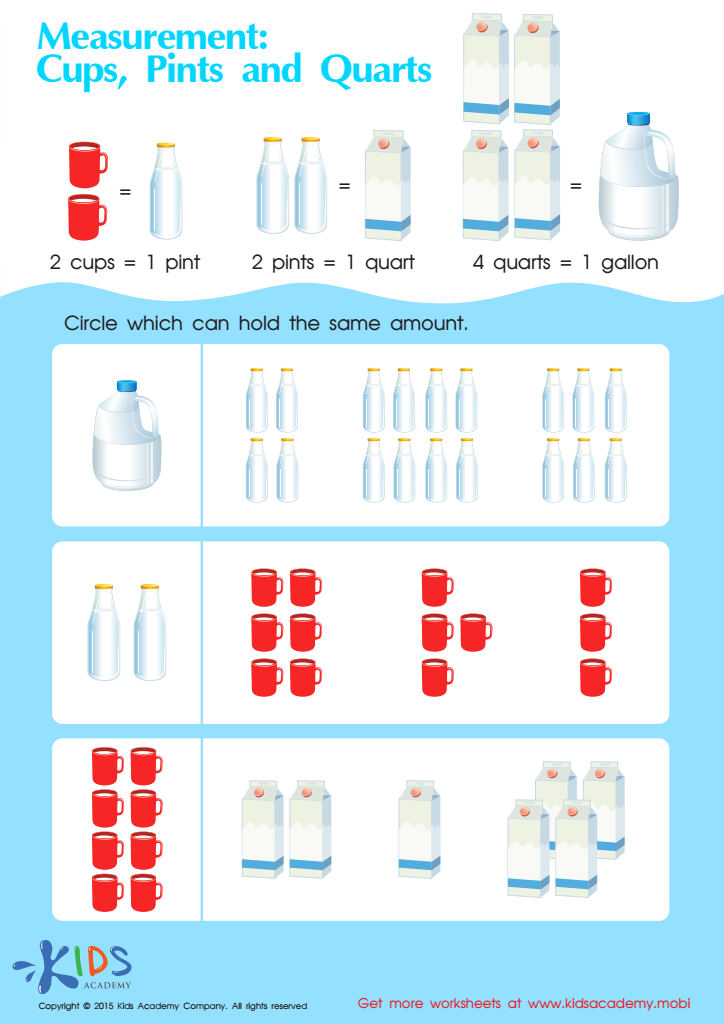
Cups, Pints and Quarts 2 Worksheet








Parents and teachers play a crucial role in a child's early education, particularly when it comes to conversion skills, which include understanding and manipulating numbers in different forms, such as fractions, decimals, and percentages. For children aged 4-9, these foundational math abilities are essential for developing critical thinking and problem-solving skills. Mastery of conversion skills fosters numerical fluency and enhances a child's confidence in tackling math-related tasks, easing the transition to more complex concepts in later years.
At this formative stage, children are naturally curious and eager to learn, making it the perfect time to cultivate positive attitudes towards math. Engaging with conversion skills promotes pattern recognition and logical reasoning, essential competencies for everyday life, including managing time, money, and measurements. Furthermore, as children learn to convert numbers and measurements, they improve their ability to communicate mathematical ideas and collaborate with others.
Involving parents and teachers in this learning process nurtures a supportive environment that reinforces the importance of numeracy. When caregivers prioritize conversion skills, children are more likely to succeed academically and develop a lasting appreciation for mathematics that extends throughout their education. This early investment in their mathematical development can significantly influence their future opportunities and confidence.








