Counting money Worksheets for Ages 4-9
3 filtered results
-
From - To
Boost your child's financial skills with our engaging Counting Money Worksheets designed for ages 4-9! These printable activities introduce children to essential concepts of recognizing coins and their values while promoting numeracy and problem-solving skills. Our worksheets feature colorful illustrations and exciting scenarios that make learning about money fun and interactive. Perfect for classroom use or at-home practice, these resources cater to different learning levels, ensuring that every child can confidently grasp money-related tasks. Help your young learner develop strong foundational skills in budgeting, making change, and spending wisely. Start fostering financial literacy today with our enjoyable counting money worksheets!
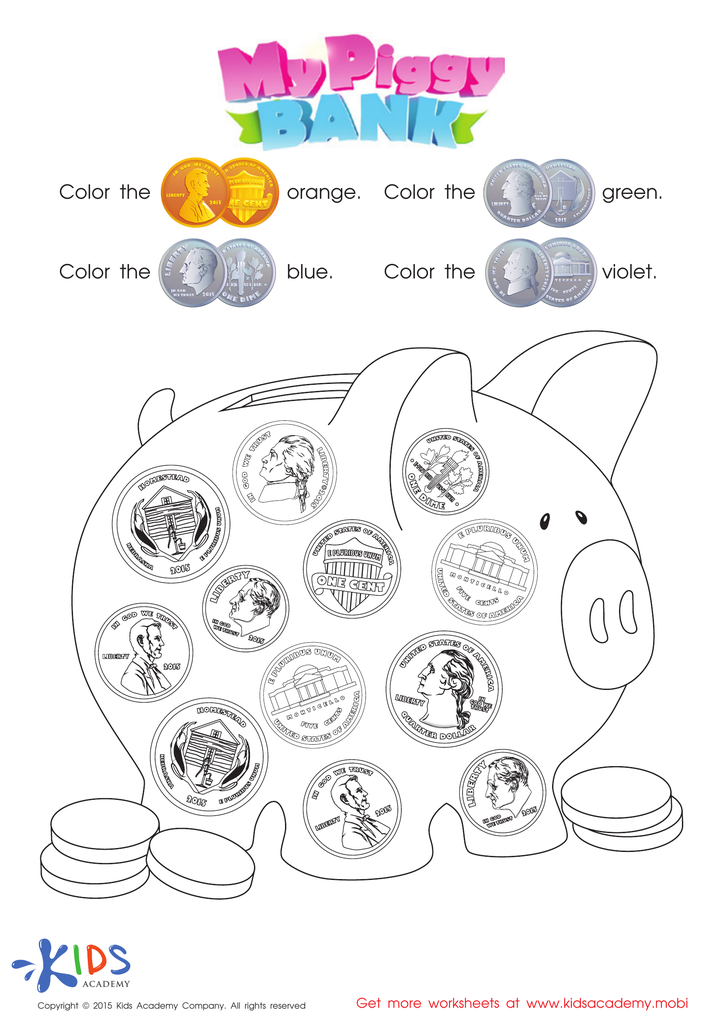
Recognizing Money Money Worksheet
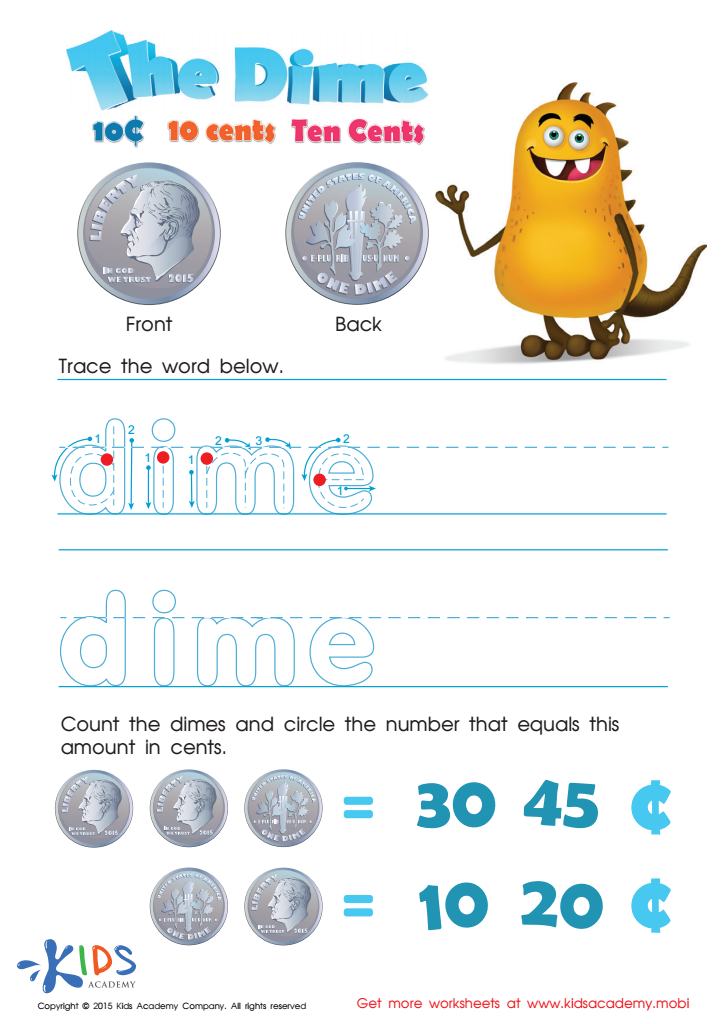
Ten Cents or the Dime Money Worksheet
 Assign to My Students




.jpg)



Counting money is a crucial skill for children ages 4-9, as it lays the foundation for financial literacy and numeracy. Parents and teachers should prioritize this skill for several reasons.
Firstly, mastering money counting fosters basic math skills, such as addition and subtraction. By handling coins and bills, children learn to recognize numbers and develop spatial awareness, which are essential for advanced mathematics.
Secondly, practical money counting reinforces real-world applications. As kids engage in play, they can simulate shopping or running a store, offering opportunities to practice budgeting and making change. This immersive learning helps children grasp the concept of value and the importance of responsible spending and saving.
Additionally, early exposure to money management instills lifelong skills. As these children grow, they become more equipped to handle personal finance, contributing to their future independence and success.
Lastly, counting money helps boost confidence. Children who understand how to handle money feel empowered in their interactions, whether excusing themselves from buying a snack or participating in school activities that involve money.
In short, counting money is more than just a math exercise; it nurtures critical life skills for children’s academic and personal development.








