Graph reading Worksheets for Ages 4-9
3 filtered results
-
From - To
Explore our engaging Graph Reading Worksheets designed specifically for children ages 4 to 9! Our thoughtfully curated printable activities help young learners develop essential graph literacy skills in a fun and interactive way. Each worksheet promotes critical thinking, encouraging kids to interpret data through colorful charts, pictographs, and bar graphs. With easy-to-follow instructions, these resources cater to varying skill levels, making them perfect for both classroom use and at-home learning. Foster a love for mathematics and enhance fine motor skills with our vibrant, hands-on exercises. Start your child's journey towards confidence in graph reading today with our exciting worksheets!
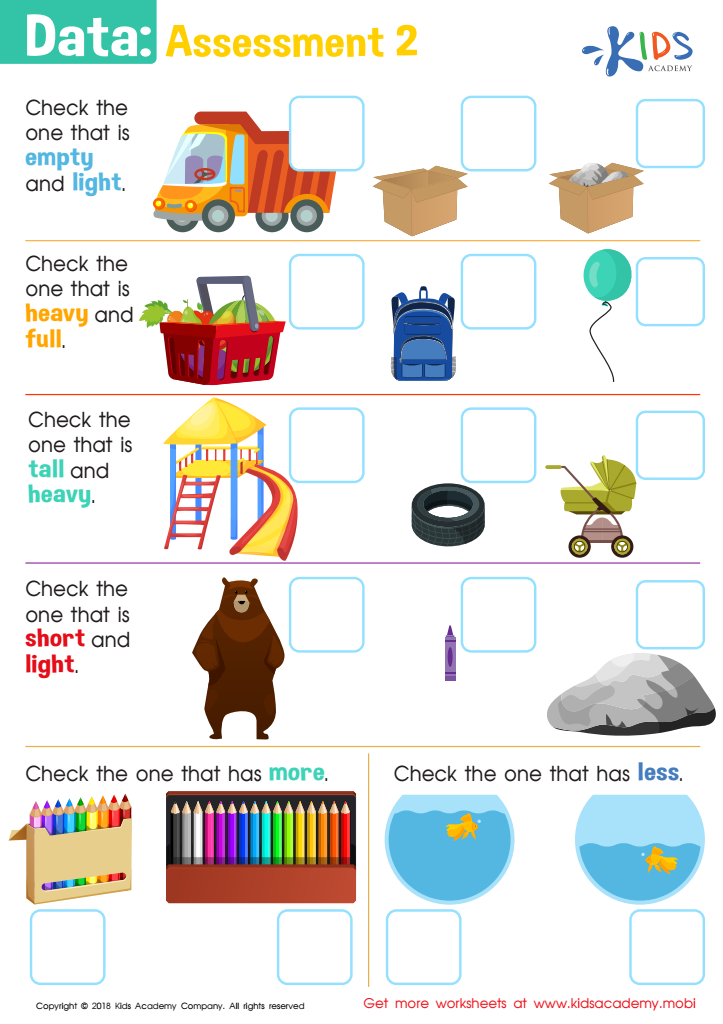
Data: Assessment 2 Worksheet
 Assign to My Students
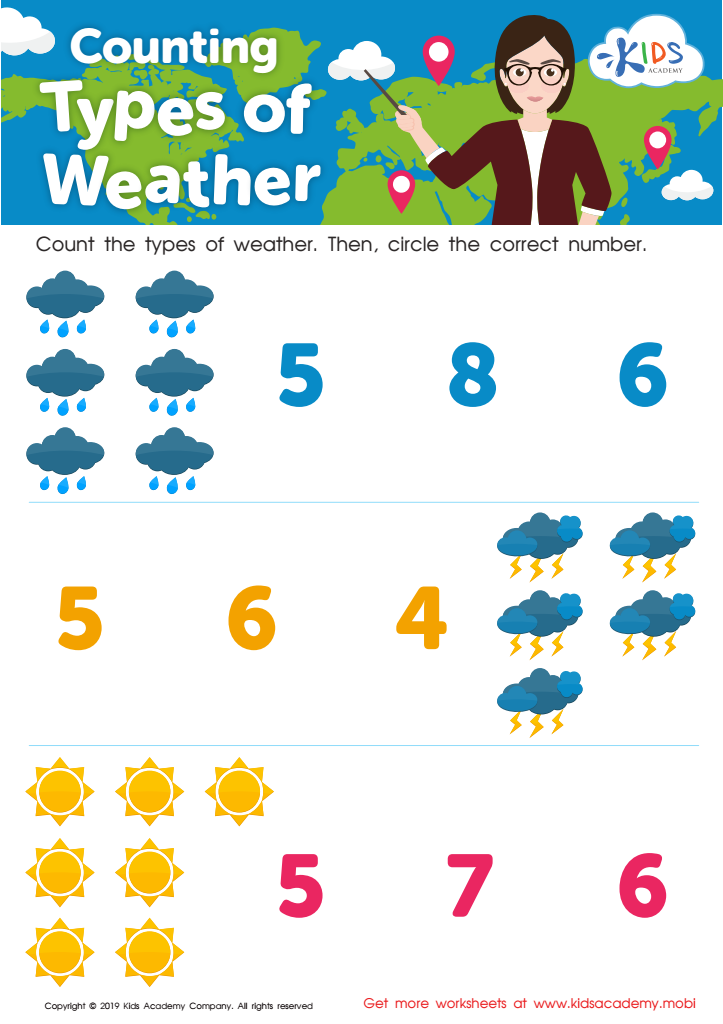
Counting Types of Weather Worksheet
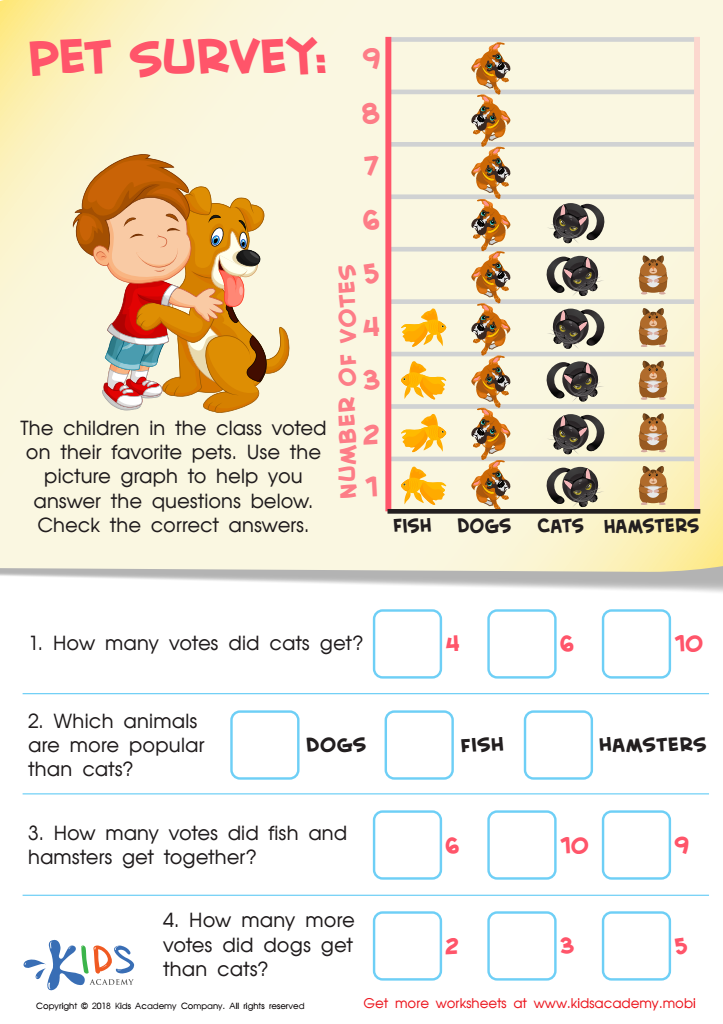
Pet Survey Worksheet







Graph reading is a crucial skill for children aged 4-9, and both parents and teachers should prioritize its development for several reasons. Firstly, graph reading fosters critical thinking and analytical skills. By learning to interpret data presented visually, children become adept at making sense of information, drawing conclusions, and even solving problems. This foundational skill enhances their overall cognitive development and prepares them for more complex subjects in the future.
Moreover, graphs are ubiquitous in everyday life, from assessing weather patterns to understanding sports statistics. Helping children become familiar with graphs enables them to navigate real-world contexts confidently. It encourages curiosity and inquiry as they learn to ask questions based on visual data.
Additionally, graph reading supports literacy and numeracy by integrating visual comprehension with mathematical skills. Children learn to translate numerical values into manageable visual formats, laying the groundwork for later success in subjects like math and science.
Finally, engaging in graph-reading activities promotes collaboration when done in groups, enhancing social skills. When parents and teachers actively engage in these discussions and activities, they not only boost children's academic maturity but also foster a lifelong appreciation for learning and discovery. Prioritizing graph reading ultimately equips young learners with essential skills for their educational journeys.








